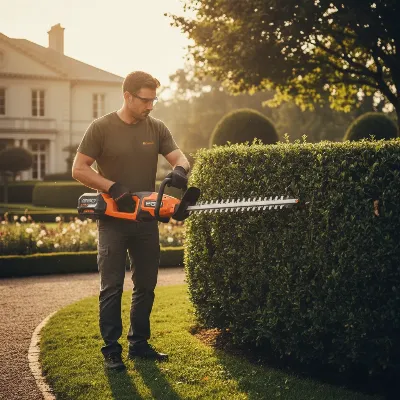
For professional landscapers, a reliable hedge trimmer isn’t just a tool; it’s an extension of their craft, defining the crisp lines and manicured beauty of outdoor spaces. In 2026, the landscape of commercial hedge trimming continues to evolve, bringing forth innovations in power, efficiency, and ergonomics. Choosing the right commercial hedge trimmer is paramount for productivity, worker comfort, and achieving impeccable results that satisfy even the most discerning clients. This comprehensive guide delves into the latest advancements, breaks down the diverse options available, and highlights the top models engineered to meet the rigorous demands of professional landscaping this year.
Overview of Hedge Trimmers (Hedge Trimmer)
A hedge trimmer is a power tool equipped with reciprocating blades designed for cutting and shaping hedges, shrubs, and bushes. Historically, maintaining hedges was a laborious manual task, evolving from shears and scythes to early mechanical versions. Over the decades, technology has transformed these tools, making them faster, more efficient, and specialized for various applications. Today’s commercial hedge trimmers are engineered for high performance, durability, and user comfort, reflecting a significant leap from their predecessors.
Modern hedge trimmers are primarily categorized by their power source: corded electric, battery-powered (cordless), and gasoline-powered. Each type offers distinct advantages tailored to specific operational needs. While basic designs consist of a motor driving a set of blades, advanced models incorporate features like anti-vibration systems, rotating handles, and specialized blade geometries to enhance precision and reduce fatigue for prolonged commercial use. The ongoing evolution continues to prioritize sustainability, quieter operation, and smart technology.
Detailed Classification of Hedge Trimmers
Understanding the different types of hedge trimmers is crucial for landscapers aiming to optimize their toolkit for diverse projects. Each power source and blade design brings a unique set of benefits and limitations.
By Power Source
The power source dictates a trimmer’s mobility, power output, and environmental impact, making it a primary consideration for commercial operations.
- Corded Electric Hedge Trimmers: These trimmers offer consistent, unlimited power as long as they are plugged into an outlet. They are typically lighter and quieter than gas models, with minimal maintenance requirements. Their main drawback for commercial use is the restriction of a power cord, limiting range and creating potential trip hazards. They are best suited for smaller, residential properties or areas with readily available power access.
- Battery-Powered Hedge Trimmers: Cordless, battery-powered hedge trimmers have become the new standard, especially for professional use, offering excellent mobility and freedom from cords and fuel. Advances in lithium-ion battery technology have led to longer runtimes, faster charging, and impressive cutting power, often rivaling smaller gas models. They are quieter, produce zero emissions, and require less maintenance, making them ideal for urban environments or noise-sensitive areas. However, battery life and the need for spare batteries on large jobs can be a consideration.
- Gasoline-Powered Hedge Trimmers: Traditionally the workhorses of commercial landscaping, gas-powered trimmers offer maximum power and unrestricted mobility, ideal for large estates, overgrown hedges, and heavy-duty tasks where raw power is non-negotiable. They can run for extended periods with quick refueling. However, they are heavier, noisier, produce exhaust fumes, and require more maintenance, including fuel mixing, filter changes, and spark plug checks. Despite the rise of battery technology, many professionals still prefer gas for its sheer cutting force on thicker, woodier growth.
|
Our Picks for the Best Hedge Trimmer in 2026
As an Amazon Associate I earn from qualifying purchases.
|
||
| Num | Product | Action |
|---|---|---|
| 1 | BLACK+DECKER Electric Hedge Trimmer, 17-Inch Corded 3.2 Amp, Dual Action, Reduced Vibration, Cleaner Cut, Lightweight, 3800 Cuts per Min (BEHT150) |

|
| 2 | Hedge Trimmer for Dewalt 20V Battery, Cordless Hedge Trimmer with 22'' Dual-Action Blade, 1600RPM, 3/5'' Cutting Width, Rotating Handle & Dual Switch Design (Battery Not Included) (Yellow) |
|
| 3 | WORX 22" Cordless Hedge Trimmer, Electric Hedge Trimmer with Dual-Action Blades, Lightweight Bush Trimmer with 4.4 LBS, Battery & Charger Not Included, WG261.9 |
|
| 4 | BLACK+DECKER 20V MAX Cordless Hedge Trimmer, Battery and Charger Included, 22 Inch Steel Blade Lightweight Bush Trimmer, Soft Grip, Less Vibration (LHT2220) |
|
| 5 | BLACK+DECKER 18-Inch Electric Hedge Trimmer (BEHT200) |
|
| 6 | Hedge Trimmer for Dw 20V Battery,Hedge Trimmer Cordless with 22'' Dual-Action Blade and 3/5'' Cutting Capacity,1600RPM& Safety Lock (Battery Not Included) |
|
| 7 | Cordless Hedge Trimmer 22-Inch Compatible with DEWALT 20V MAX Battery, Electric Hedge Trimmer Cordless, Bush Trimmers for Garden, Battery Powered Hedge Trimmers (Tool Only) |
|
| 8 | BLACK+DECKER Electric Hedge Trimmer, 16-Inch 3.0 Amp Compact Corded Power Hedge Trimmer (BEHT100) |
|
| 9 | Electric Hedge Trimmer Cordless Compatible with DEWALT 20V MAX Battery, 20-Inch Cordless Hedge Trimmer, Brushless Bush Trimmer, 2/3'' Cutting Capacity, Lightweight & Rotatable Handle(No Battery) |
|
| 10 | SEESII 20V Hedge Trimmer Cordless: 20" Electric Bush Trimmer - Dual 4.0Ah Batteries, Dual-Action Blade, 0.71" Blade Gap, Rotatable Handle, Lightweight Handheld Grass Shrub Clipper for Garden Yard |
|
By Blade Design
Blade design significantly influences a hedge trimmer’s cutting efficiency and the types of hedges it can tackle.
- Double-Sided Blades: The most common design for commercial hedge trimmers, double-sided blades allow cutting in both directions, making work faster and more versatile, especially when shaping complex hedges.
- Single-Sided Blades: These blades are typically longer and heavier, designed for straight-line cutting on long, flat hedges. They offer a larger cutting swath but are less maneuverable for intricate shaping.
- Long-Reach (Pole) Hedge Trimmers: Featuring an extended shaft, these trimmers are designed to cut tall hedges and hard-to-reach areas safely from the ground, eliminating the need for ladders. Both battery and gas versions are available, often with adjustable heads for versatile cutting angles. Stihl’s HLA series are prime examples in the professional market.
Comparison Table of Commercial Hedge Trimmer Types
Choosing the best commercial hedge trimmer often comes down to balancing power, convenience, and operational costs. This table provides a quick comparison across key criteria.
| Feature | Corded Electric Hedge Trimmer | Battery-Powered Hedge Trimmer | Gasoline-Powered Hedge Trimmer |
|---|---|---|---|
| Power | Moderate, consistent | Moderate to High, improving significantly | High, heavy-duty |
| Weight | Light | Light to Moderate | Heavy |
| Noise Level | Low | Low, quiet operation | High, requires hearing protection |
| Initial Price | Low | Moderate to High | Moderate to High |
| Flexibility | Limited by cord length | High, excellent mobility | Very High, ultimate mobility |
| Maintenance | Low, minimal upkeep | Low, battery care | High, fuel mix, filters, spark plugs |
| Emissions | Zero | Zero | High, exhaust fumes |
| Runtime | Unlimited | Limited by battery life | Unlimited (with fuel) |
| Applications | Small yards, close to power | Medium to large jobs, urban areas | Large estates, thick, woody hedges, remote sites |
Criteria for Choosing a Commercial Hedge Trimmer (Buying Guide)
Selecting the right commercial hedge trimmer is a strategic decision that impacts efficiency, worker comfort, and profitability. Consider these factors carefully.
Determine Usage Needs
Your specific landscaping tasks should guide your choice of trimmer.
- Hedge Area: For extensive properties with long hedges, battery or gas models offer the necessary mobility. Smaller areas might be adequately served by a powerful battery unit.
- Hedge Type (Hardness, Thickness): Woody, dense hedges with thick branches demand higher power and a larger cutting capacity, typically found in gas trimmers or high-voltage battery models. For softer, thinner growth, most modern battery trimmers suffice.
- Usage Frequency: Daily, prolonged use requires robust, durable machines with good ergonomics and reliable power delivery, whether through extended battery life or easy refueling.
Budget
While cost is always a factor, consider the total cost of ownership, not just the upfront price.
- Initial Purchase: Gas trimmers can sometimes have a lower initial cost than high-end battery systems (which require multiple batteries and chargers).
- Operating Costs: Battery trimmers have lower running costs (electricity vs. fuel). Gas trimmers incur ongoing costs for fuel, oil, and more frequent maintenance.
- Value vs. Performance: Investing in a higher-performing, more durable model often pays off in the long run through increased efficiency and reduced downtime.
Important Features
Modern commercial hedge trimmers come with a range of features designed to enhance performance, safety, and comfort.
- Blade Length: Longer blades (24-30 inches) cover more area faster, ideal for large, straight hedges. Shorter blades (18-22 inches) offer more control for intricate shaping.
- Tooth Gap (Cutting Capacity): This refers to the maximum branch thickness the trimmer can cut. Commercial models should have a tooth gap of at least 3/4 inch (20mm), with some heavy-duty battery and gas models capable of 1 inch (25mm) or more for woody material.
- Motor Power: For battery models, look at voltage (e.g., 40V, 60V, 80V) and brushless motors, which offer greater efficiency, less noise, and longer lifespan. Gas models are rated by engine displacement (cc).
- Weight and Balance: A lighter, well-balanced tool reduces operator fatigue during long shifts. Look for models with ergonomic designs and features like rotating rear handles or carbon-fiber components for improved handling.
- Safety Features: Essential for commercial use include dual-switch triggers (requiring two hands to operate), blade-tip protectors, handguards, and anti-blocking systems that prevent blades from jamming in thicker branches.
- Convenience Features: Rotating handles allow for comfortable cutting at various angles. Anti-vibration systems significantly reduce user fatigue. Quick-charge batteries and integrated debris removers (like Ryobi’s Hedgesweep) improve workflow.
Top Commercial Hedge Trimmers for 2026
The year 2026 brings refined power and smarter designs to the commercial hedge trimmer market. Here are some of the top picks known for their performance, durability, and features suited for professional landscapers.
Husqvarna Hedge Master 320iHD60 Battery Hedge Trimmer:
This battery-powered model stands out for its overall performance and robust build. It offers excellent cutting power, quiet operation, and low vibration, making it a favorite for extensive commercial use. Its triple-handle design enhances versatility for cutting at various angles, and the ample battery life supports demanding workdays.
 Professional landscaper using a Husqvarna Hedge Master 320iHD60 battery hedge trimmer to shape a large, dense hedge with precision, early morning light, realistic style
Stihl HSA 130 Series (Battery-Powered):
Stihl remains a dominant force in professional-grade tools. The HSA 130 series, especially the HSA 130 R (for pruning) and HSA 130 T (for high-speed shaping), are designed for demanding commercial applications. These models often feature external battery packs worn on a belt or back, reducing in-hand weight, and offering three-speed settings for versatile cutting. New models like the HLA 150 B and HLA 140 K-B/B long-reach trimmers provide powerful battery performance for tall hedges, with adjustable cutter bars and smart connectivity through STIHL Connected.
ECHO HC-2020 Gas Hedge Trimmer:
For those who still prefer the raw power and extended runtime of a gas model, the Echo HC-2020 is a consistently reliable choice. This 21.2 cc two-stroke trimmer is lightweight at only 10 pounds and features a commercial-grade air filtration system for long-term durability. Its 20-inch blades and strong engine make quick work of thicker branches, providing potent cutting power and a user-friendly design.
Milwaukee M18 Fuel 24-Inch Hedge Trimmer (3033-20):
Part of Milwaukee’s robust M18 Fuel lineup, this battery-powered hedge trimmer delivers impressive power and cutting capacity, capable of slicing through branches up to 1-1/4 inches thick. It features a rotating handle for ergonomic flexibility and an all-metal gear casing for durability, making it a strong contender for aggressive cutting tasks in a professional setting.
Bosch AdvancedHedgeCut 36V-65-28 (Battery-Powered):
Engineered for demanding jobs, this Bosch model boasts a powerful 36V brushless motor and a 65 cm blade with a 30 mm tooth gap, making it adept at cutting thicker hedges and overgrown greenery. Its ergonomic, lightweight design ensures control during long sessions, and the Bosch Anti-Blocking System prevents jams for smooth, continuous trimming.
How to Use and Maintain a Hedge Trimmer
Proper usage and regular maintenance are critical for maximizing the lifespan of your commercial hedge trimmer, ensuring safety, and maintaining peak performance.
Safety When Using
Safety should always be the top priority for professional landscapers.
- Wear Personal Protective Equipment (PPE): Always use safety glasses or goggles, hearing protection (especially with gas trimmers), heavy-duty gloves, long sleeves, long pants, and sturdy footwear.
- Inspect Your Machine: Before each use, check blades for sharpness and damage, ensure all bolts and nuts are tight, and verify that safety features (e.g., dual-switch triggers, guards) are functioning correctly. For gas models, check fuel and oil levels; for battery models, ensure batteries are fully charged and securely seated.
- Maintain Proper Stance: Keep a balanced footing, hold the trimmer firmly with both hands, and maintain a safe distance from the blades. Avoid overreaching, which can lead to loss of balance or control.
- Clear the Work Area: Remove any obstacles, debris, or hidden wires from the hedge and surrounding area before starting. Be aware of your surroundings, including other workers and potential hazards.
- Emergency Preparedness: Know how to quickly stop the trimmer. For gas models, ensure the kill switch is accessible. For battery models, know how to quickly remove the battery.
Regular Maintenance
Consistent maintenance prevents breakdowns and extends the life of your equipment.
- Clean and Lubricate Blades: After each use, especially when cutting resinous wood, clean the blades thoroughly to remove sap and debris. Use a stiff brush and a blade cleaner, then apply a light machine oil or specialized blade lubricant to prevent rust and ensure smooth operation.
- Inspect and Sharpen Blades: Regularly check blades for dullness, nicks, or bends. Dull blades tear rather than cut, harming the hedge and straining the motor. Sharpening can be done with a file or a grinder, or by a professional service, especially for complex blade geometries.
- Check and Replace Worn Parts: Periodically inspect spark plugs, air filters (for gas models), and fuel lines. Replace them as needed to ensure efficient engine operation. For battery models, check battery terminals and ensure batteries are stored in a cool, dry place.
- Proper Storage: Store your hedge trimmer in a clean, dry location, preferably hung up to prevent blade damage. For gas models, drain the fuel or use a fuel stabilizer during off-season storage. Remove batteries from cordless models during storage.
 Close-up of a landscaper cleaning hedge trimmer blades after use, demonstrating proper maintenance, workshop background, realistic style
Conclusion
The commercial hedge trimmer market in 2026 offers landscapers an impressive array of powerful, efficient, and ergonomically designed tools. From the raw, untethered power of gasoline models to the quiet, eco-friendly advancements of battery technology, there’s a perfect match for every professional’s needs. Key considerations like power source, blade design, and essential features like cutting capacity and ergonomics will guide your investment towards equipment that not only enhances productivity but also ensures the safety and comfort of your crew. By understanding these options and committing to diligent maintenance, you can ensure your hedges always look their best, allowing your business to thrive in the competitive landscaping industry. What kind of hedges are you trimming most often, and what features are most important for your daily work?
Frequently Asked Questions
What advancements in battery technology are impacting commercial hedge trimmers in 2026?
In 2026, battery technology for commercial hedge trimmers has seen significant improvements, including increased energy density for longer runtimes, faster charging capabilities, and more robust battery management systems. Brushless motors are standard, enhancing efficiency, reducing noise, and extending tool life, making battery-powered options increasingly viable for demanding professional use.
Are gas-powered hedge trimmers still relevant for commercial landscapers?
Yes, gas-powered hedge trimmers remain highly relevant for commercial landscapers, particularly for large-scale projects, very dense or woody hedges, and remote sites where power access is limited. While battery technology has advanced, gas models still often offer superior raw power and continuous operation with quick refueling, making them indispensable for heavy-duty tasks.
How does blade length affect a commercial hedge trimmer’s performance?
Blade length directly impacts efficiency and maneuverability. Longer blades (24-30 inches) cover more area quickly, ideal for large, flat hedges, but can be heavier and less precise for intricate shaping. Shorter blades (18-22 inches) offer greater control and less fatigue for detailed work or smaller, more complex hedges.
What is the ideal cutting capacity (tooth gap) for a professional hedge trimmer?
For professional use, an ideal cutting capacity or tooth gap for a hedge trimmer is typically at least 3/4 inch (20mm). This allows the trimmer to handle a wide range of branch thicknesses common in commercial landscaping. Some heavy-duty models offer cutting capacities of 1 inch (25mm) or more for tackling thicker, woodier growth effectively.
What are “smart” features in modern commercial hedge trimmers?
Modern commercial Hedge Trimmers are starting to integrate “smart” features such as IoT connectivity for remote monitoring, battery health tracking, and digital fleet management (e.g., STIHL Connected). These features provide valuable data on usage, maintenance needs, and location, helping landscapers optimize operations and prevent downtime.