There’s little more frustrating than pulling the starter cord on your gas hedge trimmer, expecting that familiar roar, only to be met with silence or a weak cough. A non-starting gas hedge trimmer can bring your garden work to an abrupt halt, leaving you with overgrown hedges and a sense of helplessness. As a seasoned technician with over a decade of experience, I’ve seen countless gas hedge trimmers refuse to spring to life. The good news is that many common starting issues can be quickly diagnosed and fixed with a few simple DIY steps, saving you time and money. This guide will walk you through the most likely culprits and provide practical, step-by-step solutions to get your hedge trimmer back in action.
Understanding Your Gas Hedge Trimmer: The Basics
Before diving into repairs, it’s helpful to understand the fundamental elements a gas hedge trimmer engine needs to start: fuel, air, and spark. The fuel system delivers a precise mixture of gasoline and oil (for two-stroke engines) to the carburetor. The carburetor then mixes this fuel with air, which is drawn through the air filter. This combustible mixture enters the engine’s cylinder, where the spark plug ignites it, creating the power to drive the blades. If any one of these three elements is compromised—whether due to a clogged filter, a faulty spark plug, or stale fuel—your hedge trimmer simply won’t start. Regular maintenance is key to preventing these issues, but when problems do arise, a systematic approach to troubleshooting is your best friend.
Essential Troubleshooting Steps: Where to Begin
When your gas hedge trimmer refuses to start, don’t panic. Most problems can be traced back to a few common areas. Start with these essential checks to quickly pinpoint the issue.
Step 1: Fuel System Check
|
Our Picks for the Best Hedge Trimmer in 2026
As an Amazon Associate I earn from qualifying purchases.
|
||
| Num | Product | Action |
|---|---|---|
| 1 | WORX 22" Cordless Hedge Trimmer, Electric Hedge Trimmer with Dual-Action Blades, Lightweight Bush Trimmer with 4.4 LBS, Battery & Charger Not Included, WG261.9 |

|
| 2 | Hedge Trimmer for Dewalt 20V Battery, Cordless Hedge Trimmer with 22'' Dual-Action Blade, 1600RPM, 3/5'' Cutting Width, Rotating Handle & Dual Switch Design (Battery Not Included) (Yellow) |
|
| 3 | BLACK+DECKER Electric Hedge Trimmer, 16-Inch 3.0 Amp Compact Corded Power Hedge Trimmer (BEHT100) |
|
| 4 | Cordless Hedge Trimmer 22-Inch Compatible with DEWALT 20V MAX Battery, Electric Hedge Trimmer Cordless, Bush Trimmers for Garden, Battery Powered Hedge Trimmers (Tool Only) |
|
| 5 | BLACK+DECKER Electric Hedge Trimmer, 17-Inch Corded 3.2 Amp, Dual Action, Reduced Vibration, Cleaner Cut, Lightweight, 3800 Cuts per Min (BEHT150) |
|
| 6 | SEESII 20V Hedge Trimmer Cordless: 20" Electric Bush Trimmer - Dual 4.0Ah Batteries, Dual-Action Blade, 0.71" Blade Gap, Rotatable Handle, Lightweight Handheld Grass Shrub Clipper for Garden Yard |
|
| 7 | BLACK+DECKER 20V MAX Cordless Hedge Trimmer, Battery and Charger Included, 22 Inch Steel Blade Lightweight Bush Trimmer, Soft Grip, Less Vibration (LHT2220) |
|
| 8 | Hedge Trimmer for Dw 20V Battery,Hedge Trimmer Cordless with 22'' Dual-Action Blade and 3/5'' Cutting Capacity,1600RPM& Safety Lock (Battery Not Included) |
|
| 9 | Electric Hedge Trimmer Cordless Compatible with DEWALT 20V MAX Battery, 20-Inch Cordless Hedge Trimmer, Brushless Bush Trimmer, 2/3'' Cutting Capacity, Lightweight & Rotatable Handle(No Battery) |
|
| 10 | BLACK+DECKER 18-Inch Electric Hedge Trimmer (BEHT200) |
|
The fuel system is often the first place to look when a gas hedge trimmer won’t start. Over time, gasoline can degrade, leaving behind a sticky residue that clogs vital components.
Fuel Quality
The most common culprit for starting issues is old or improperly mixed fuel. Gasoline can go stale in as little as 30 days, especially if it contains ethanol, which attracts water and leaves gummy deposits. Always drain any old fuel from the tank and refill it with fresh gasoline, mixed correctly with two-stroke oil if your trimmer requires it. Consider using a high-quality fuel stabilizer, or even pre-mixed, ethanol-free fuel, for better engine longevity and easier starting.
Fuel Filter
A clogged fuel filter prevents clean fuel from reaching the carburetor, starving the engine. To check your fuel filter, carefully open the fuel tank cap. The filter is usually located at the end of a fuel line inside the tank. Use a hooked wire or pliers to gently pull the fuel line and filter out of the tank. Inspect the filter; if it’s discolored, covered in debris, or looks restricted, it’s time for a replacement. This is a quick and inexpensive fix that can make a huge difference.
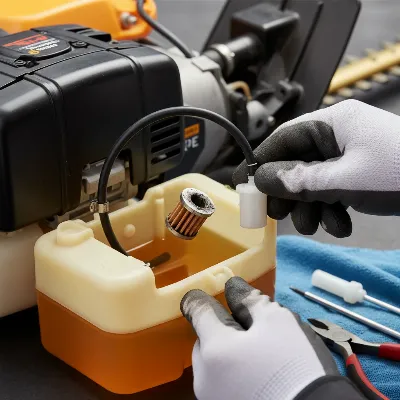 A person replacing a clogged fuel filter in a gas hedge trimmer fuel tank.
Fuel Lines
While you’re inspecting the fuel filter, also check the fuel lines themselves. Look for any cracks, kinks, or signs of dry rot. Ensure all connections are secure and that the lines aren’t pinched. Blockages can also occur within the lines. If you notice any damage, replace the affected fuel line segments.
Primer Bulb
The primer bulb’s job is to draw fuel from the tank into the carburetor, ensuring a rich fuel mixture for starting. Press the primer bulb several times. You should see fuel flowing through the clear lines and the bulb filling completely. If the bulb doesn’t fill with fuel, is cracked, or doesn’t spring back, it might be faulty, or there could be an issue upstream in the fuel lines or filter.
Step 2: Ignition System Diagnostics
Even with perfect fuel and air, an engine won’t start without a strong spark. The ignition system is responsible for creating this crucial spark.
Spark Plug Inspection
The spark plug ignites the air-fuel mixture. A dirty, fouled, or damaged spark plug can prevent your hedge trimmer from starting.
- Locate and Remove: First, disconnect the spark plug boot (the thick rubber cable) from the top of the spark plug. Use a spark plug wrench to unscrew the plug counter-clockwise.
- Inspect Condition: Examine the tip of the spark plug. A healthy plug will have a light brownish or grayish appearance. If it’s black and oily (fouled), white and chalky (running too lean), or has damaged electrodes, it needs attention. Heavy carbon buildup prevents a strong spark.
- Clean or Replace: If the plug is dirty but otherwise intact, gently clean the electrodes with a wire brush or fine-grit sandpaper. Always check the gap between the electrodes with a feeler gauge and adjust it if necessary (refer to your owner’s manual for the correct gap). If the plug is damaged or heavily fouled, simply replace it. Replacing your spark plug annually is a good preventative measure.
Testing for Spark
To confirm your ignition system is working, you need to test for spark.
- Method 1 (Grounding): Reconnect the spark plug to its boot. Hold the metal body of the spark plug firmly against a clean, unpainted metal part of the engine (ensuring it’s grounded). Have a helper pull the starter cord vigorously while you watch the gap between the electrodes. You should see a strong, blue-white spark.
- Method 2 (Spark Tester): For a safer and more reliable test, use an inline spark tester. Connect one end to the spark plug boot and the other to the spark plug itself. Pull the starter cord; if the tester light flashes, you have spark.
If there’s no spark, even with a new plug, the issue might lie with the ignition coil or the kill switch. These are more advanced problems that might require professional diagnosis, though you can check the kill switch by ensuring it’s in the “ON” position and testing its continuity with an ohmmeter if you’re comfortable.
Step 3: Air Intake and Exhaust System
Proper airflow is essential for combustion. Just like the fuel system, the air intake and exhaust can become restricted.
Air Filter
A dirty air filter chokes the engine by limiting the air supply, leading to a fuel-rich mixture that prevents starting.
- Locate and Inspect: The air filter is typically housed in a plastic cover near the carburetor. Remove the cover and pull out the filter.
- Clean or Replace: Most gas hedge trimmers use a foam or paper air filter. If it’s a foam filter, clean it with warm, soapy water, rinse thoroughly, let it dry completely, and then lightly oil it with a few drops of engine oil before reinstalling. Paper filters cannot be cleaned and must be replaced if dirty. A visibly dirty or clogged air filter should always be replaced.
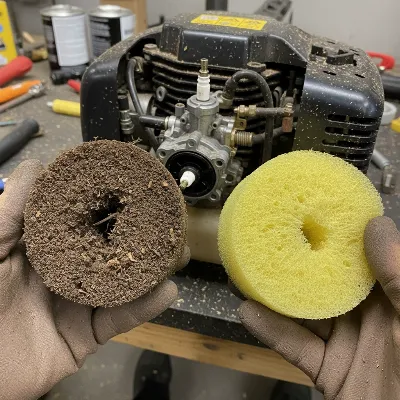 A person inspecting a dirty air filter from a gas hedge trimmer, contrasting it with a clean, new filter.
Spark Arrestor
The spark arrestor is a small mesh screen located in the muffler that prevents hot sparks from exiting the engine. Over time, carbon buildup (soot) can clog this screen, restricting exhaust flow and preventing the engine from starting or running properly.
- Locate and Remove: You’ll usually find the spark arrestor behind a small cover on the muffler. Remove the cover and carefully extract the screen.
- Clean: Use a wire brush to thoroughly clean off any carbon deposits. If it’s heavily clogged and cannot be cleaned, replace it.
Advanced Checks and Repairs
If the basic checks don’t resolve the issue, you might need to delve into more complex components.
Carburetor Cleaning/Rebuild
When old fuel sits in a hedge trimmer for extended periods, it can leave behind gummy deposits that clog the tiny passages and jets within the carburetor. If cleaning with a carburetor cleaner spray doesn’t work, a full disassembly and cleaning or a carburetor rebuild might be necessary. This involves carefully taking the carburetor apart, cleaning all internal components, and potentially replacing gaskets and diaphragms with a repair kit. If the carburetor is severely damaged or corroded, replacement may be the only option. This step requires mechanical aptitude and attention to detail.
“A clogged carburetor is arguably the most common culprit for gas hedge trimmers that won’t start after sitting. The fuel system needs to be pristine for reliable operation.” – Admin, ReviewsRain.com
Recoil Starter
If you pull the starter rope and it feels loose, doesn’t engage the engine, or doesn’t recoil properly, the problem lies with the recoil starter assembly. This could be a broken rewind spring, a damaged pulley, or a faulty engagement mechanism. While individual parts can often be replaced, it’s sometimes easier and more reliable to replace the entire recoil starter assembly.
Hot Start Procedure
Sometimes, a hedge trimmer that runs perfectly when cold refuses to restart when hot. Many manufacturers recommend a specific “hot start” procedure:
- Ensure the choke is OFF.
- Hold the throttle wide open.
- Pull the starter rope briskly several times until the engine fires.
- You may need to pump the primer bulb a few times before attempting to start, even when hot, depending on the model.
Safety First: Essential Precautions
Working with small gas engines and sharp blades requires utmost caution.
- Disconnect Spark Plug: Always disconnect the spark plug wire before performing any maintenance or inspection to prevent accidental starting.
- Wear PPE: Protect your eyes with safety glasses and your hands with sturdy gloves.
- Ventilation: Work in a well-ventilated area, especially when handling fuel or carburetor cleaner, which emit strong fumes.
- Fuel Handling: Handle gasoline with care. Avoid spills, do not smoke, and keep open flames away from the work area. Use an approved container for draining old fuel.
- Sharp Blades: The hedge trimmer blades are extremely sharp. Always be mindful of their position and keep your hands clear.
Expert Tips for Prevention
Prevention is always better than cure. Following these simple tips will dramatically reduce your chances of encountering starting issues with your gas hedge trimmer.
- Fresh Fuel is Key: Always use fresh gasoline, mixed accurately with the correct two-stroke oil ratio for your trimmer.
- Fuel Stabilizer: Add a fuel stabilizer to every tank of fuel, especially if the trimmer will sit unused for more than a few weeks. This prevents fuel degradation and carburetor gumming.
- Proper Storage: Before long-term storage (e.g., over winter), either run the fuel tank dry or drain it and run the carburetor dry. Alternatively, use fuel stabilized with an additive and ensure the fuel system is completely filled with treated fuel, then store in a cool, dry place.
- Regular Cleaning: Periodically clean or replace the air filter and clean the spark plug. A clean engine runs more efficiently and reliably.
- Check Spark Arrestor: Clean the spark arrestor annually, or more frequently if you notice reduced engine power or starting difficulties.
Conclusion
Getting your gas hedge trimmer to start reliably doesn’t have to be a mystery. By systematically checking the fuel, ignition, and air/exhaust systems, you can diagnose and often fix common problems yourself. Most issues stem from stale fuel, a dirty spark plug, or clogged filters—all relatively easy DIY fixes. Remember, safety is paramount, so always disconnect the spark plug before working on your machine and wear appropriate protective gear. With a bit of patience and the right approach, you can restore your gas hedge trimmer to its full glory, ensuring your hedges stay perfectly sculpted. What’s the one maintenance task you always overlook, and how has it impacted your hedge trimmer’s performance?
Câu Hỏi Thường Gặp
Why does my gas hedge trimmer only run with the choke on?
If your hedge trimmer only runs with the choke on, it’s a strong indicator that the engine is running too lean, meaning it’s getting too much air and not enough fuel. This is most commonly caused by a clogged carburetor or a restricted fuel filter, which prevents sufficient fuel from reaching the engine. Cleaning or replacing these components usually resolves the issue.
How often should I change the spark plug in my gas hedge trimmer?
It’s generally recommended to inspect your spark plug annually and replace it if you notice significant wear, damage, or heavy carbon buildup. Even if it looks okay, replacing it every one to two years is a good preventative measure to ensure reliable starting and optimal engine performance.
Can I use car fuel in my gas hedge trimmer?
No, you should not use regular car fuel (especially pump gas with ethanol) in a two-stroke gas hedge trimmer. Two-stroke engines require a specific gasoline-to-oil mixture, and ethanol in pump gas can damage the fuel system components of small engines. Always use fresh, high-octane, ethanol-free gasoline mixed with the correct two-stroke oil.
What is a fuel stabilizer, and do I need it for my hedge trimmer?
A fuel stabilizer is an additive that prevents gasoline from degrading and forming varnish or gum deposits when stored for extended periods. Yes, it’s highly recommended for your Hedge Trimmer, particularly if you don’t use it frequently or for seasonal storage, as it helps prevent carburetor clogging and ensures easier starting after periods of inactivity.
How do I know if my carburetor needs cleaning?
Common signs that your carburetor needs cleaning include difficulty starting (especially after storage), the engine stalling frequently, running rough, surging, or only running with the choke engaged. These symptoms indicate that fuel flow through the carburetor’s small passages is restricted, often by sticky residue from old fuel.