The sight of smoke billowing from your hedge trimmer can be alarming and concerning, often bringing your gardening tasks to an abrupt halt. A smoking hedge trimmer is a clear sign that something isn’t right, and continuing to operate it could lead to further damage or even pose a safety risk. This guide will delve into the most common reasons why your trusty hedge trimmer might be emitting smoke, whether it’s an electric, battery-powered, or gas model. We’ll then provide five quick, actionable fixes you can implement at home to resolve the issue, along with essential prevention tips to keep your hedge trimmer running smoothly and safely for years to come.
Understanding Why Your Hedge Trimmer Might Be Smoking
When a hedge trimmer starts to smoke, it’s typically an indicator of excessive heat build-up or an issue with its operational components. This overheating can stem from various sources, including increased friction, electrical faults, or problems within the fuel system of gas-powered models. The type of smoke—its color and smell—can often provide clues about the underlying problem, guiding you toward an effective solution. Addressing the smoke promptly is crucial to prevent minor issues from escalating into significant repairs or complete tool failure.
Common Causes of a Smoking Hedge Trimmer
Identifying the source of the smoke is the first step toward a solution. Different hedge trimmer types often exhibit distinct smoking symptoms related to their power source and mechanics.
Overheating Blades or Engine
|
Our Picks for the Best Hedge Trimmer in 2026
As an Amazon Associate I earn from qualifying purchases.
|
||
| Num | Product | Action |
|---|---|---|
| 1 | Electric Hedge Trimmer Cordless Compatible with DEWALT 20V MAX Battery, 20-Inch Cordless Hedge Trimmer, Brushless Bush Trimmer, 2/3'' Cutting Capacity, Lightweight & Rotatable Handle(No Battery) |

|
| 2 | BLACK+DECKER 18-Inch Electric Hedge Trimmer (BEHT200) |
|
| 3 | BLACK+DECKER Electric Hedge Trimmer, 17-Inch Corded 3.2 Amp, Dual Action, Reduced Vibration, Cleaner Cut, Lightweight, 3800 Cuts per Min (BEHT150) |
|
| 4 | BLACK+DECKER 20V MAX Cordless Hedge Trimmer, Battery and Charger Included, 22 Inch Steel Blade Lightweight Bush Trimmer, Soft Grip, Less Vibration (LHT2220) |
|
| 5 | Hedge Trimmer for Dw 20V Battery,Hedge Trimmer Cordless with 22'' Dual-Action Blade and 3/5'' Cutting Capacity,1600RPM& Safety Lock (Battery Not Included) |
|
| 6 | WORX 22" Cordless Hedge Trimmer, Electric Hedge Trimmer with Dual-Action Blades, Lightweight Bush Trimmer with 4.4 LBS, Battery & Charger Not Included, WG261.9 |
|
| 7 | SEESII 20V Hedge Trimmer Cordless: 20" Electric Bush Trimmer - Dual 4.0Ah Batteries, Dual-Action Blade, 0.71" Blade Gap, Rotatable Handle, Lightweight Handheld Grass Shrub Clipper for Garden Yard |
|
| 8 | Hedge Trimmer for Dewalt 20V Battery, Cordless Hedge Trimmer with 22'' Dual-Action Blade, 1600RPM, 3/5'' Cutting Width, Rotating Handle & Dual Switch Design (Battery Not Included) (Yellow) |
|
| 9 | Cordless Hedge Trimmer 22-Inch Compatible with DEWALT 20V MAX Battery, Electric Hedge Trimmer Cordless, Bush Trimmers for Garden, Battery Powered Hedge Trimmers (Tool Only) |
|
| 10 | BLACK+DECKER Electric Hedge Trimmer, 16-Inch 3.0 Amp Compact Corded Power Hedge Trimmer (BEHT100) |
|
One of the most frequent culprits behind a smoking hedge trimmer is excessive heat generated by the blades or the engine. Dull, bent, or damaged blades require the motor to work much harder to cut through foliage, creating increased friction and heat. Similarly, an accumulation of sap, resin, and debris on the blades can bind them together, forcing the motor to strain and overheat. Overworking the machine by attempting to cut branches thicker than its capacity also puts immense stress on the engine, leading to overheating and potential smoke emission. Blocked air vents on the engine housing can prevent proper cooling, exacerbating overheating issues.
Electrical Issues (Electric & Battery Models)
For electric and battery-powered hedge trimmers, smoke often points to an electrical problem. Overloading the motor, perhaps by trying to cut dense material, can cause it to overheat, burning the insulation around the motor windings and producing white smoke and a distinctive burning smell. Faulty wiring, a failing power transistor, or a blown capacitor within the circuitry can also generate significant heat, resulting in smoke. In cordless models, an overheating or failing battery pack can also be a source of smoke, indicating a potential internal cell failure. Using an inadequate or excessively long extension cord for corded electric models can restrict the power supply, forcing the motor to work harder and overheat.
Fuel/Oil Problems (Gas Models)
Gas-powered hedge trimmers have their own set of potential issues related to their fuel system. An incorrect fuel-oil mixture, particularly one with too much oil, can lead to incomplete combustion and excessive light grey or blue smoke from the exhaust. Old or stale fuel, which degrades over time, can also burn inefficiently and cause smoking. A dirty or restricted air filter starves the engine of oxygen, leading to a rich fuel mixture and black smoke, or it can cause the engine to bog down and stall. Clogged exhaust ports or silencers can trap hot gases, causing the engine to run hotter and smoke. Sometimes, a leaking or burning engine oil can also be responsible for the smoke.
Damaged Components
Beyond the more common issues, internal mechanical damage can also result in smoke. Worn gears or bearings within the cutting mechanism or gearbox can create excessive friction and heat as they grind against each other. A loose or damaged spark plug in a gas model can lead to incomplete combustion, contributing to smoke from the exhaust. These issues often accompany unusual noises, such as grinding or clattering, before smoke becomes apparent.
5 Quick Fixes You Can Try at Home
Before considering professional repair, several common issues can be resolved with a bit of DIY effort. Always ensure your hedge trimmer is switched off and unplugged (or battery removed for cordless models) before performing any maintenance.
1. Clean and Sharpen Blades
Dull or dirty blades are a prime cause of overheating. Begin by thoroughly cleaning your hedge trimmer blades. Remove all sap, resin, and debris using a stiff brush and a suitable blade cleaner. Once clean, inspect the blades for nicks or dull spots. Use a flat file or sharpening stone to sharpen each cutting edge, always filing in one direction, away from your body, and maintaining the original angle. After sharpening, use a whetstone to remove any burrs from the underside of the blades. Finally, apply a light coat of lubricant or blade oil to reduce friction and protect against rust.
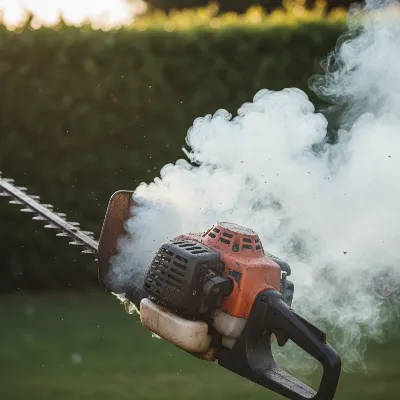 A smoking hedge trimmer with dense white smoke emanating from the engine area, surrounded by green foliage, conveying an urgent problem.
2. Clear Debris and Vents
Overheating can also occur when debris blocks cooling airflow. Carefully inspect the hedge trimmer’s engine housing, particularly around the motor and air intake vents, for any accumulated leaves, twigs, or dirt. Use a brush or compressed air to clear these obstructions. For gas models, check and clean the air filter, replacing it if it appears heavily soiled or damaged. Ensure the exhaust port and silencer are also clear of any blockages. This allows the engine to breathe and cool efficiently, reducing strain and heat.
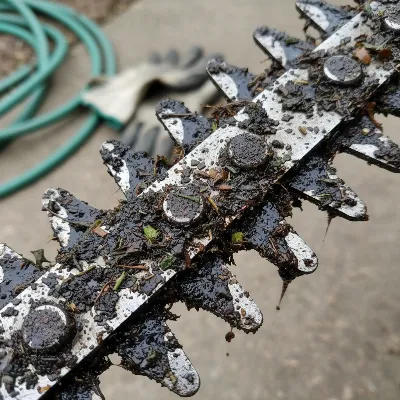 Close-up of dull, sticky, and dirty hedge trimmer blades covered in sap and debris, showing wear and tear.
3. Check Fuel and Oil (Gas Models)
If you have a gas hedge trimmer, fuel issues are often the culprit. First, ensure you are using the correct fuel-oil mixture (e.g., 50:1 for most 2-stroke engines) and that the fuel is fresh, ideally less than 30 days old. Drain any old or contaminated fuel and refill with a fresh, properly mixed batch. Check the fuel filter and fuel lines for any signs of blockage, cracks, or deterioration. If the engine is flooded, follow your manual’s instructions for clearing it, usually involving removing the spark plug and allowing the cylinder to dry.
 A person wearing protective gloves and glasses, carefully sharpening the blades of a hedge trimmer with a flat file, demonstrating proper technique.
4. Inspect for Electrical Faults (Electric/Battery Models)
For electric and battery-powered units, carefully inspect the power cord for any cuts, frays, or damage. Ensure the plug connections are secure and that you’re using an appropriately gauged extension cord, especially for longer runs. For battery models, check the battery pack for signs of swelling, excessive heat, or damage. If you notice a burning smell directly from the motor compartment or observe any melting, it’s best to cease use immediately. While simple cord checks are DIY-friendly, internal electrical component failures often require professional diagnosis and repair due to safety risks.
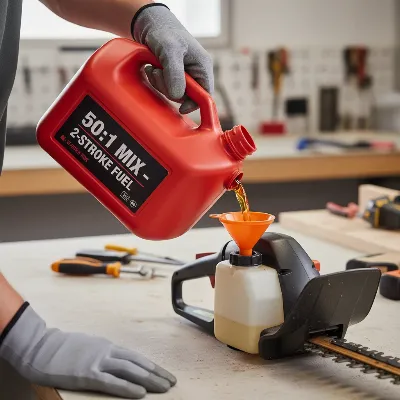 A person inspecting the fuel mixture and level in a gas-powered hedge trimmer's tank, with fuel cans nearby, illustrating fuel maintenance.
5. Allow for Cooling and Reduce Workload
Sometimes, the simplest fix is to give your hedge trimmer a break. If you’ve been cutting continuously or tackling very thick branches, the machine may simply be overworked and overheating. Turn off the trimmer, unplug it, and allow it to cool down completely. When you resume, try to work in shorter bursts, allowing the machine to rest between sections. Avoid forcing the blades through overly thick material; use loppers or pruning shears for larger stems that exceed your trimmer’s capacity. This prevents the motor from straining and reduces heat buildup.
 A well-maintained and clean hedge trimmer with shiny, lubricated blades, ready for use, emphasizing proper care.
How to Prevent Your Hedge Trimmer from Smoking
Proactive maintenance is key to preventing your hedge trimmer from smoking and ensuring its longevity. Consistent care can save you from unexpected breakdowns and costly repairs.
- Regular Cleaning: After every use, clean your hedge trimmer blades to remove sap, resin, and debris. This prevents buildup that can cause friction and motor strain.
- Blade Lubrication: Regularly lubricate the blades with a specialized blade oil or spray. This reduces metal-on-metal friction, ensures smooth operation, and protects against rust.
- Sharpen Blades Periodically: Keep your blades sharp. Dull blades make the motor work harder, increasing heat. Sharpen them regularly, depending on usage, or at least once a season.
- Inspect Air Filters (Gas Models): For gas trimmers, routinely check and clean the air filter to ensure proper engine ventilation and prevent a rich fuel mixture. Replace it as needed.
- Use Fresh, Correct Fuel (Gas Models): Always use fresh fuel mixed according to the manufacturer’s specifications. Old or incorrectly mixed fuel can lead to poor combustion and smoking.
- Respect Capacity Limits: Avoid cutting branches thicker than your hedge trimmer is designed to handle. Using the right tool for the job prevents motor overload and overheating.
- Proper Extension Cords (Electric Models): If using a corded electric trimmer, ensure your extension cord is of the correct gauge and length to provide adequate power without causing voltage drop and overheating.
- Store Properly: Store your hedge trimmer in a clean, dry place. For gas models, drain the fuel tank before extended storage or use a fuel stabilizer. Remove batteries from cordless models during long storage periods.
When to Seek Professional Help
While many smoking issues can be resolved at home, there are situations where professional intervention is necessary. If your hedge trimmer continues to smoke after you’ve tried the common fixes, or if you observe any of the following, it’s time to consult an authorized service technician:
- Persistent Smoke: Smoke continues to emit even after cleaning, sharpening, and checking fuel/electrical components.
- Burning Smell with No Visible Fix: A strong, acrid burning smell, especially from the motor housing, often indicates internal electrical component failure that requires specialized tools and expertise to diagnose and repair safely.
- Loud or Unusual Noises: Grinding, clattering, or persistent knocking sounds combined with smoke often suggest significant internal mechanical damage to gears, bearings, or the engine itself.
- Physical Damage: Any signs of melting plastic, exposed wires, or significant damage to the engine or battery housing warrant immediate professional inspection.
- Fuel System Complications: If you suspect a complex carburetor issue, persistent fuel leaks, or other deep-seated fuel system problems that you are not comfortable addressing.
Attempting to fix complex issues yourself can be dangerous and may void your warranty. Professional technicians have the diagnostic tools and expertise to safely and effectively repair your hedge trimmer, ensuring it’s safe to use.
Conclusion
Witnessing your hedge trimmer smoke can be concerning, but understanding the common causes and knowing how to address them can save you time and money. From dull blades and debris buildup to incorrect fuel mixtures and electrical overloads, most smoking incidents point to issues that can often be fixed at home with a bit of troubleshooting. Regular cleaning, proper lubrication, and adhering to the manufacturer’s guidelines for fuel and usage are your best defense against a smoking hedge trimmer. By taking proactive steps and knowing when to seek professional help, you can ensure your hedge trimmer remains a reliable and efficient tool for maintaining a pristine garden. What preventative measures will you implement today to keep your hedge trimmer smoke-free?
Frequently Asked Questions
Is it normal for a hedge trimmer to smoke a little?
No, it is generally not normal for a hedge trimmer to emit smoke. Even light smoke indicates an issue, such as excessive friction, an incorrect fuel mixture in gas models, or an electrical problem in electric units. It’s always best to investigate the cause immediately to prevent further damage or safety hazards.
What does white smoke from a hedge trimmer mean?
White smoke can indicate several issues. In gas hedge trimmers, it often suggests an incorrect fuel-oil mixture (too much oil) or old, contaminated fuel, leading to incomplete combustion. For electric and battery-powered models, white smoke usually signals an overheating electric motor, where the windings’ insulation is burning off, indicating a serious electrical fault or overload.
Can I use a smoking hedge trimmer?
No, you should immediately stop using a hedge trimmer if it starts smoking. Continuing to operate a smoking hedge trimmer can lead to more severe damage, potential fire hazards, or electric shock. Turn it off, unplug it (or remove the battery), and allow it to cool before attempting any troubleshooting.
How can I prevent my hedge trimmer blades from getting dull quickly?
To prevent blades from dulling quickly, clean them after every use to remove sap and debris. Lubricate the blades regularly to reduce friction, and avoid cutting branches thicker than the trimmer’s recommended capacity. Sharpening them periodically also helps maintain their edge.
What is the correct fuel-oil mix for a 2-stroke gas hedge trimmer?
The correct fuel-oil mixture for a 2-stroke gas hedge trimmer is typically 50:1 (50 parts unleaded gasoline to 1 part 2-stroke oil), but this can vary by manufacturer. Always consult your Hedge Trimmer’s owner’s manual for the precise recommended ratio to ensure proper engine lubrication and prevent smoking.