Maintaining a pristine garden, especially when faced with stubborn, overgrown hedges and thick branches, can be a daunting task. While a regular hedge trimmer might handle light foliage, tackling dense, woody growth demands a specialized tool engineered for superior power and cutting capacity. Choosing the right hedge trimmer for thick branches in 2026 means looking beyond basic models to those designed to slice through challenging vegetation with efficiency and ease. This comprehensive guide will equip you with the knowledge to select a powerhouse hedge trimmer, ensuring your landscaping efforts are both effective and effortless.
Understanding Hedge Trimmers for Demanding Tasks
A hedge trimmer is an essential garden tool equipped with reciprocating blades that cut through foliage to shape and maintain hedges and shrubs. For tasks involving thick branches, their core function remains the same, but the emphasis shifts dramatically to raw cutting power and robust design. These heavy-duty trimmers are specifically engineered to sever larger, woodier stems that would jam or damage less powerful models, making them indispensable for tackling overgrown areas or maintaining dense privacy hedges.
Historically, gardening relied on manual shears for hedge trimming, a labor-intensive process ill-suited for thick branches. The advent of gasoline-powered trimmers brought significant power, albeit with associated noise, fumes, and maintenance. However, the landscaping world has seen a substantial shift towards advanced battery-powered cordless models. These modern marvels offer comparable power to many gas units, combined with the convenience of portability, reduced noise, and zero emissions, making them the preferred choice for most homeowners and even many professionals handling tough jobs. For explore our hedge trimmer reviews on this site.
When considering hedge trimmers for thick branches, the primary types—electric, battery, and gas—each offer distinct advantages. Battery-powered units are now at the forefront, with high-voltage systems delivering impressive torque and cutting capacity. Gas models continue to be the workhorses for extreme tasks or extended runtimes without recharging. Corded electric trimmers, while generally less powerful for very thick branches, can feature specialized “powersaw” tips for occasional heavier cuts.
Detailed Classification: Powering Through Dense Growth
The effectiveness of a hedge trimmer on thick branches largely depends on its power source and blade design. Understanding these classifications is key to making an informed decision for your demanding trimming needs.
By Power Source
Cordless/Battery-Powered Hedge Trimmers have become the gold standard for versatility and power, especially models designed for challenging jobs. They offer unparalleled freedom of movement without the hassle of cords or the fumes of gasoline. Modern battery technology, often seen in 36V, 40V, or even 60V and 80V systems, coupled with efficient brushless motors, provides ample power to cut through surprisingly thick stems. The main advantage is portability, while the primary consideration is battery runtime and recharge cycles. For thick branches, look for higher voltage and amp-hour (Ah) ratings to ensure sustained power and longer operation.
Gas-Powered Hedge Trimmers remain the champions for raw, untethered power, making them ideal for very large properties with extensive, dense, and woody hedges. They are typically more robust, with larger engines capable of slicing through the toughest branches without hesitation. However, their significant drawbacks include higher noise levels, exhaust fumes, increased weight, and more involved maintenance routines (fuel mixing, spark plug changes, air filter cleaning). Despite these, for maximum power and continuous operation without battery constraints, gas trimmers are still a viable option for professionals or homeowners with exceptionally demanding tasks.
Corded Electric Hedge Trimmers offer continuous power as long as they are plugged into an outlet, eliminating battery limitations or fuel concerns. They are generally lighter and more affordable than their gas or high-end battery counterparts. While many standard corded models may struggle with very thick branches, some specialized corded trimmers incorporate a “powersaw tip” feature. This allows users to tackle individual branches up to 1.5 inches thick that would otherwise jam the main blade, offering a budget-friendly option for occasional heavier cuts, though still constrained by cord length.
By Blade Design
The blade design, particularly the tooth gap and action, is paramount when dealing with thick branches.
Tooth Gap / Cutting Capacity refers to the maximum diameter of a branch that the trimmer can effectively cut. For thick branches, a larger tooth gap is critical. Standard hedge trimmers might have a cutting capacity of 0.5 to 0.75 inches, but for truly thick branches, you need models with a capacity of 1 inch or more, with some premium tools reaching 1.25 inches. This specification directly indicates the machine’s ability to grip and sever woodier stems without jamming or tearing.
Dual-Action Blades are now standard on almost all but the most basic hedge trimmers. This design features two blades that move independently and reciprocate, creating a scissor-like cutting motion. This action results in cleaner cuts and significantly reduces vibration compared to single-action blades, making the tool more comfortable to use over extended periods, which is crucial when tackling tough, dense hedges. The clean cuts also promote healthier plant regrowth.
Single-Sided vs. Double-Sided Blades also impact efficiency. Double-sided blades, with cutting teeth on both edges, allow for cutting in both directions and are generally more versatile for shaping various hedge types. Single-sided blades, on the other hand, are often found on longer trimmers and can be effective for straight runs, as one side rests against the hedge for stability. For dense, intricate work with thick branches, double-sided blades often provide more maneuverability and cutting angles.
Comparing Top-Tier Hedge Trimmers for Thick Branches
When selecting a hedge trimmer for thick branches, key specifications like cutting capacity, power, and handling are paramount. The following table provides a comparative overview of some of the leading models ideal for heavy-duty tasks in 2026.
| Feature | Milwaukee M18 Fuel 24-Inch 3033-20 | Ego Power+ 26-inch HT2601 | Greenworks Pro Ultrapower 60V 26-Inch | Husqvarna Hedge Master 320iHD60 | RYOBI 40-Volt 24-Inch RY40HG01K |
|---|---|---|---|---|---|
| Power Source | 18V Battery | 56V Battery | 60V Battery | 36V Battery | 40V Battery |
| Cutting Capacity | Up to 1.25 inches | Up to 1.2 inches | Up to 1.1 inches | Up to 1 inch | Up to 1 inch |
| Blade Length | 24 inches | 26 inches | 26 inches | 25 inches | 23.5 inches |
| SPM/Cuts/Min | 3,200 SPM | 3,400 SPM | 3,200 CPM | 3,800 SPM (Boost), 2,800 (Normal) | 3,200 SPM |
| Weight (w/Battery) | Nearly 12 pounds | 9 pounds, 12.7 ounces | 10.1 pounds | Just over 11 pounds | 7 pounds, 4 ounces |
| Key Features | Rotating handle (5 positions), durable, high SPM | Long reach, fast recharge, rotating handle (5 positions), carbon fiber rail | Powerful motor, long bar, rotatable handle (3 positions) | Triple handle (3 triggers), reverse button, boost mode, sweeper | Balanced, lightweight, good value, sweeper |
| Price Range | Mid to High | Mid to High | Mid-Range | High | Mid-Range |
The Ultimate Buying Guide: Choosing Your Powerhouse Hedge Trimmer
Selecting a hedge trimmer for thick branches requires a strategic approach, focusing on performance, durability, and ergonomic design tailored to challenging tasks.
Assessing Your Needs for Thick Branches
Before anything else, accurately gauge the nature of your trimming work. Branch thickness and density are the most critical factors. If you’re routinely dealing with woody stems exceeding 1 inch in diameter, prioritize models with a cutting capacity of 1.2 inches or more. Consider the type of wood; some species are tougher than others, demanding more robust power. The size and area of your hedges also play a role. For extensive or tall hedges, a longer blade (24-26 inches) will increase efficiency, while a powerful battery system with extended runtime is essential for covering large areas without interruption. Finally, frequency of use influences your choice; if you plan on heavy, regular use, investing in a durable, high-performance model with a strong warranty will pay off in the long run.
Budgeting for Performance
Hedge trimmers capable of tackling thick branches often fall into a higher price bracket than basic models. Price versus power is a crucial consideration. Generally, higher voltage battery systems or commercial-grade gas engines will cost more but deliver the necessary performance for demanding jobs. Remember that the initial cost often includes the tool, battery, and charger (a “kit”). However, many brands offer “bare tools” for a lower price, assuming you already own compatible batteries from their ecosystem. Factor in the cost of additional batteries if your workload exceeds the runtime of a single pack, as extra batteries can be a significant investment but extend your work time considerably.
Essential Features for Tough Trimming Jobs
When facing thick branches, certain features transition from “nice-to-have” to “must-have”:
- High Cutting Capacity (Tooth Gap): As emphasized, a minimum of 1 inch is recommended, with 1.1 to 1.25 inches being ideal for truly thick and woody stems. This ensures the blades can cleanly sever the material without getting stuck or damaging the plant.
- Robust Motor & Power: Look for higher voltage (40V-60V+) in battery models and powerful engines (20cc+) in gas trimmers. Brushless motors in cordless units are highly beneficial, offering greater efficiency, increased torque, and a longer tool lifespan compared to brushed motors.
- Blade Length & Quality: A blade length of 24-26 inches provides extended reach and allows you to cover more area per pass. The blades themselves should be made from hardened steel, typically dual-action, and ideally feature three cutting edges per tooth for superior cutting performance and sharpness retention.
- Ergonomics & Weight Balance: Powerful trimmers can be heavy. Features like rotating rear handles (allowing you to adjust your grip for vertical or angled cuts), anti-vibration systems, and good overall weight balance significantly reduce fatigue during long or awkward trimming sessions.
- Safety & Convenience: Prioritize safety features such as two-hand operation requirements, handguards, and tip guards (to protect blades from striking hard surfaces). Convenience features like an anti-jam or reverse function (to clear stuck branches) and a debris sweeper (to clear clippings as you cut) greatly enhance the user experience.
“For tackling thick, woody branches, the cutting capacity, powered by a robust brushless motor, is non-negotiable. Don’t compromise on these if you want to avoid frustration and rework.” – Admin, ReviewsRain.com, Hedge Trimmer Expert
Top 5 Best Hedge Trimmers for Thick Branches in 2026
When facing dense foliage and stubborn branches, these hedge trimmers stand out in 2026 for their exceptional power, cutting capacity, and user-friendly features.
1. Milwaukee M18 Fuel 24-Inch Hedge Trimmer 3033-20 / M18 2726-20
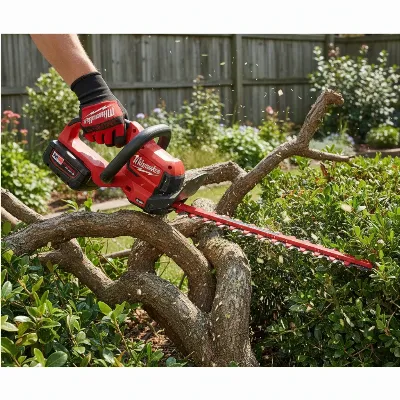 Milwaukee M18 Fuel 24-inch Hedge Trimmer cutting through thick branches with precision.
The Milwaukee M18 Fuel 24-inch Hedge Trimmer (models 3033-20 or 2726-20) is a true powerhouse, consistently praised for its aggressive cutting capabilities. With an impressive 1.25-inch cutting capacity, it’s engineered to tackle the thickest and woodiest branches that would challenge lesser tools. Its 3,200 strokes per minute (SPM) combined with a robust brushless motor ensures swift and clean cuts. The rotating handle, which locks into five positions, offers exceptional ergonomic flexibility, making it comfortable for various cutting angles and ideal for both right and left-handed users. While it’s one of the heavier options at nearly 12 pounds with an 8 Ah battery, its formidable power and durability make it a top choice for serious landscaping work.
- Pros: Highest cutting capacity for thick branches (1.25 inches), excellent power and speed (3,200 SPM), durable all-metal gear casing, versatile rotating handle, part of the extensive M18 battery system.
- Cons: Heavier than some competitors, battery sold separately.
2. Ego Power+ 26-inch Hedge Trimmer HT2600 / HT2601
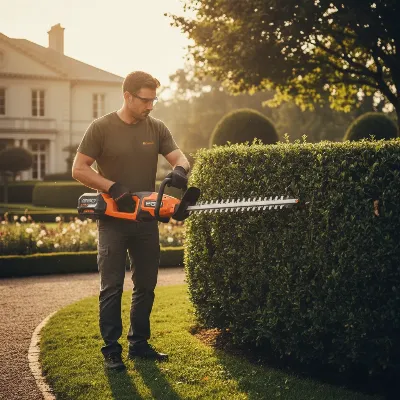 Ego Power+ 26-inch Hedge Trimmer making a long, clean cut on a dense hedge.
The Ego Power+ 26-inch Hedge Trimmer (HT2600/HT2601) excels in both reach and cutting prowess, making it ideal for large, mature hedges with thick growth. Its 1.2-inch cutting capacity and rapid 3,400 SPM rate allow it to slice through substantial stems with ease. The 26-inch blade is the longest among top picks, enabling efficient trimming of wide and tall shrubs in fewer passes. A notable feature is its carbon fiber rail, contributing to a manageable weight (under 10 pounds with battery) despite its size. The 56V battery platform is powerful and offers quick recharge times, alongside a rotating handle for ergonomic comfort.
- Pros: Excellent 1.2-inch cutting capacity, superior reach with a 26-inch blade, very fast cutting speed (3,400 SPM), effective rotating handle, quick battery recharge.
- Cons: Can be loud, weight distribution sometimes mentioned as unbalanced.
3. Greenworks Pro Ultrapower 60V, 26-Inch Electric Hedge Trimmer
 Greenworks Pro 60V Hedge Trimmer being used on a very overgrown, thick bush.
For those seeking robust power without breaking the bank, the Greenworks Pro Ultrapower 60V, 26-inch Electric Hedge Trimmer is a strong contender. Its 60-volt motor delivers impressive force, capable of cutting through branches up to 1.1 inches thick. While its 3,200 cuts per minute may not be the absolute fastest, its sheer power allows it to chew through woodier branches effectively. The 26-inch blade provides ample coverage for larger jobs. The rotatable handle is a welcome ergonomic feature, although it offers fewer positions (three) compared to some other models. It’s an excellent value proposition for tackling substantial hedges.
- Pros: Strong 1.1-inch cutting capacity with a powerful 60V motor, good blade length for large hedges, affordable price point for its performance, well-balanced despite its power.
- Cons: Slightly slower acceleration to full speed, fewer handle rotation positions.
4. Husqvarna Hedge Master 320iHD60
 Husqvarna Hedge Master 320iHD60 precisely trimming a formal, dense hedge.
The Husqvarna Hedge Master 320iHD60 lives up to its name, offering a blend of high performance and thoughtful features for heavy-duty trimming. It boasts a solid 1-inch cutting capacity and an impressive top speed of 3,800 strokes per minute in boost mode, making quick work of dense foliage. A unique “triple handle” design with multiple trigger points at 0, 90, and 180 degrees provides exceptional control and comfort at various angles. Furthermore, it features a convenient reverse button to clear jammed branches, a feature not commonly found. While on the pricier and heavier side, its superior cutting speed and ergonomic innovations make it a premium choice.
- Pros: High SPM (3,800 in boost mode), innovative triple-handle design for superior ergonomics, reverse button for clearing jams, good 1-inch cutting capacity, includes a useful sweeper attachment.
- Cons: More expensive than many alternatives, heavier tool, battery ecosystem may be less extensive.
5. RYOBI 40-Volt 24-Inch Hedge Trimmer Kit RY40HG01K
 RYOBI 40-Volt 24-inch Hedge Trimmer being used for general yard maintenance.
The RYOBI 40-Volt 24-Inch Hedge Trimmer Kit RY40HG01K strikes an excellent balance between performance and value, making it a strong option for homeowners with substantial trimming needs. It offers a respectable 1-inch cutting capacity and operates at 3,200 strokes per minute, efficiently handling a wide range of branch thicknesses. Users appreciate its excellent balance and relatively lightweight design (just over 7 pounds with battery), contributing to comfortable use even during longer tasks. While it lacks an articulating handle found on more premium models, its overall performance, inclusion of a debris sweeper, and integration into Ryobi’s extensive 40V battery ecosystem make it a highly practical choice for thick branches at a mid-range price.
- Pros: Good 1-inch cutting capacity, lightweight and well-balanced for its power, integrated debris sweeper, strong value, compatible with Ryobi’s wide 40V battery system.
- Cons: No articulating handle, can be noisier than premium cordless models.
Safe Operation and Maintenance for Longevity
Ensuring safe operation and diligent maintenance is crucial for maximizing the performance and lifespan of your heavy-duty hedge trimmer, especially when tackling thick branches.
Prioritizing Safety
Working with powerful cutting tools always demands caution. Personal Protective Equipment (PPE) is non-negotiable: always wear safety glasses to protect against flying debris, sturdy work gloves for a firm grip and hand protection, and hearing protection, especially with louder models. Before each use, perform pre-use checks: inspect the blades for damage or dullness, ensure the battery is fully charged (or fuel tank is full and mixed correctly for gas models), and clear the surrounding area of any obstacles or people. Maintain a proper technique by keeping a stable stance, using both hands on the tool, and avoiding overreaching. Let the tool do the work; forcing it can lead to kickback or injury. In case of handling jams, immediately turn off the trimmer and remove the battery (or disconnect the spark plug for gas models) before attempting to clear the obstruction. Some advanced trimmers even feature a reverse function for safely clearing jams.
Extending Tool Lifespan
Regular maintenance will keep your hedge trimmer operating at peak efficiency for years to come. After each use, thoroughly clean and lubricate the blades. Sap and debris can accumulate, causing friction and dulling. Use a stiff brush and a specialized blade cleaner or mild solvent to remove gunk, then apply a light coat of lubricant (like WD-40 or silicone spray) to prevent rust and ensure smooth operation. Sharpening the blades regularly is vital for clean cuts and to prevent the motor from overworking. You can either use a file at home, following the existing bevel of each tooth, or take it to a professional service, particularly for complex blade geometries. For battery-powered units, follow best practices for battery care and storage: store batteries in a cool, dry place, avoid extreme temperatures, and follow manufacturer guidelines for charging. Finally, general storage should always include using a blade cover to protect the teeth and prevent accidental injury, storing the tool in a dry, secure location away from children and pets.
Conclusion
Navigating the world of hedge trimmers for thick branches can seem complex, but by focusing on critical features like cutting capacity, motor power, and ergonomic design, you can confidently choose a tool that transforms challenging tasks into manageable ones. The top models of 2026, such as the Milwaukee M18 Fuel and Ego Power+, demonstrate how cordless technology now delivers the raw power needed to slice through dense, woody growth. Remember, the best hedge trimmer for you will perfectly match your specific needs, budget, and the demands of your unique landscape. With the right powerhouse tool and a commitment to safety and maintenance, you’re not just trimming hedges; you’re cultivating a garden that reflects precision and care.
What kind of thick branches are you looking to conquer in your garden this year?
Frequently Asked Questions
Can a chainsaw be used instead of a hedge trimmer for thick branches?
While a chainsaw can cut very thick branches, it is not designed for the clean, precise shaping required for hedges. Using a chainsaw on thinner stems can result in jagged cuts, damage the plant, and create an uneven finish. For optimal plant health and aesthetic results, it’s best to use a hedge trimmer for shaping and reserve a chainsaw for much larger, structural cuts.
How often should I sharpen my hedge trimmer blades?
The frequency of blade sharpening depends on how often you use your hedge trimmer and the type of material you cut. If you notice the trimmer tearing or bending branches instead of cleanly cutting them, or if it struggles more than usual, it’s time to sharpen. For regular users, an annual sharpening is often recommended, but heavy use on thick, woody material might require more frequent attention.
What is the ideal tooth gap for thick branches?
For effectively cutting thick branches, an ideal tooth gap or cutting capacity for a hedge trimmer is generally 1 inch (25mm) or greater. Models with a cutting capacity of 1.1 to 1.25 inches are excellent for very dense and woody growth. This larger gap allows the blades to firmly grasp and sever thicker stems without binding or stalling.
Are gas or battery hedge trimmers better for heavy-duty work?
For truly heavy-duty work on very large properties with extensive, mature, and thick hedges, gas hedge trimmers traditionally offer unlimited runtime and immense power. However, modern high-voltage battery-powered trimmers (40V, 60V, 80V) with brushless motors now deliver comparable power for many demanding tasks, often with better ergonomics, less noise, and zero emissions, making them a more convenient and increasingly popular choice for heavy use.
What safety gear is essential when trimming thick hedges?
When trimming thick hedges, it is essential to wear safety glasses to protect against flying debris, heavy-duty work gloves for grip and hand protection, and hearing protection to guard against noise, especially from powerful models. Long sleeves, long pants, and sturdy, closed-toe shoes are also recommended to protect against scratches and potential falling debris.
