The Stihl HS 45 Gas Hedge Trimmer is a robust and highly capable tool for homeowners managing medium to large gardens, offering a powerful 2-MIX engine, lightweight design, and effective anti-vibration system for comfortable and efficient routine hedge maintenance. This entry-level petrol hedge trimmer is specifically designed for optimal upkeep of shrubs and bushes, providing strong cutting performance and mobility without the constraints of power cords or battery charging.
An Overview of the Stihl HS 45 Gas Hedge Trimmer
The Stihl HS 45 is a staple in many home gardens, renowned as an entry-level petrol hedge trimmer designed for the optimal maintenance of shrubs and bushes. Stihl, a brand synonymous with durable outdoor power equipment, engineered the HS 45 to offer homeowners a robust solution for regular garden upkeep. It stands out in the crowded market of hedge trimmers as a gas-powered unit that prioritizes ease of handling and efficient cutting for typical residential tasks. This model is generally recommended for those with medium to large gardens who need a consistent performer without the constraints of a power cord or the charging time of a battery.
Detailed Classification of Hedge Trimmers
Understanding the various types of hedge trimmers available helps contextualize the Stihl HS 45’s place in the market. Each category offers distinct advantages and disadvantages tailored to different gardening needs.
By Power Source
Hedge trimmers primarily come in three power varieties, each suiting specific applications and user preferences.
- Gas-Powered Hedge Trimmers: Like the Stihl HS 45, these trimmers offer the most power and unrestricted mobility, making them ideal for larger properties or areas far from power outlets. They are capable of tackling tougher, thicker branches than most electric counterparts and generally provide longer run times. However, gas models are typically heavier, louder, produce emissions, and require more maintenance, including fuel mixing and engine care. They are often the preferred choice for those needing robust performance for demanding jobs.
- Corded Electric Hedge Trimmers: These are lightweight, quieter, and produce no emissions, making them excellent for smaller yards near a power source. They require minimal maintenance and are generally more affordable. The main drawback is the power cord, which limits mobility and poses a tripping hazard or risk of accidental cutting.
- Cordless (Battery-Powered) Hedge Trimmers: Offering the best of both worlds in terms of mobility and reduced noise, battery-powered trimmers are increasingly popular. They are lighter and quieter than gas models and free from cords, but their run time is limited by battery life, and they may lack the sheer power for very thick growth. Battery cost and charging time are also factors to consider.
By Blade Design
The design of a hedge trimmer’s blade significantly impacts its cutting efficiency and suitability for different tasks.
- Double-Sided Blades: The Stihl HS 45 features double-sided reciprocating blades, which cut on both sides simultaneously. This design is highly effective for shaping hedges, allowing users to cut in both directions (left-to-right and right-to-left) without repositioning the trimmer. This flexibility and balanced cutting capability make them excellent for intricate shaping and general maintenance, though they may require more careful handling due to cutting action on both sides.
- Single-Sided Blades: These blades have cutting teeth on only one side. They are often found on longer bar models designed for straight sections of hedges, where the primary goal is to trim long, level lines efficiently. While potentially safer due to the single cutting edge, they are less versatile for detailed shaping compared to double-sided blades.
Stihl HS 45 Performance Tested: A Closer Look
When evaluating the Stihl HS 45, its performance characteristics reveal why it remains a popular choice for homeowners. It’s a tool built for consistent, effective results in typical garden settings.
Cutting Power and Efficiency
The HS 45 is powered by a 27.2 cm³ (1 HP) Stihl 2-MIX engine, providing ample power for trimming most residential hedges and shrubs. With a tooth spacing of 30mm, it effectively cuts through common hedge material, often described by users as cutting “like butter” for medium-density branches. The dual-reciprocating blades, available in 18-inch (45 cm) or 24-inch (60 cm) lengths, ensure fast and clean cuts, crucial for maintaining healthy plant growth and a tidy appearance. This power-to-weight ratio is optimized for tasks such as shaping privet, conifer, and other ornamental hedges.
Ease of Use
One of the most praised aspects of the Stihl HS 45 is its surprisingly lightweight design for a gas-powered unit, weighing approximately 4.7 kg (10.4-11 lbs). This makes a significant difference during extended use, reducing operator fatigue, especially when trimming taller hedges or working overhead. Stihl’s anti-vibration system is another comfort-enhancing feature, effectively dampening the jarring vibrations typically associated with gas engines, thus making longer work sessions much more pleasant. The ergonomic design and large, comfortable handles also contribute to a secure and balanced grip, allowing for precise control.
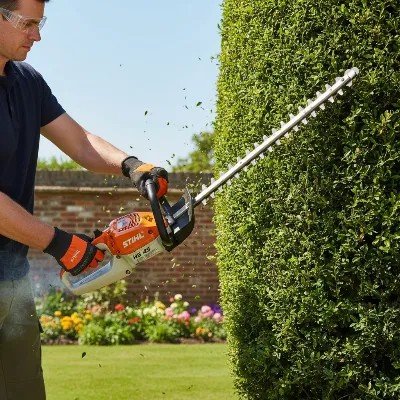 A person using a Stihl HS 45 gas hedge trimmer to trim a dense green hedge in a garden setting, viewed from a slight low angle with bright natural light, realistic style.
Starting and Reliability
The Stihl HS 45 incorporates features designed for easier starting, including a manual fuel pump (purger) and an electronic ignition system. These aim to reduce the number of pulls needed to get the engine running, particularly after longer periods of inactivity. Many users report the machine starts reliably after a few pulls, appreciating the convenience. However, some long-term users have noted that the carburetor can occasionally be “moody” after several months of use, sometimes bogging down at full throttle or stalling at idle, potentially requiring minor adjustments. Despite these occasional quirks, its overall durability and dependable operation for homeowners have earned it a reputation as a garden workhorse.
Fuel Economy and Noise Levels
Equipped with Stihl’s 2-MIX engine technology, the HS 45 is designed to be fuel-efficient, with users often reporting a decent run time of around 45 minutes on a small tank of fuel. This system also helps to reduce exhaust emissions. However, like most gas-powered tools, the HS 45 is notably loud, with a sound pressure level of 97 dB(A). Proper ear protection is absolutely essential during operation to prevent hearing damage and for overall comfort.
Buying Guide: Choosing Your Ideal Hedge Trimmer
Selecting the right hedge trimmer involves more than just picking a brand; it’s about matching the tool to your specific gardening environment and personal preferences.
Assess Your Needs
- Hedge Size and Type: Consider the total area of hedges you need to trim and the thickness and density of the branches. The Stihl HS 45 is an excellent choice for medium to large residential properties with typical ornamental hedges. For exceptionally thick, woody overgrowth or commercial-grade, all-day professional use, a more powerful, commercial-grade model might be necessary.
- Frequency of Use: If you trim regularly, factors like weight, anti-vibration systems, and fuel efficiency become more critical. The HS 45 excels in these areas for frequent homeowner use.
Budget Considerations
Hedge trimmers span a range of price points. The Stihl HS 45 offers a compelling balance of performance, durability, and brand reputation for its price, presenting strong value for homeowners seeking a long-lasting, capable gas trimmer. While cheaper alternatives exist, the investment in a Stihl often pays off in reliability and longevity.
Important Features
- Blade Length and Spacing: The HS 45 offers 18-inch and 24-inch blade options, both with a 30mm tooth spacing, suitable for most residential hedges. Longer blades cover more area per pass but can be heavier, while wider tooth spacing accommodates thicker branches.
- Engine Power: The 27.2 cc, 1 HP engine of the HS 45 provides sufficient power for its intended use, ensuring clean cuts without bogging down on appropriate material.
- Weight: At approximately 4.7 kg, the HS 45 is considered lightweight for a gas hedge trimmer, a critical factor for comfort during extended use and when trimming high hedges.
- Safety Features: Look for features like the anti-vibration system found in the HS 45, which enhances user comfort and reduces fatigue. Double-sided blades on the HS 45 also come with built-in cut protection. Always ensure the machine has a functioning safety switch or guard.
Operating and Maintaining Your Stihl HS 45
Proper operation and diligent maintenance are key to maximizing the lifespan and safe performance of your Stihl HS 45.
Safety First
Operating any power tool, especially one with sharp, rapidly moving blades, demands strict adherence to safety protocols.
- Personal Protective Equipment (PPE): Always wear safety glasses or goggles to protect your eyes from flying debris. Hearing protection, such as ear defenders, is crucial given the HS 45’s noise levels. Heavy-duty gloves, long pants, and sturdy, non-slip footwear are also recommended.
- Pre-Operation Checks: Before starting, inspect the hedge trimmer. Ensure the blades are sharp, undamaged, and free of debris. Check that the fuel cap is securely tightened to prevent spills and that all nuts, bolts, and screws are firm. Clear the work area of bystanders, children, pets, and hidden obstacles like wires or fences.
- Proper Technique: Maintain a firm, two-hand grip on the handles during operation. Avoid overreaching, and always maintain good balance and secure footing. Turn off the engine and allow blades to stop before making adjustments or clearing jams. Remember that the blades will continue to move for a short period after releasing the throttle due to the flywheel effect.
> “The Stihl HS 45, while a homeowner’s dream for its cutting efficiency and manageable weight, demands respect. Always prioritize your safety gear and a clear understanding of its operation to ensure every trimming session is productive and incident-free.”
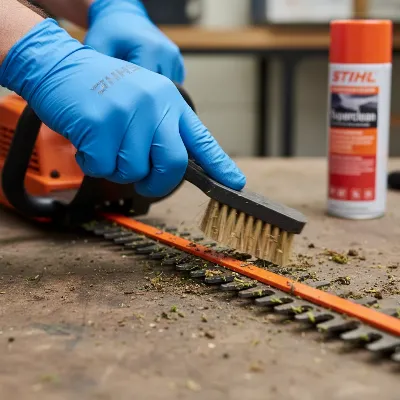 Close-up of a person cleaning the blades of a Stihl HS 45 hedge trimmer after use, with a brush and lubricant spray, demonstrating maintenance, realistic style.
Routine Maintenance
Regular care not only prolongs the life of your HS 45 but also ensures it performs optimally and safely.
- Blade Cleaning and Sharpening: After each use, clean the blades thoroughly to remove sap and debris, which can gum up the cutting mechanism. A stiff brush and a suitable cleaning agent are effective. Regularly check the blades for sharpness; dull blades tear rather than cut, harming the hedge and straining the engine. Sharpening should be done according to the manufacturer’s instructions or by a professional.
- Air Filter and Spark Plug: Periodically inspect and clean the air filter to ensure proper airflow to the engine. A clogged filter can reduce performance and increase fuel consumption. The spark plug should also be checked for wear and proper gapping, replacing it as needed to ensure reliable ignition.
- Fuel Filter and Storage: The fuel filter inside the tank should be inspected and replaced periodically to prevent fuel system issues. When storing the trimmer for extended periods, especially during off-season, ensure the fuel tank is empty or treated with a fuel stabilizer to prevent carburetor issues. Always store the machine with the blade guard in place, in a dry, secure location out of reach of children.
Conclusion
The Stihl HS 45 Gas Hedge Trimmer proves to be a robust and highly capable tool for homeowners tackling medium to large gardens. Its combination of a powerful 2-MIX engine, lightweight design, and effective anti-vibration system makes it comfortable and efficient for routine hedge maintenance and shaping. While its noise level and occasional carburetor adjustments are considerations, these are often outweighed by its strong cutting performance, mobility, and overall reliability for the average garden enthusiast. If you’re looking for a dependable gas hedge trimmer that can handle significant workload without constant refueling or cord management, the Stihl HS 45 is undoubtedly a strong contender worth considering. What kind of hedges are you hoping to transform this season?
Frequently Asked Questions
Is the Stihl HS 45 suitable for professional landscaping work?
The Stihl HS 45 is primarily designed as an entry-level model for homeowners and light maintenance tasks in medium to large gardens. While it offers reliable performance for typical residential use, its power and durability may not meet the demands of commercial-grade, all-day professional landscaping, especially for very thick or woody overgrowth. Professionals might seek more powerful, heavy-duty models.
What kind of fuel does the Stihl HS 45 use?
The Stihl HS 45 uses a gasoline-oil mixture. It requires a specific ratio of high-octane unleaded gasoline mixed with Stihl’s 2-stroke engine oil, typically 50:1. Always refer to your Stihl owner’s manual or oil container for the precise mixing ratio to ensure proper engine lubrication and longevity.
Why is my Stihl HS 45 hard to start or stalls frequently?
Common reasons for starting difficulties or frequent stalling in a Stihl HS 45 can include an old or incorrect fuel mixture, a dirty air filter, a fouled spark plug, or a carburetor that needs adjustment. Ensuring fresh fuel, proper maintenance of filters and spark plugs, and potentially a professional carburetor tune-up can resolve these issues, as some users report the carburetor can be sensitive.
How often should I sharpen the blades of my Stihl HS 45?
The frequency of blade sharpening depends on your usage and the type of material you’re cutting. For regular homeowner use, inspecting and sharpening the blades at least once a season or when you notice performance decline (e.g., tearing instead of clean cuts) is a good practice. Always ensure the blades are sharp for optimal cutting efficiency and to reduce strain on the machine.
Frequently Asked Questions
Is the Stihl HS 45 suitable for professional landscaping work?
The Stihl HS 45 is primarily designed for homeowners and light maintenance tasks in medium to large gardens, not for commercial-grade, all-day professional landscaping. Its power and durability are optimized for typical residential use, not for very thick or woody overgrowth that professionals often encounter.
What kind of fuel does the Stihl HS 45 hedge trimmer use?
The Stihl HS 45 uses a gasoline-oil mixture, specifically high-octane unleaded gasoline mixed with Stihl's 2-stroke engine oil, typically at a 50:1 ratio. Always consult the owner's manual for the precise mixing ratio to ensure proper engine lubrication and longevity.
Why does my Stihl HS 45 have trouble starting or frequently stall?
Common reasons for starting difficulties or frequent stalling in a Stihl HS 45 include an old or incorrect fuel mixture, a dirty air filter, a fouled spark plug, or a carburetor that requires adjustment. Ensuring fresh fuel, proper maintenance of filters and spark plugs, and a professional carburetor tune-up can resolve these issues, as the carburetor can be sensitive.
How often should the blades of my Stihl HS 45 be sharpened?
For regular homeowner use, inspect and sharpen the blades of your Stihl HS 45 at least once per season or whenever you notice a decline in performance, such as tearing instead of clean cuts. Sharp blades are crucial for optimal cutting efficiency and to reduce strain on the machine's 27.2 cmu00b3 engine.
What are the key safety precautions for operating a Stihl HS 45?
When operating a Stihl HS 45, always wear personal protective equipment (PPE) including safety glasses, hearing protection (due to 97 dB(A) noise), heavy-duty gloves, long pants, and sturdy footwear. Before starting, inspect the trimmer for damage, ensure the fuel cap is secure, and clear the work area of obstacles and bystanders. Maintain a firm, two-hand grip and good balance during operation.
Maintain Your Stihl HS 45 Hedge Trimmer
Proper operation and diligent maintenance are key to maximizing the lifespan and safe performance of your Stihl HS 45 gas hedge trimmer.
After each use, thoroughly clean the blades to remove sap and debris using a stiff brush and cleaning agent. Regularly check for sharpness; dull blades tear rather than cut, harming hedges and straining the engine. Sharpen blades according to manufacturer instructions or by a professional.
Periodically inspect and clean the air filter to ensure proper airflow, as a clogged filter reduces performance and increases fuel consumption. Check the spark plug for wear and proper gapping, replacing it as needed to ensure reliable ignition for the 27.2 cmu00b3 engine.
Inspect and replace the fuel filter inside the tank periodically to prevent fuel system issues. For extended storage, empty the fuel tank or treat it with a fuel stabilizer to prevent carburetor problems. Always store the trimmer with the blade guard in place, in a dry, secure location out of reach of children.

Finally upgraded to the Stihl HS 45 and I’m so glad I did. The 2-MIX engine is fantastic; it’s got plenty of power without being overly complicated to maintain. I used to struggle with thicker branches on my privet hedges, but this trimmer handles them with ease. It’s made my routine garden upkeep much faster and more efficient.
This Stihl HS 45 is a solid choice for general hedge maintenance. It’s powerful enough for most of my shrubs and bushes, and I love not having to deal with a cord. My only minor complaint is that it can be a bit loud, so I always make sure to wear ear protection. Otherwise, it’s a reliable entry-level petrol hedge trimmer.
I’ve had my Stihl HS 45 for about a year now and it’s been a workhorse. My property has a lot of mature hedges and this trimmer cuts through them like butter. The anti-vibration system really makes a difference on longer jobs, my arms don’t feel nearly as fatigued as they used to with my old electric one. Definitely recommend for anyone with a medium to large garden.
The Stihl HS 45 does a decent job on my hedges, but I found it a little heavier than I expected for a ‘lightweight’ design. It’s manageable for shorter periods, but after about 20-30 minutes, I start to feel it. The cutting performance is good though, and it starts up pretty easily. Just wish it was a tad lighter for extended use.