Winterizing your gas hedge trimmer involves a few essential steps to prevent costly damage and ensure optimal performance in spring. This process typically takes about 30-60 minutes and includes thorough cleaning, proper fuel management (draining or stabilizing), engine and spark plug care, blade protection, and correct storage. Neglecting these steps can lead to fuel system clogs, rust, and difficult starts due to degraded gasoline and moisture exposure during long periods of inactivity.
Why Winterize Your Gas Hedge Trimmer?
Storing your gas hedge trimmer without proper preparation can lead to significant problems. Over extended periods of inactivity, especially with fluctuating temperatures, gasoline degrades rapidly, forming gum and varnish deposits that clog carburetors and fuel lines. This makes the trimmer difficult or impossible to start. Moisture can cause rust and corrosion in engine components, reducing performance and shortening the equipment’s lifespan. Uncleaned blades can dull and seize.
Proper winterization protects your investment by safeguarding the engine, fuel system, and blades from the harsh effects of storage. This preventative maintenance prevents costly repairs and ensures your hedge trimmer starts reliably and performs efficiently when spring arrives. For explore our hedge trimmer reviews on this site.
Essential Preparations for Winterizing Your Gas Hedge Trimmer
Before beginning the winterization process, gather the necessary tools and understand key safety measures to ensure a smooth and safe task.
Gathering Your Tools and Supplies
Having all items on hand prevents interruptions and ensures a thorough job. You will need:
- Fuel Stabilizer: Crucial if you choose not to drain the fuel completely.
- Small Fuel Container: For safely draining and disposing of old fuel.
- Spark Plug Wrench: To remove and reinstall the spark plug.
- New Spark Plug (Optional): If the current one is heavily fouled or old.
- 2-Stroke Engine Oil or Fogging Oil: A small amount to protect the cylinder.
- Wire Brush and Soft Brush: For cleaning various parts.
- Clean Rags or Cloths: For wiping and drying.
- Hedge Trimmer Blade Cleaner/Resin Remover: To dissolve sap and grime.
- Specialized Blade Lubricant Spray: To protect blades from rust and ensure free movement.
- Funnel: For easy fuel handling.
- Personal Protective Equipment (PPE): Heavy-duty gloves and safety glasses are essential.
- Breathable Cover: To protect the trimmer during storage.
Safety First: Pre-Winterization Checks
Safety is paramount when working with gas-powered equipment. Always ensure the hedge trimmer’s engine is cool before starting. The most critical safety step is to disconnect the spark plug wire from the spark plug to prevent accidental starting and potential injury. Wear heavy-duty gloves to protect hands from sharp blades and fuel contact, and safety glasses to shield eyes from debris or splashes. Work in a well-ventilated area when handling gasoline to avoid inhaling fumes. Always refer to your owner’s manual for specific instructions unique to your hedge trimmer model.
 Technician wearing safety glasses and gloves working on a gas hedge trimmer, emphasizing safety
Step-by-Step Guide to Winterizing Your Gas Hedge Trimmer
Follow these detailed steps to prepare your gas hedge trimmer for winter storage.
1. Thorough Cleaning and Inspection
|
Our Picks for the Best Hedge Trimmer in 2026
As an Amazon Associate I earn from qualifying purchases.
|
||
| Num | Product | Action |
|---|---|---|
| 1 | BLACK+DECKER 20V MAX Cordless Hedge Trimmer, Battery and Charger Included, 22 Inch Steel Blade Lightweight Bush Trimmer, Soft Grip, Less Vibration (LHT2220) |

|
| 2 | Hedge Trimmer for Dewalt 20V Battery, Cordless Hedge Trimmer with 22'' Dual-Action Blade, 1600RPM, 3/5'' Cutting Width, Rotating Handle & Dual Switch Design (Battery Not Included) (Yellow) |
|
| 3 | SEESII 20V Hedge Trimmer Cordless: 20" Electric Bush Trimmer - Dual 4.0Ah Batteries, Dual-Action Blade, 0.71" Blade Gap, Rotatable Handle, Lightweight Handheld Grass Shrub Clipper for Garden Yard |
|
| 4 | Cordless Hedge Trimmer 22-Inch Compatible with DEWALT 20V MAX Battery, Electric Hedge Trimmer Cordless, Bush Trimmers for Garden, Battery Powered Hedge Trimmers (Tool Only) |
|
| 5 | WORX 22" Cordless Hedge Trimmer, Electric Hedge Trimmer with Dual-Action Blades, Lightweight Bush Trimmer with 4.4 LBS, Battery & Charger Not Included, WG261.9 |
|
| 6 | Electric Hedge Trimmer Cordless Compatible with DEWALT 20V MAX Battery, 20-Inch Cordless Hedge Trimmer, Brushless Bush Trimmer, 2/3'' Cutting Capacity, Lightweight & Rotatable Handle(No Battery) |
|
| 7 | BLACK+DECKER Electric Hedge Trimmer, 16-Inch 3.0 Amp Compact Corded Power Hedge Trimmer (BEHT100) |
|
| 8 | Hedge Trimmer for Dw 20V Battery,Hedge Trimmer Cordless with 22'' Dual-Action Blade and 3/5'' Cutting Capacity,1600RPM& Safety Lock (Battery Not Included) |
|
| 9 | BLACK+DECKER 18-Inch Electric Hedge Trimmer (BEHT200) |
|
| 10 | BLACK+DECKER Electric Hedge Trimmer, 17-Inch Corded 3.2 Amp, Dual Action, Reduced Vibration, Cleaner Cut, Lightweight, 3800 Cuts per Min (BEHT150) |
|
Begin by comprehensively cleaning your hedge trimmer. Remove all visible dirt, grass clippings, leaves, and sticky sap from the blades, engine housing, air vents, and cooling fins. Use a stiff brush for stubborn debris and a soft brush for delicate areas. This prevents corrosion and hard build-up during storage. While cleaning, inspect the unit for damage, loose fasteners, or worn components that may need attention before the next season.
2. Fuel System Management: Drain or Stabilize
This is a critical step for any gas-powered tool. Untreated gasoline can degrade and create gummy deposits that clog the carburetor and fuel lines. You have two main options:
- Option A: Drain Fuel Completely: Run the engine until it runs out of fuel and stalls, ensuring the carburetor is empty. Then, carefully drain any remaining fuel from the tank into a suitable container. Dispose of old gasoline responsibly at an authorized recycling center.
- Option B: Use Fuel Stabilizer: If draining is not practical, add the recommended amount of a high-quality fuel stabilizer to your fuel tank (ideally with fresh, ethanol-free gasoline). Start the engine and let it run for 5 to 10 minutes to circulate the stabilized fuel throughout the entire system, protecting it from degradation.
> “The biggest culprit for springtime starting woes is stale fuel. Whether you drain it or stabilize it, addressing the fuel system is non-negotiable for long-term storage.” – John Peterson, Small Engine Repair Specialist
3. Engine and Spark Plug Care
Proper engine care protects internal components from rust and ensures reliable starts. Remove the spark plug using a spark plug wrench. Inspect it for excessive carbon buildup or damage; replace it if heavily fouled or worn. Before reinstalling, add a few drops of 2-stroke engine oil or specialized fogging oil directly into the cylinder through the spark plug hole to lubricate and protect cylinder walls and the piston from rust. Gently pull the starter cord a few times (with the spark plug still out and ignition off) to distribute the oil evenly. Reinstall the spark plug, being careful not to overtighten, and reattach the spark plug wire.
4. Blade Cleaning and Protection
The blades require special attention before storage. Thoroughly clean them, removing all sap, plant residue, and dirt. A stiff brush and warm soapy water work for general grime, but a specialized resin remover or blade cleaner is effective for stubborn sap. Hold the trimmer so blades point downwards to prevent liquids from entering the engine housing. Ensure blades are completely dry to prevent rust. Apply a generous coat of specialized hedge trimmer blade lubricant or spray along the entire cutting length. Run the trimmer for a second or two to distribute the lubricant evenly. This protects against rust and ensures smooth operation. Consider professional sharpening if blades are dull.
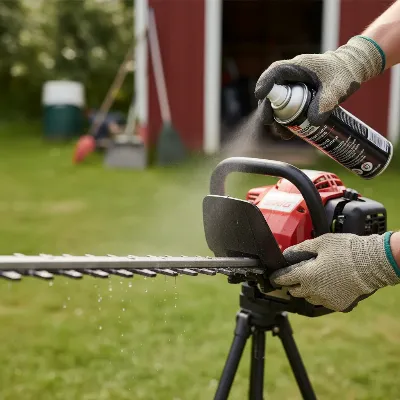 Close-up of hands applying lubricant to clean gas hedge trimmer blades for winter storage
5. Final Checks and Proper Storage
Before storing, perform a final inspection to ensure all fasteners are tight and no parts are loose or damaged. Store the trimmer in a clean, dry, and frost-free environment like a garage or shed, avoiding dampness or extreme temperature fluctuations. If possible, elevate it off concrete floors to prevent moisture absorption. Cover the gas hedge trimmer with a breathable cover (avoid airtight plastic) to protect it from dust and accidental bumps. Store it horizontally or hang it securely, following your owner’s manual recommendations.
Common Mistakes to Avoid When Winterizing
Several common mistakes can undermine winterization efforts. One frequent error is ignoring the fuel system entirely; storing the engine with untreated fuel leads to ethanol-induced corrosion and clogs, causing hard starting or engine failure. Another mistake is not thoroughly cleaning the blades, which allows sap and debris to harden, promoting rust and binding. Additionally, storing the trimmer in a damp or exposed location without a proper cover can cause rust on external and internal engine parts. Finally, skipping safety precautions, such as disconnecting the spark plug wire, can create dangerous situations during maintenance.
Conclusion
Winterizing your gas hedge trimmer is a vital maintenance step that extends its lifespan, ensures reliable performance, and saves you money and frustration. By following these straightforward steps—thorough cleaning, diligent fuel management (draining or stabilization), comprehensive engine and spark plug care, meticulous blade cleaning and protection, and proper storage—you actively protect your investment. This small effort before winter guarantees your gas hedge trimmer will be ready for garden tasks when spring arrives.
As you put your hedge trimmer away for the season, you can be confident it has received the care it deserves. What exciting hedge designs will you create next spring with your perfectly preserved hedge trimmer?
Frequently Asked Questions
How long can I store gasoline in my hedge trimmer with stabilizer?
With a high-quality fuel stabilizer, gasoline typically remains fresh and stable in your hedge trimmer’s tank for up to 12 months. Some premium stabilizers claim protection for up to 2-3 years. Always check the specific recommendations on the stabilizer product for accurate storage duration.
What if I forgot to winterize my gas hedge trimmer?
If you forgot to winterize your gas hedge trimmer, address it immediately. Drain any old, stale fuel and inspect the fuel lines and carburetor for gumming. Proceed with cleaning the blades and performing all other winterization steps. If significant deposits have formed, you might need to clean or replace the carburetor.
Can I use WD-40 on my hedge trimmer blades for lubrication?
While WD-40 can displace water, it is primarily a penetrant and rust preventative, not a long-term lubricant. It tends to evaporate quickly and is not ideal for the high-friction environment of hedge trimmer blades. It is best to use a specialized hedge trimmer blade lubricant or spray designed specifically for this purpose.
Is an oil change necessary for a gas hedge trimmer?
Most handheld gas hedge trimmers use a 2-stroke engine, which requires a pre-mixed fuel-oil mixture and does not have a separate oil crankcase for an oil change. Instead, for winter storage, you add a few drops of 2-stroke oil directly into the cylinder for protection. Some larger, walk-behind hedge trimmers might use 4-stroke engines, which would require an oil change. Always consult your owner’s manual for specific maintenance requirements.
How often should I sharpen my hedge trimmer blades?
Sharpening frequency depends on usage and the type of material cut. For typical home use, sharpening blades once a year, usually during winterization, is sufficient. If you frequently cut tough or woody hedges, or notice the trimmer tearing rather than cleanly cutting, more frequent sharpening may be needed.
What is the best way to dispose of old gasoline?
The best way to dispose of old gasoline is to take it to an authorized hazardous waste recycling center or a local automotive shop that accepts used fluids. Never pour old gasoline down drains, onto the ground, or into regular trash, as it is highly flammable and harmful to the environment.
Frequently Asked Questions
How long can I store gasoline in my hedge trimmer with stabilizer?
With a high-quality fuel stabilizer, gasoline typically remains fresh and stable in your hedge trimmer's tank for up to 12 months. Some premium stabilizers claim protection for up to 2-3 years. Always check the specific recommendations on the stabilizer product for accurate storage duration.
What if I forgot to winterize my gas hedge trimmer?
If you forgot to winterize your gas hedge trimmer, address it immediately. Drain any old, stale fuel and inspect the fuel lines and carburetor for gumming. Proceed with cleaning the blades and performing all other winterization steps. If significant deposits have formed, you might need to clean or replace the carburetor.
Can I use WD-40 on my hedge trimmer blades for lubrication?
While WD-40 can displace water, it is primarily a penetrant and rust preventative, not a long-term lubricant. It tends to evaporate quickly and is not ideal for the high-friction environment of hedge trimmer blades. It is best to use a specialized hedge trimmer blade lubricant or spray designed specifically for this purpose.
Is an oil change necessary for a gas hedge trimmer?
Most handheld gas hedge trimmers use a 2-stroke engine, which requires a pre-mixed fuel-oil mixture and does not have a separate oil crankcase for an oil change. Instead, for winter storage, you add a few drops of 2-stroke oil directly into the cylinder for protection. Some larger, walk-behind hedge trimmers might use 4-stroke engines, which would require an oil change. Always consult your owner's manual for specific maintenance requirements.
How often should I sharpen my hedge trimmer blades?
Sharpening frequency depends on usage and the type of material cut. For typical home use, sharpening blades once a year, usually during winterization, is sufficient. If you frequently cut tough or woody hedges, or notice the trimmer tearing rather than cleanly cutting, more frequent sharpening may be needed.
What is the best way to dispose of old gasoline?
The best way to dispose of old gasoline is to take it to an authorized hazardous waste recycling center or a local automotive shop that accepts used fluids. Never pour old gasoline down drains, onto the ground, or into regular trash, as it is highly flammable and harmful to the environment.
Winterize Your Gas Hedge Trimmer
Prepare your gas hedge trimmer for winter storage to ensure it starts easily and performs optimally in the spring. This process involves cleaning, fuel management, engine care, blade protection, and proper storage.
Begin by comprehensively cleaning your hedge trimmer. Remove all visible dirt, grass clippings, leaves, and sticky sap from the blades, engine housing, air vents, and cooling fins. Use a stiff brush for stubborn debris and a soft brush for delicate areas. While cleaning, inspect the unit for damage, loose fasteners, or worn components.
Address the fuel system to prevent degradation. You can either run the engine until it's out of fuel and then drain any remaining fuel from the tank, disposing of it responsibly. Alternatively, add a high-quality fuel stabilizer to the tank, then run the engine for 5-10 minutes to circulate the stabilized fuel throughout the system.
Protect internal engine components. Remove the spark plug, inspect it, and replace if necessary. Add a few drops of 2-stroke engine oil or fogging oil into the cylinder through the spark plug hole, then gently pull the starter cord a few times to distribute the oil. Reinstall the spark plug and reattach its wire.
Clean the blades thoroughly, removing all sap, plant residue, and dirt using a brush and specialized cleaner. Ensure the blades are completely dry to prevent rust. Apply a generous coat of specialized hedge trimmer blade lubricant or spray along the cutting length, then run the trimmer briefly to distribute it evenly.
Perform a final inspection to ensure all fasteners are tight. Store the trimmer in a clean, dry, and frost-free environment, ideally elevated off concrete floors. Cover it with a breathable cover to protect it from dust and accidental bumps, following your owner's manual for specific storage recommendations.

I always used to just throw my hedge trimmer in the shed for winter and then wonder why it wouldn’t start in spring. The tip about draining the fuel or using a stabilizer was a game-changer. My trimmer fired right up this year, no sputtering or issues. Definitely worth the 30 minutes it takes to do it right.
I tried to follow the fuel management advice, but draining the tank completely was a bit messy for me. I ended up just using a fuel stabilizer, which seemed easier. My trimmer started okay, but it still took a few pulls. Maybe I didn’t get all the old fuel out before adding the stabilizer.
This guide saved me a trip to the repair shop! Last year, my trimmer wouldn’t start at all because of what I now know was degraded gasoline clogging everything. This year, I made sure to follow the steps for proper fuel management and engine care. It’s running smoother than ever.
Good advice here. I followed the steps for cleaning the blades and applying a rust preventative, and they look much better than last year. I did find the spark plug care a bit fiddly, but I managed it. My only minor complaint is that I wish there was a specific product recommendation for the rust preventative.