If your gas hedge trimmer sputters, refuses to catch, or feels locked up when you pull the starter cord, it is likely experiencing a flooded engine. A flooded engine occurs when an excessive amount of fuel enters the combustion chamber, creating a fuel-to-air mixture too rich for proper ignition. This common issue can be resolved quickly by following a few simple DIY steps, such as disengaging the choke, holding the throttle wide open, and repeatedly pulling the starter rope, which allows the engine to clear the excess fuel and restart.
Understanding a Flooded Gas Hedge Trimmer Engine
A “flooded” small engine, like that in your hedge trimmer, means there’s too much gasoline in its combustion chamber, resulting in a fuel-to-air mixture that is too rich to ignite. Efficient engine operation requires a precise balance of fuel and air. When this balance is disrupted by excess fuel, the spark plug becomes wet, preventing it from creating the necessary spark. This excess fuel can also cause a hydraulic lock, making the starter rope difficult to pull. Key indicators of a flooded gas hedge trimmer include a strong gasoline smell, a wet spark plug, and the engine’s refusal to start despite multiple pulls.
Common Causes of Flooding in Gas Hedge Trimmers
Engine flooding is a frequent problem for small gasoline-powered equipment. Understanding the causes helps in both unflooding your trimmer and preventing future occurrences.
The most frequent cause is over-choking or improper starting procedures. The choke enriches the fuel mixture for cold starts. However, if left on too long, especially when the engine is warm or not truly cold, it introduces excessive fuel. Many users keep the choke engaged for too many pulls or disengage it too late, leading to flooding.
Another common cause is excessive priming. The primer bulb manually pushes fuel into the carburetor for cold starts. Pushing it more times than the manufacturer’s recommendation can easily over-saturate the engine with fuel. Priming a warm engine is often unnecessary and contributes to flooding.
Beyond user error, carburetor malfunctions significantly contribute to persistent flooding. Issues like a stuck or malfunctioning needle valve can allow continuous fuel flow into the carburetor bowl, creating an overly rich mixture. A damaged or misaligned float can also fail to regulate fuel levels. Furthermore, clogged or worn jets or a stiff metering diaphragm can disrupt the precise fuel-to-air ratio, causing the engine to receive too much fuel. These components can wear out or become clogged over time, requiring repair or replacement.
A dirty or clogged air filter can indirectly cause flooding. An obstructed air filter restricts airflow, making the fuel-to-air mixture too rich, similar to operating with the choke on, which leads to fuel accumulation and a flooded engine.
Lastly, a fouled or wet spark plug can prevent ignition. If the spark plug is covered in fuel or carbon deposits, it won’t produce a strong spark, causing unburnt fuel to build up. Using old or contaminated fuel can also lead to carburetor blockages and poor combustion, increasing flooding risk. While less common, low engine compression from worn piston rings or cylinders can make an engine harder to start and prone to flooding due to inefficient fuel-air mixture compression.
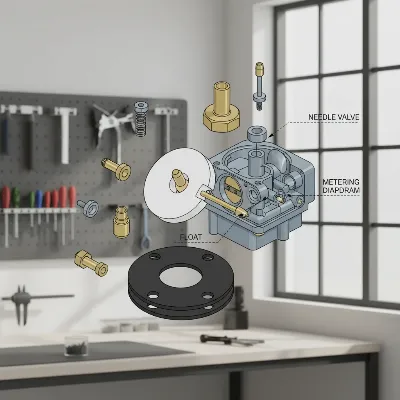 An exploded view of a gas hedge trimmer carburetor, showing its internal components like the needle valve, float, and diaphragm.
Step-by-Step DIY Guide to Unflood Your Hedge Trimmer
Unflooding a gas hedge trimmer is often a straightforward DIY fix requiring minimal tools. Follow these steps to quickly clear excess fuel and get your trimmer running.
First, prioritize safety. Place your hedge trimmer on a stable, flat surface away from open flames. Wear safety glasses and gloves when handling gasoline.
Step 1: Turn Off the Choke and Engage Full Throttle
The initial and most critical action is to stop any further fuel from entering the engine.
- Turn the choke to the “OFF” position. This opens the air intake, allowing maximum airflow into the carburetor.
- Engage the throttle to the “FULL” position. Squeeze and hold down the throttle trigger to ensure the carburetor’s butterfly valve is completely open, creating a clear pathway for air to rush through the engine.
Step 2: Pull the Starter Rope Repeatedly and Quickly
With the choke off and throttle wide open, clear the excess fuel from the combustion chamber.
- Pull the starter rope firmly and rapidly 10-20 times (or more). This draws a large volume of air through the engine, pushing accumulated fuel through the exhaust system and drying the spark plug.
- If the engine is severely flooded and hydraulically locked, the starter rope might be unusually hard to pull. Consistent pulling should lessen resistance as fuel is expelled.
Step 3: Consider Removing the Air Filter for Enhanced Airflow
For stubborn flooding, or to accelerate the process, temporarily removing the air filter can be beneficial.
- Locate and carefully remove the air filter cover and the air filter itself. This provides an even less restricted path for air to enter the carburetor and engine.
- Once the air filter is off, repeat Step 2, pulling the starter rope several more times. This increased airflow helps dissipate fuel more quickly.
- After the engine starts and runs smoothly, remember to reinstall the air filter before continued use.
Step 4: Advanced Step – Check and Dry the Spark Plug (for Persistent Flooding)
If your hedge trimmer still won’t start after the above steps, the spark plug might be heavily fouled or drenched in fuel.
- Disconnect the spark plug wire and carefully remove the spark plug using a spark plug wrench.
- Inspect the spark plug. If it’s wet with fuel or covered in black, sooty deposits, it’s preventing a strong spark.
- Clean and dry the spark plug. Use a clean, dry cloth to wipe off fuel or debris. A wire brush can help with heavy fouling. Let the spark plug and the spark plug hole air dry for a minute or two for any remaining fuel in the cylinder to evaporate.
- While the spark plug is out, you can pull the starter rope a few times to help expel fuel directly from the cylinder. Ensure no dirt or foreign objects enter the cylinder.
- Reinstall the clean, dry spark plug and firmly reconnect the spark plug wire. Ensure the spark plug is correctly tightened.
- Then, return to Step 1 and attempt to start the engine again with the choke off and full throttle.
> “Most flooding issues can be resolved with these basic steps. The key is to maximize airflow and minimize fuel intake to allow the engine to ‘breathe’ out the excess.” – John Smith, Small Engine Repair Technician
It’s normal to see some white smoke from the exhaust once the engine finally kicks to life; this is just the remaining excess fuel burning off. The smoke should clear quickly as the engine runs.
 A person performing the steps to unflood a gas hedge trimmer, illustrating turning the choke off and pulling the starter rope.
Preventing Future Flooding Incidents
Preventing your gas hedge trimmer from flooding is often simpler than fixing it. By adopting best practices and diligent maintenance, you can significantly reduce future flooding.
The most critical preventive measure is adhering to the proper starting procedure outlined in your hedge trimmer’s owner’s manual. Small engines have specific starting sequences, especially regarding the choke. Generally, you should:
- Engage the choke only for a cold start.
- Prime the engine only the recommended number of times (usually 3-5 pushes).
- As soon as the engine “sputters” or shows signs of wanting to start, immediately disengage the choke (move it to the “run” position). Continuing to pull the starter cord with the choke on after these initial signs is a primary cause of flooding.
Regular maintenance is also paramount.
- Spark Plugs: Routinely inspect and clean or replace your spark plug. A clean, properly gapped spark plug ensures a strong spark, vital for efficient combustion.
- Air Filter: Frequently check and clean or replace the air filter. A clogged air filter restricts airflow, causing the engine to run “rich” and increasing flooding risk.
- Fuel System: Periodically inspect your carburetor components, including the needle valve and metering diaphragm. Worn or stuck components can lead to improper fuel delivery. If you suspect consistent carburetor issues, a professional inspection or rebuild might be necessary.
Furthermore, using fresh, quality fuel is non-negotiable. Old gasoline degrades, forming varnish and deposits that clog carburetor jets and fuel lines. Always use fresh fuel, and consider adding a fuel stabilizer if the trimmer will be stored for an extended period. For 2-stroke engines, ensure you use the correct fuel/oil mix ratio as specified by the manufacturer. An incorrect mixture can lead to poor combustion and fouling. It’s recommended to use fuel with no more than 10% ethanol content, as higher concentrations can damage small engine components over time.
“A well-maintained engine is a happy engine. Simple checks like ensuring your air filter is clean and your fuel is fresh can save you a lot of headache.” – ReviewsRain.com Admin
By integrating these practices into your hedge trimmer routine, you’ll not only prevent frustrating flooding incidents but also extend the overall lifespan and performance of your valuable outdoor power equipment.
Conclusion
Dealing with a flooded gas hedge trimmer engine can interrupt your gardening rhythm, but it’s a common issue that is largely preventable and fixable with basic DIY knowledge. Engine flooding primarily stems from an imbalance of too much fuel and insufficient air, often due to over-choking, excessive priming, or underlying carburetor issues. By following a few clear steps—disengaging the choke, holding the throttle wide open, and pulling the starter rope repeatedly—you can efficiently clear the excess fuel. For persistent cases, checking and drying the spark plug or removing the air filter offers an effective solution.
Prevention is always better than cure. Adopting proper starting procedures, ensuring regular maintenance of key components like the spark plug and air filter, and using fresh, high-quality fuel are crucial steps to keep your hedge trimmer running smoothly. With these insights, you’re now equipped to tackle a flooded engine confidently and prevent it from derailing your landscaping efforts.
Frequently Asked Questions
Why does my gas hedge trimmer smell like gas but won't start?
If your gas hedge trimmer smells strongly of gasoline but refuses to start, it indicates a flooded engine. This means an excessive amount of fuel has entered the combustion chamber, creating a fuel-to-air mixture too rich for the spark plug to ignite effectively, often due to over-choking or excessive priming.
Can I unflood my hedge trimmer without removing the spark plug?
Yes, in many cases, you can unflood your hedge trimmer without removing the spark plug. The primary method involves turning the choke off, holding the throttle wide open, and repeatedly pulling the starter rope 10-20 times to cycle fresh air through the engine and push out excess fuel. Removing the spark plug is typically reserved for more severely flooded engines.
How long should I wait after a hedge trimmer floods before trying to restart it?
If your hedge trimmer is severely flooded, it's often beneficial to let it sit for about 15-20 minutes, or even a couple of hours if it's extremely saturated, to allow the excess fuel to evaporate. For minor flooding, the full-throttle, choke-off pull method can often work immediately without a waiting period.
What maintenance can prevent my hedge trimmer from flooding?
Regular maintenance is crucial for preventing flooding. This includes routinely cleaning or replacing the air filter and spark plug, using fresh fuel with a fuel stabilizer (especially during storage), and ensuring you follow the manufacturer's specific starting procedures, particularly regarding the choke and primer bulb, to avoid over-fueling.
Is it normal for a hedge trimmer to smoke after being unflooded?
Yes, it is entirely normal for a hedge trimmer to produce white smoke from the exhaust after successfully unflooding and restarting it. This smoke is simply the residual excess fuel burning off from the exhaust system and combustion chamber. The smoke should clear within a few moments of the engine running smoothly.

This guide was a lifesaver! My Stihl trimmer was totally flooded after I accidentally left the choke on too long. I followed the steps, especially holding the throttle wide open, and after about 10 pulls, it finally sputtered to life. Saved me a trip to the repair shop and probably a good chunk of change. Highly recommend these tips for anyone with a stubborn trimmer.
Great advice here. My old Craftsman hedge trimmer has been acting up lately, and I suspected it was flooded. The explanation about the fuel-to-air mixture being too rich really helped me understand what was going on. I tried disengaging the choke and pulling the cord a few times, and it eventually started. It still took a bit longer than I expected, but it worked!
I tried these steps on my Echo trimmer, and while it eventually started, it took a lot more than just a few pulls. The engine felt really locked up at first, and I was worried I was going to break the starter cord. It did clear the excess fuel, but it wasn’t as quick as I hoped. Maybe my trimmer was just really flooded.
Fantastic breakdown of how to unflood a gas hedge trimmer. I’ve had this issue before with my Husqvarna, and usually just let it sit for a while. The tip about repeatedly pulling the starter rope to clear the excess fuel is key. It’s good to know the mechanics behind why it happens too, with too much gasoline in the combustion chamber. Very helpful for DIYers.