Preventing a hedge trimmer from jamming on branches primarily involves consistent maintenance, understanding the tool’s limits, and employing smart trimming techniques. Most jamming issues are preventable by keeping blades sharp, clean, and lubricated, and by avoiding cutting branches thicker than the trimmer’s specified capacity, typically 0.5 to 1 inch in diameter.
Why Your Hedge Trimmer Jams: Common Causes
Hedge trimmers typically jam when they struggle to cut through material efficiently, leading to blades getting snagged or seizing up. Several factors can contribute to this common problem. Often, the blades themselves are the primary culprit, becoming dull over time from regular use. Dull blades don’t slice cleanly; instead, they pinch and tear at branches, making them prone to getting stuck.
Another frequent cause is attempting to cut branches that are simply too thick for your specific hedge trimmer’s cutting capacity. Each trimmer has a maximum diameter it can handle, and forcing it beyond this limit will inevitably lead to jamming. Sticky sap and accumulated plant debris can also bind the blades together, increasing friction and reducing their ability to slide smoothly. Blades can become bent, misaligned, or suffer from loose bolts and spacers, creating gaps where branches can slip through rather than being cut. For cordless models, a low battery can reduce blade speed and power, leading to poor cutting performance and jamming, while petrol trimmers might struggle due to a clogged air filter or other engine issues.
Proactive Prevention: The DIY Approach to Jam-Free Trimming
Preventing hedge trimmer jams largely comes down to consistent maintenance and smart operational habits. By taking a proactive DIY approach, you can significantly reduce the likelihood of your tool getting stuck and ensure a smoother trimming experience every time.
1. Master Your Tool: Knowing Your Hedge Trimmer’s Limits
Understanding the capabilities and limitations of your hedge trimmer is the first step in preventing jams. Every model has a maximum cutting diameter, which refers to the thickest branch its blades can effectively sever. Pushing your tool beyond this specified limit is a sure way to cause it to bind, overheat, and potentially damage the blades or motor. Before you start, assess the thickness of your hedge branches. For thicker, older growth or branches exceeding approximately one inch in diameter, a hedge trimmer is not the appropriate tool. Instead, reach for manual bypass loppers or a pruning saw to make clean cuts. This not only protects your hedge trimmer but also ensures healthier cuts for your plants.
2. Sharpening Your Blades: The Edge of Efficiency
|
Our Picks for the Best Hedge Trimmer in 2026
As an Amazon Associate I earn from qualifying purchases.
|
||
| Num | Product | Action |
|---|---|---|
| 1 | SEESII 20V Hedge Trimmer Cordless: 20" Electric Bush Trimmer - Dual 4.0Ah Batteries, Dual-Action Blade, 0.71" Blade Gap, Rotatable Handle, Lightweight Handheld Grass Shrub Clipper for Garden Yard |

|
| 2 | BLACK+DECKER Electric Hedge Trimmer, 16-Inch 3.0 Amp Compact Corded Power Hedge Trimmer (BEHT100) |
|
| 3 | BLACK+DECKER 18-Inch Electric Hedge Trimmer (BEHT200) |
|
| 4 | BLACK+DECKER 20V MAX Cordless Hedge Trimmer, Battery and Charger Included, 22 Inch Steel Blade Lightweight Bush Trimmer, Soft Grip, Less Vibration (LHT2220) |
|
| 5 | WORX 22" Cordless Hedge Trimmer, Electric Hedge Trimmer with Dual-Action Blades, Lightweight Bush Trimmer with 4.4 LBS, Battery & Charger Not Included, WG261.9 |
|
| 6 | Hedge Trimmer for Dewalt 20V Battery, Cordless Hedge Trimmer with 22'' Dual-Action Blade, 1600RPM, 3/5'' Cutting Width, Rotating Handle & Dual Switch Design (Battery Not Included) (Yellow) |
|
| 7 | BLACK+DECKER Electric Hedge Trimmer, 17-Inch Corded 3.2 Amp, Dual Action, Reduced Vibration, Cleaner Cut, Lightweight, 3800 Cuts per Min (BEHT150) |
|
| 8 | Cordless Hedge Trimmer 22-Inch Compatible with DEWALT 20V MAX Battery, Electric Hedge Trimmer Cordless, Bush Trimmers for Garden, Battery Powered Hedge Trimmers (Tool Only) |
|
| 9 | Electric Hedge Trimmer Cordless Compatible with DEWALT 20V MAX Battery, 20-Inch Cordless Hedge Trimmer, Brushless Bush Trimmer, 2/3'' Cutting Capacity, Lightweight & Rotatable Handle(No Battery) |
|
| 10 | Hedge Trimmer for Dw 20V Battery,Hedge Trimmer Cordless with 22'' Dual-Action Blade and 3/5'' Cutting Capacity,1600RPM& Safety Lock (Battery Not Included) |
|
Sharp blades are fundamental to a hedge trimmer’s performance and are crucial for preventing jams. Dull blades rip and tear at branches, demanding more effort from both you and the machine, and are highly susceptible to getting caught. Regular sharpening ensures clean, efficient cuts.
DIY Sharpening Steps:
- Safety First: Always prioritize safety. Before touching the blades, ensure your hedge trimmer is completely powered off. If it’s electric, unplug it from the power source. For cordless models, remove the battery pack, and for petrol models, switch off the engine and allow it to cool.
- Clean Blades: Thoroughly clean the blades before sharpening. Sap, dirt, and debris can obscure the modern and clog your sharpening tool. Use a stiff brush or cloth to remove loose debris, and for stubborn resin, apply a specialized resin remover or a mild soap-and-water solution. Dry the blades completely before proceeding.
- Secure the Trimmer: For easier and safer sharpening, secure the hedge trimmer in a vise or clamp with the blades facing upwards. This prevents accidental movement during the process.
- Identify Cutting Edges: Inspect your blades to identify the bevelled cutting edges. You’ll be filing along these edges.
- Sharpen with a Flat File: Using a flat file, follow the natural angle of the blade’s edge. This angle is typically around 45 degrees, but you can consult your user manual for the exact specification. File in a single direction, always away from your body, applying steady pressure on the forward stroke and lifting the file on the return. Avoid a back-and-forth sawing motion, which can dull the edge. Aim for a consistent number of strokes on each cutting tooth to ensure even sharpness across all blades.
- Remove Burrs: As you file, small metal burrs may form on the underside of the blades. Use a whetstone, moistened with water, to smooth these burrs away. Draw the whetstone along the back of each blade with a careful swiping motion towards the tip.
- Lubricate: After sharpening, wipe down the blades to remove any metal filings. Then, apply a light coat of lubricant or specialized blade protector to prevent rust and ensure smooth operation.
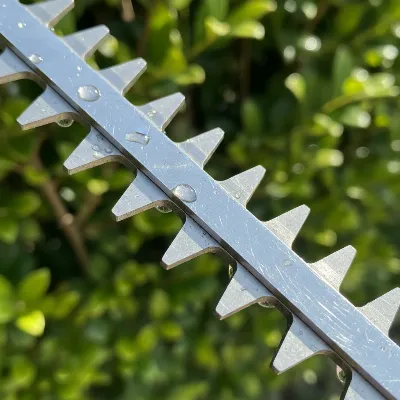 A close-up of sharpened hedge trimmer blades ready for use, sparkling clean and well-lubricated.
3. Immaculate Maintenance: Cleanliness is Key
Consistent cleaning and lubrication are paramount to keeping your hedge trimmer running smoothly and preventing jams. Neglecting these basic maintenance tasks can lead to sticky, rusty blades that struggle to cut.
- Cleaning After Every Use: Every trimming session leaves behind sap, leaves, and small branch fragments on the blades. If left to dry, sap becomes a sticky resin that glues the blades together, dramatically increasing friction and making them bind. After each use, always turn off and unplug (or remove the battery from) your trimmer. Use a stiff brush or a damp cloth to wipe away all visible debris. For stubborn sap buildup, a solution of warm soapy water or a specialized resin solvent can be highly effective. Ensure the blades are thoroughly dried immediately after cleaning to prevent rust.
- Regular Lubrication: Hedge trimmer blades slide rapidly against each other, creating friction. Lubrication reduces this friction, allowing the blades to move freely and cut efficiently. It also creates a protective barrier against moisture, preventing rust and corrosion. Apply a quality multipurpose oil or a specialized spray-on lubricant to the blades before each use and again after cleaning. A little goes a long way; run the trimmer briefly after application to ensure the lubricant spreads evenly across the moving surfaces.
- Inspecting and Tightening Components: The constant vibrations of a hedge trimmer can cause screws, bolts, and other fasteners to loosen over time. Periodically check all visible components and gently tighten any that feel loose. Pay particular attention to the blade bolts and spacers, as loose connections can cause misalignment and branches to get caught. For petrol trimmers, a dirty air filter restricts airflow to the engine, leading to reduced power and potential stalling or jamming under load. Check and clean the air filter regularly according to your manufacturer’s instructions. For cordless models, always ensure the battery is fully charged before starting work, as low power can mimic jamming issues.
Smart Trimming Techniques: Cut Smarter, Not Harder
Beyond tool maintenance, adopting intelligent trimming techniques can significantly reduce jamming and improve the overall health and appearance of your hedges.
- Gradual Approach: Avoid the temptation to force the trimmer through thick sections of a hedge. Instead, take a more gradual approach. Work in smaller sections, making light, sweeping passes rather than attempting to cut too much material at once. This reduces strain on the motor and blades, making jams less likely.
- Sweeping Motions: When trimming the sides of your hedge, use long, smooth, sweeping motions, starting from the bottom and working your way upwards. This technique helps guide the branches into the blades more effectively and prevents the trimmer from getting bogged down. For the top, maintain a consistent, even motion across the surface.
- Tapering Hedges: A common expert technique is to shape your hedges so they are slightly narrower at the top than at the base. This “tapered” profile allows sunlight to reach the lower branches, promoting healthier, denser growth and preventing bare patches at the bottom. It also helps shed snow more easily, reducing stress on the hedge and your trimmer.
- Identifying and Pre-cutting Larger Branches: Before you begin trimming, take a moment to inspect the hedge for any particularly thick or woody branches that are clearly beyond your trimmer’s capacity. Pre-cut these larger branches using loppers or a pruning saw. Clearing these out beforehand will allow your hedge trimmer to work more efficiently on the smaller growth it’s designed for, preventing frustrating jams.
What To Do When Your Hedge Trimmer Jams (Safely)
Even with the best preventative measures, a jam can occasionally happen. Knowing how to safely and effectively clear a jammed hedge trimmer is crucial for both your safety and the longevity of your tool.
- Immediate Safety Steps: Your absolute first priority is safety. As soon as you notice a jam, immediately turn off the hedge trimmer. If it’s an electric model, unplug it from the power outlet. For battery-powered trimmers, remove the battery pack, and for petrol models, switch off the engine. Never attempt to clear a jam while the tool is still connected to a power source or running, as accidental activation can lead to severe injury.
- Clearing Obstructions: Once the power is safely disconnected, inspect the blades for any visible obstructions. This could be a branch, a tangle of vines, or even a piece of fencing or wire that has become lodged between the teeth. Carefully remove any debris by hand. For stubborn pieces of wood or entangled material, use a pair of sturdy gloves and pruning shears to cut and clear the blockage. Avoid forcing the blades apart, as this can bend or damage them.
- Inspecting for Damage: After clearing the jam, take a moment to inspect the blades for any damage. Look for bent teeth, signs of misalignment, or loose bolts. Minor bends in the teeth might be carefully straightened with pliers, but for significant damage or if the blades appear misaligned, it’s often best to consult a professional. If the jam was particularly severe and the blades still don’t move freely after clearing, the issue might be internal, possibly within the gearbox. In such cases, professional repair is recommended to avoid causing further damage.
“A well-maintained hedge trimmer isn’t just about prolonging its life; it’s about making your gardening safer and more enjoyable. Simple steps like cleaning and sharpening blades can drastically reduce frustration.” – John Davis, Master Gardener and Landscape Technician
Conclusion
Keeping your hedge trimmer from jamming on branches is a straightforward process rooted in consistent maintenance and smart technique. By prioritizing sharp, clean, and lubricated blades, understanding your tool’s limitations, and employing effective trimming strategies, you can minimize frustrating interruptions and achieve beautifully manicured hedges with ease. a little preventative care goes a long way in ensuring your gardening tools perform reliably for many seasons to come. What simple maintenance step will you commit to after your next trimming session to keep your hedge trimmer running smoothly?
Frequently Asked Questions
How often should I sharpen my hedge trimmer blades?
The frequency depends on usage. For typical home gardeners, sharpening once every 25 to 50 hours of use or once or twice per season is usually sufficient. Professionals using their trimmers frequently might need to sharpen them every 20-30 hours or whenever cutting performance noticeably declines.
Can I use WD-40 to lubricate my hedge trimmer?
While WD-40 can help displace moisture and temporarily lubricate, it’s generally not recommended as a primary long-term lubricant for hedge trimmer blades. It can evaporate quickly and might attract more dirt. Instead, use a specialized plant-friendly lubricant, light machine oil, or a silicone-based spray designed for garden tools.
What is the maximum branch thickness a hedge trimmer can cut?
Most standard hedge trimmers can handle branches up to 0.5 to 0.75 inches (12-19mm) in diameter. Heavy-duty or professional models might manage up to 1 inch (25mm). Always check your specific model’s user manual for its maximum cutting capacity and use loppers or a pruning saw for thicker branches.
Why does my cordless hedge trimmer lose power when cutting?
Power loss in cordless hedge trimmers can be due to a low battery charge, dull blades increasing resistance, sap buildup causing friction, or attempting to cut branches thicker than the tool’s capacity. Ensure the battery is fully charged, blades are sharp and clean, and you’re not overworking the motor.
Frequently Asked Questions
How often should I sharpen my hedge trimmer blades?
For typical home gardeners, sharpening hedge trimmer blades once every 25 to 50 hours of use or one to two times per season is usually sufficient. Professionals might need to sharpen every 20-30 hours or when cutting performance declines.
Can I use WD-40 to lubricate my hedge trimmer?
WD-40 is not recommended as a primary long-term lubricant for hedge trimmer blades because it evaporates quickly and can attract dirt. Instead, use a specialized plant-friendly lubricant, light machine oil, or a silicone-based spray designed for garden tools.
What is the maximum branch thickness a hedge trimmer can cut?
Most standard hedge trimmers can handle branches up to 0.5 to 0.75 inches (12-19mm) in diameter. Heavy-duty models may cut up to 1 inch (25mm), but always check your specific model's user manual for its maximum cutting capacity.
Why does my cordless hedge trimmer lose power when cutting?
Cordless hedge trimmer power loss often stems from a low battery charge, dull blades increasing resistance, or sap buildup causing friction. Ensure the battery is fully charged, blades are sharp and clean, and avoid cutting branches thicker than the tool's capacity.
What are the main causes of a hedge trimmer jamming?
Hedge trimmers typically jam due to dull blades that tear instead of cut, attempting to cut branches too thick for the tool's capacity, or sticky sap and debris binding the blades. Misaligned or loose blades and low battery power in cordless models can also contribute.
Sharpen Hedge Trimmer Blades for Jam Prevention
Sharpening hedge trimmer blades is crucial for efficient cutting and preventing jams. This DIY guide outlines the steps to safely and effectively sharpen your blades.
Before touching the blades, ensure the hedge trimmer is completely powered off. Unplug electric models, remove the battery from cordless models, and switch off petrol engines, allowing them to cool.
Clean the blades before sharpening to remove sap, dirt, and debris that can clog your sharpening tool. Use a stiff brush or cloth, and for stubborn resin, apply a specialized remover or mild soap-and-water solution, then dry completely.
Secure the hedge trimmer in a vise or clamp with blades facing upwards for easier and safer sharpening, preventing accidental movement. Inspect the blades to identify the bevelled cutting edges you will be filing along.
Using a flat file, follow the natural angle of the blade's edge (typically around 45 degrees), filing in a single direction away from your body. Apply steady pressure on the forward stroke and lift the file on the return, aiming for consistent strokes on each tooth.
After filing, use a water-moistened whetstone to smooth away any small metal burrs that form on the underside of the blades. Finally, wipe down the blades to remove filings and apply a light coat of lubricant or blade protector to prevent rust and ensure smooth operation.

I tried all the steps, especially focusing on cleaning the blades after every use, but my older hedge trimmer still jams occasionally. It’s better than before, but not perfect. I think my blades might just be too dull at this point, and maybe it’s time for a professional sharpening or even a new trimmer. The advice about dull blades being a primary culprit really resonated.
I used to get so frustrated with my hedge trimmer jamming, especially on thicker branches. Following the advice here about not cutting anything over 1 inch in diameter really made a difference. My old trimmer was constantly getting stuck, but now that I’m more mindful of the branch size, it’s been running smoothly. Great tips for keeping things efficient!
This was super helpful! I always thought my technique was fine, but I was definitely trying to rush through things and not letting the trimmer do its job. Slowing down and making sure I wasn’t forcing it through material has completely eliminated the constant snagging. It’s amazing how much difference proper trimming techniques make.
Keeping the blades sharp and clean is something I always knew was important, but I often neglected the lubrication part. After reading about how much that helps prevent jamming, I started doing it regularly. My trimmer definitely feels like it’s working less hard now, and I haven’t had a single jam since. It’s a small step that makes a big impact.