Sharpening hedge trimmer blades at home is a straightforward DIY task that can be accomplished quickly and efficiently with basic tools like a flat file, restoring them to optimal performance. Dull blades tear at branches, stress plants, and strain the trimmer’s motor, whereas sharp blades make clean cuts that promote plant health and extend tool life. This guide outlines the essential steps for safe and effective blade sharpening, ensuring healthier hedges and a more satisfying gardening experience.
Understanding Your Hedge Trimmer Blades: Why Sharpness Matters
Maintaining sharp hedge trimmer blades is paramount for both the health of your plants and the efficiency of your gardening efforts. When blades are keen, they execute clean cuts that allow plants to heal rapidly and grow vigorously, minimizing vulnerability to diseases and pests. Conversely, dull blades rip and tear at foliage, leaving ragged edges that stress plants and hinder their recovery. This not only compromises the aesthetic appeal of your hedges but also places undue strain on your trimmer’s motor or engine, potentially shortening its operational life.
Recognizing when your blades require attention is key. Common indicators include branches getting stuck or jammed between the blades, requiring increased force to cut through, or observing frayed and uneven edges on trimmed foliage. You might also notice visible nicks or dents along the blade edges. Ideally, blades should be sharpened regularly, typically after every 50 hours of use or once or twice per season, depending on the density of the material you’re cutting and how frequently you use your trimmer. Early intervention prevents significant wear and ensures consistent performance.
Essential Tools for DIY Hedge Trimmer Blade Sharpening
Before you begin the sharpening process, gathering the correct tools is crucial for both safety and effectiveness. Having everything within reach will streamline your work and help you achieve professional results.
Safety Gear
- Work Gloves: Heavy-duty, non-slip gloves protect your hands from sharp edges and potential slippage.
- Safety Glasses or Face Shield: Essential for shielding your eyes from metal shavings and debris generated during sharpening.
Cleaning Supplies
- Stiff-Bristle Brush or Wire Brush: For scrubbing off stubborn dirt, sap, and plant residue.
- Silicone-Based Cleaner (e.g., WD-40) or Soapy Water: To loosen and remove grime.
- Soft Cloth: For wiping down blades.
Sharpening Tools
- Flat File: This is the most common and recommended tool for manual sharpening at home. Choose a medium-grit file that comfortably fits the width of your blade teeth.
- Rotary Tool (e.g., Dremel) with Grinding Bit: A faster option for experienced users, but requires a steady hand and careful attention to avoid removing too much material or overheating the blades.
- Whetstone or Fine File: Used to remove burrs (small metal shavings) that form on the unsharpened side of the blade after filing, ensuring a smooth finish.
Securing Tools
- Work Bench or Sturdy Surface: A stable area to work on.
- Bench Vice or C-Clamp: Absolutely vital for securely holding the hedge trimmer in place, preventing movement and ensuring safety and precision.
Lubricant
- Lubricating Oil or Resin Solvent: Applied after sharpening to protect the blades from rust and ensure smooth operation.
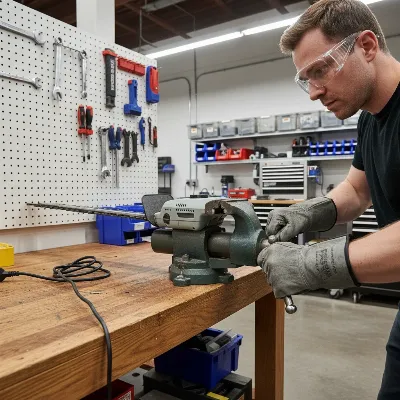 Person securing hedge trimmer in vice with safety glasses and gloves, ready for sharpening
Step-by-Step Guide to Sharpening Hedge Trimmer Blades at Home
Sharpening your hedge trimmer blades doesn’t have to be an intimidating task. By following these methodical steps, you can achieve sharp, efficient blades safely and effectively.
Safety First: Preparing Your Work Area
Before touching the blades, always prioritize your safety. This crucial step prevents accidental starts and potential injuries.
- Disconnect Power: For electric hedge trimmers, unplug the tool from the power outlet. For cordless models, remove the battery pack. For gasoline-powered trimmers, disconnect the spark plug lead to prevent accidental ignition.
- Wear Protective Gear: Don your safety glasses or face shield and heavy-duty work gloves.
- Secure the Trimmer: Place your hedge trimmer on a sturdy workbench at a comfortable height. Use a bench vice or C-clamp to secure the trimmer body firmly, ensuring it cannot move or slip during sharpening. Positioning the blade over the edge of the workbench can provide better access.
Cleaning the Blades Thoroughly
A clean blade is essential for effective sharpening. Dirt, sap, and resin can clog your sharpening tools and obscure the true cutting edge.
- Remove Debris: Use a stiff-bristle brush or wire brush to scrub away any loose dirt, plant material, and stubborn sap that has accumulated on and between the blades.
- Deep Clean: For more ingrained grime, spray a silicone-based cleaner like WD-40 liberally onto the blades, or wipe them down with soapy water and a soft cloth. Allow it to sit for a few minutes to loosen the residue.
- Wipe Dry: Thoroughly wipe the blades clean and dry with a soft cloth. Ensure there is no moisture left, as this can lead to rust. Clean blades allow your sharpening tool to glide smoothly and reveal the exact angle of the cutting edge.
Sharpening with a Flat File
The flat file method is a reliable and precise way to sharpen your hedge trimmer blades manually.
- Identify the Original Angle: Examine a blade tooth to identify its original sharpening angle, which is typically between 30 and 45 degrees. It’s crucial to maintain this angle during sharpening to ensure optimal cutting performance.
- File in One Direction: Position the flat file against the angled bevel of the first blade tooth. Push the file along the blade in one fluid motion, always away from your body, following the established angle. Do not use a back-and-forth “sawing” motion, as this can dull the edge.
- Consistent Strokes: Apply steady, even pressure and use the same number of strokes (e.g., 5-10 strokes) on each tooth to ensure uniform sharpness across the entire blade.
- Work Systematically: Move methodically from one tooth to the next until all teeth on one side of the blade are sharpened.
- Flip and Repeat: Once one side is complete, carefully unclamp the trimmer, flip it over, and re-secure it. Repeat the entire process on the other side of the blades, ensuring every cutting edge receives equal attention.
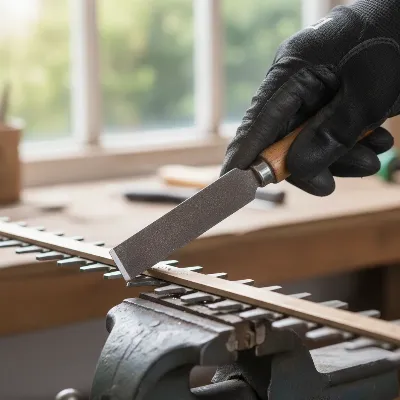 Close-up of hand manually sharpening hedge trimmer blade with a flat file at the correct angle
Using a Rotary Tool (Optional)
For those seeking a quicker method, a rotary tool with a grinding bit can be used, though it requires extra caution.
- Select the Right Bit: Use a grinding stone bit specifically designed for sharpening.
- Maintain Angle and Speed: With the tool running at a low to medium speed, carefully run the grinding bit along the bevel of each tooth, following the original angle. Move the tool gently and quickly, avoiding prolonged contact that could overheat the metal. Overheating can weaken the blade’s temper.
- Light Touch: Do not apply excessive pressure; let the tool do the work. Move it back and forth for only a few seconds per tooth, just enough to restore the edge.
Removing Burrs for a Smooth Finish
After sharpening, small metal burrs may form along the flat, unsharpened side of the blades. Removing these ensures a cleaner cut and smoother operation.
- Whetstone Technique: Take a whetstone or a fine file. Gently draw it along the flat, unsharpened side of each blade in the direction of the cutting edge. Keep the stone flat against the blade, without changing its angle, to smooth away any raised burrs. This process improves cutting efficiency and prevents snagging.
Post-Sharpening Care and Ongoing Maintenance
Once your hedge trimmer blades are gleaming and razor-sharp, a final step of care will protect your hard work and extend the life of your tool.
- Clean Off Filings: Use a soft cloth to wipe down the blades thoroughly, removing any leftover metal filings or dust.
- Lubricate Blades: Apply a light, even coat of lubricating oil or a specialized resin solvent to both sides of the blades. This protects the metal from moisture, prevents rust, and ensures the blades glide smoothly against each other during operation.
- Reassemble and Test: If you disassembled any parts for sharpening, carefully reassemble your trimmer. Once everything is securely back in place, test the trimmer on a small section of a hedge to ensure it cuts cleanly and efficiently.
- Regular Cleaning: Make it a habit to clean your hedge trimmer blades after every use. Removing sap and debris immediately prevents buildup that can quickly dull the blades.
- Avoid Overburdening: Hedge trimmers are designed for smaller, softer branches. For thicker branches that are beyond your trimmer’s capacity, use a pruning saw to avoid damaging the blades.
- Know When to Call a Pro: While DIY sharpening is effective for routine maintenance, if your blades have deep nicks, cracks, or severe alignment issues, it might be time to consult a professional or consider blade replacement. Over-sharpening can also thin the blades too much, compromising their strength.
“A well-maintained tool is not just about performance; it’s about respecting your investment and ensuring your safety. Sharp blades make the job effortless and protect your plants.” – Admin, ReviewsRain.com
Conclusion
Mastering the art of sharpening your hedge trimmer blades at home is a skill that empowers you to keep your garden looking its best while extending the life of your essential tools. By consistently applying the safety measures, proper cleaning techniques, and the precise sharpening methods outlined, you’ll ensure your hedge trimmer is always ready to deliver pristine, healthy cuts. This proactive approach not only saves you money on professional servicing but also transforms a potentially frustrating chore into a satisfying and efficient gardening task. So, grab your file, put on your gloves, and get ready to experience the joy of a perfectly manicured hedge. What perfectly shaped masterpiece will you create next with your newly sharpened hedge trimmer?
Frequently Asked Questions
How often should I sharpen my hedge trimmer blades?
Generally, it’s recommended to sharpen your hedge trimmer blades after every 50 hours of use or at least once or twice per season, depending on how frequently you use it and the type of foliage you cut. Look for signs like frayed cuts or branches jamming as indicators.
Can I sharpen hedge trimmer blades with an angle grinder?
While an angle grinder can sharpen blades quickly, it’s generally recommended only for experienced users due to its aggressive nature. It removes metal rapidly and can easily overheat or damage the blades if not handled with extreme care and precision, potentially altering the blade’s temper.
What is the ideal angle for sharpening hedge trimmer blades?
Most hedge trimmer blades have a factory sharpening angle between 30 and 45 degrees. It’s crucial to identify and replicate this original angle as closely as possible when sharpening. Maintaining the correct angle ensures efficient cutting and prolongs the blade’s integrity.
Frequently Asked Questions
How often should I sharpen my hedge trimmer blades?
It is recommended to sharpen hedge trimmer blades after every 50 hours of use or at least once or twice per season. Indicators like frayed cuts or jammed branches signal that sharpening is needed.
Can an angle grinder be used to sharpen hedge trimmer blades?
An angle grinder can sharpen blades quickly, but it is generally recommended only for experienced users. Its aggressive nature can rapidly remove metal and potentially overheat or damage the blades if not handled with extreme care and precision.
What is the ideal sharpening angle for hedge trimmer blades?
Most hedge trimmer blades have a factory sharpening angle between 30 and 45 degrees. It is crucial to identify and replicate this original angle as closely as possible during sharpening to ensure efficient cutting and prolong blade integrity.
What tools are essential for sharpening hedge trimmer blades at home?
Essential tools for sharpening hedge trimmer blades at home include work gloves, safety glasses, a stiff-bristle brush, a flat file, a bench vice or C-clamp, and lubricating oil. A whetstone or fine file is also useful for removing burrs.
Why is it important to clean hedge trimmer blades before sharpening?
Cleaning hedge trimmer blades thoroughly before sharpening is essential because dirt, sap, and resin can clog sharpening tools and obscure the true cutting edge. Clean blades allow the sharpening tool to glide smoothly and reveal the exact angle of the cutting edge for effective sharpening.
Sharpen Hedge Trimmer Blades at Home
Follow these steps to safely and effectively sharpen your hedge trimmer blades using a flat file, ensuring clean cuts and extending the life of your tool.
Disconnect power from the hedge trimmer (unplug electric, remove battery for cordless, disconnect spark plug for gas). Wear safety glasses and heavy-duty work gloves. Secure the trimmer firmly on a sturdy workbench using a bench vice or C-clamp to prevent movement.
Use a stiff-bristle or wire brush to remove loose dirt, plant material, and sap. For stubborn grime, spray a silicone-based cleaner like WD-40 or use soapy water, letting it sit for a few minutes. Wipe the blades completely clean and dry with a soft cloth to prevent rust and reveal the cutting edge.
Identify the original sharpening angle (typically 30-45 degrees) on a blade tooth. Position a medium-grit flat file against the angled bevel and push it along the blade in one fluid motion, away from your body, maintaining the original angle. Use 5-10 consistent strokes per tooth, then flip the trimmer and repeat on the other side.
After filing, small metal burrs may form on the flat, unsharpened side of the blades. Gently draw a whetstone or fine file along this flat side, keeping it flat against the blade, to smooth away any raised burrs. This step improves cutting efficiency and prevents snagging.
Wipe down the blades with a soft cloth to remove any metal filings. Apply a light, even coat of lubricating oil or resin solvent to both sides of the blades to protect against rust and ensure smooth operation. Reassemble the trimmer if necessary and test it on a small section of hedge.

Great tips! I always just winged it before, but understanding how dull blades stress the motor was a real eye-opener. My old electric trimmer was starting to sound pretty rough, and after giving the blades a good sharpen, it’s running much smoother. I appreciate the focus on extending tool life, that’s a big plus for me.
This was exactly what I needed! My hedges were looking pretty ragged, and I knew it was because of my dull blades. Following the steps for safe and effective blade sharpening made a huge difference. My gas-powered trimmer feels like new again, and the cuts are so much cleaner. My garden looks so much tidier now.
I used to dread sharpening my hedge trimmer blades, but the flat file method described here made it so much easier. My hedges look so much cleaner now, and the trimmer isn’t struggling like it used to. It really does make a difference in how quickly the plants heal after a trim. Definitely recommend following these steps.
The guide was helpful for the most part, especially the bit about clean cuts promoting plant health. I tried the sharpening steps, but I found it a little tricky to get the angle just right with my particular hedge trimmer. It’s definitely better than before, but I think I might need a bit more practice or maybe a different type of file for my specific blades.