Properly lubricating and maintaining hedge trimmer blades at home is crucial for optimal performance and tool longevity, reducing friction, preventing rust, and ensuring efficient cutting for years. This guide covers everything from understanding different hedge trimmer types to essential safety protocols and detailed maintenance steps, including blade cleaning and lubrication, based on over a decade of hands-on experience.
Hedge Trimmer Overview
Hedge trimmers are specialized gardening tools designed to efficiently cut, prune, and shape hedges, shrubs, and bushes, making them essential for both aesthetic landscaping and practical plant health. They fundamentally replace the strenuous and time-consuming work of manual shears, allowing gardeners to achieve cleaner cuts and more uniform results with significantly less effort. Modern hedge trimmers are indispensable for maintaining formal landscapes, intricate topiary designs, and privacy screens in diverse settings.
Definition and Purpose
A hedge trimmer is a powered gardening device featuring reciprocating blades that shear through branches and stems, typically up to 1/2 inch thick, though some powerful models can handle more. Its primary purpose is to trim and shape foliage, promoting healthier plant growth by removing overgrown or dead branches, and helping to control the size and form of plants. Beyond aesthetic appeal, these tools contribute to garden safety by clearing overgrown areas that might obstruct pathways or views. For browse all hedge trimmer articles on this site.
A Brief History of Hedge Trimmers
The evolution of the hedge trimmer reflects a continuous effort to mechanize and simplify garden maintenance. For centuries, gardeners relied on basic hand tools like large garden shears and pruning knives, a laborious process demanding significant physical exertion and skill. Early precursors to modern hedge trimmers emerged in the 19th century, with innovations like Leonard Wood’s wheeled hedge cutter in 1854. However, handheld mechanical models gained traction in the early 20th century. A significant breakthrough occurred in 1940 when Little Wonder, an American manufacturer, introduced the world’s first electric-powered hedge trimmer, marking a pivotal shift from manual methods. This was followed by the same company’s introduction of the first gasoline-powered hedge trimmer in 1955, further expanding portability and power for professional applications. These developments transformed labor-intensive pruning into a faster, more precise task, revolutionizing landscaping practices globally.
General Types of Hedge Trimmers
Hedge trimmers are broadly categorized based on their power source, blade configuration, and specific design, each suited to different user needs and hedge sizes. Understanding these general types is the first step in selecting the right tool for your gardening tasks. The most common distinctions are based on whether they are powered by electricity (corded or battery) or gasoline, and the design of their cutting blades, such as single-sided or double-sided.
Detailed Classification of Hedge Trimmers
Delving deeper into the types of hedge trimmers reveals significant differences in their functionality, performance, and suitability for various tasks. The two primary ways to classify these tools are by their power source and their blade design, each presenting a unique set of advantages and limitations.
By Power Source: Electric, Battery-Powered, and Gas
The power source of a hedge trimmer profoundly impacts its mobility, power, noise level, and maintenance requirements.
- Electric (Corded) Hedge Trimmers: These trimmers connect to a standard power outlet via an extension cord. They are typically the least expensive option and are known for being lightweight, making them easy to handle for extended periods. Corded electric models are quieter than their gas counterparts and produce no emissions, making them ideal for urban environments. However, their mobility is limited by the length of the cord, which can also pose a tripping hazard. They are best suited for smaller gardens and hedges where power access is readily available.
- Battery-Powered (Cordless) Hedge Trimmers: Offering the ultimate in portability and freedom of movement, cordless hedge trimmers run on rechargeable lithium-ion batteries. They are significantly quieter and produce no emissions, akin to corded electric models, but without the cable restriction. These trimmers are generally lightweight and well-balanced, reducing user fatigue. While they offer decent power for most residential tasks, their runtime is limited by battery life, often requiring spare batteries for larger jobs. They represent a mid-range price point, balancing convenience with performance.
- Gas-Powered (Petrol) Hedge Trimmers: Designed for heavy-duty tasks and professional use, gas-powered trimmers offer the most power and longest continuous runtime, making them ideal for large properties, thick branches, and overgrown hedges. They are not limited by power cords or battery life and can tackle very demanding plant material. However, they are significantly heavier, louder, and produce exhaust emissions. Gas models also require more maintenance, including fuel mixing, spark plug changes, and air filter cleaning, and typically come with a higher upfront cost.
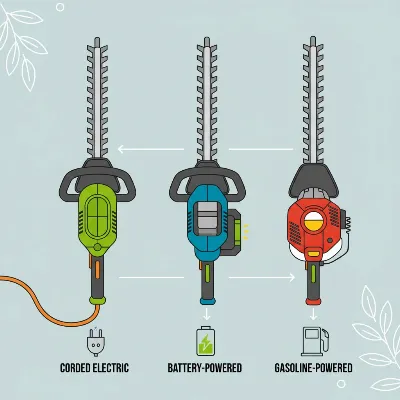 Illustration of different types of hedge trimmers: electric, battery, and gas
By Blade Design: Single-Sided, Double-Sided, and Pole Trimmers
The design of a hedge trimmer’s blades dictates its cutting efficiency, precision, and suitability for specific trimming styles.
- Single-Sided Blades: These blades have cutting teeth on only one side of the blade bar. They are generally considered safer as they only cut in one direction, reducing the risk of accidental contact with the non-cutting edge. Single-sided blades can be longer without making the tool unwieldy, making them excellent for cutting long, straight sections of hedges, especially when aiming for a flat top or uniform side. They are often found on less expensive models and require less complex maintenance.
- Double-Sided Blades: Featuring cutting teeth on both sides of the blade bar, double-sided trimmers cut in both directions as the blades reciprocate. This design offers faster cutting performance and is highly effective for shaping hedges, creating intricate curves, and tackling general garden maintenance tasks. Many double-sided models also come with rotating or swivel handles, enhancing ergonomic flexibility for trimming at various angles. While more versatile, they require careful handling due to exposed cutting edges on both sides.
- Pole Hedge Trimmers: These specialized trimmers are designed with an extended shaft, allowing users to reach high hedges or ground covers without the need for ladders. Pole trimmers often feature an articulating or pivoting head, enabling the blade to be angled for precise cuts from a distance. They can be powered by electric cords, batteries, or gasoline. While invaluable for accessibility, their extended reach can make them heavier and require more careful balancing during operation.
Comparing Hedge Trimmer Types
Choosing the right hedge trimmer can significantly impact your efficiency and satisfaction in the garden. To simplify this decision, a direct comparison of the main types—electric (corded), battery-powered, and gas-powered—across key criteria is highly beneficial. Each type excels in different areas, making one a better fit depending on your specific gardening needs and priorities. The table below outlines these differences to help you make an informed choice.
| Feature | Electric (Corded) | Battery-Powered (Cordless) | Gas-Powered (Petrol) |
|---|---|---|---|
| Power | Moderate, consistent | Moderate to High | High to Very High |
| Weight | Light (3-4 lbs) | Light to Moderate (5-10 lbs) | Heavy (10-12+ lbs) |
| Noise Level | Low, quiet | Low, quiet | High, loud |
| Price Range | Lowest | Mid-range (consider extra batteries) | Highest (plus fuel costs) |
| Flexibility | Limited by cord length | High (cordless freedom) | High (cordless freedom) |
| Maintenance | Minimal (cleaning, lubrication) | Low (cleaning, lubrication, battery care) | High (fuel, oil, filters, spark plugs) |
| Cutting Cap. | 15-20mm (light to medium growth) | 20-25mm (medium to mature growth) | 25mm+ (thick, woody growth) |
| Emissions | None | None | High |
| Best For | Small yards, light use, close to power | Medium to large yards, regular use | Large estates, heavy-duty, professional |
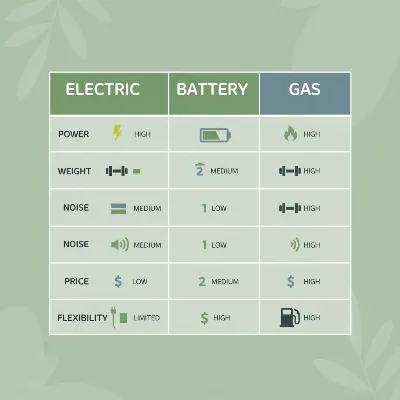 A comparative table highlighting features of various hedge trimmer types
Choosing Your Ideal Hedge Trimmer: A Buying Guide
Selecting the perfect hedge trimmer can seem daunting given the variety available. However, by systematically considering your specific gardening context, budget, and desired features, you can confidently narrow down the options and find a tool that perfectly aligns with your needs. This buying guide breaks down the critical factors to help you make an informed decision.
Assessing Your Trimming Needs
The first step in choosing a hedge trimmer is to honestly evaluate the scope and nature of your trimming tasks. Consider the size of the area you need to maintain, as this will influence the ideal power source and blade length. For instance, a small urban garden with ornamental shrubs might only require a lightweight, corded electric model, while a large rural property with extensive, dense hedges would benefit more from a powerful gas or high-capacity battery trimmer. Additionally, assess the type of plant material you’ll be cutting; soft, new growth demands less power and blade strength than thick, woody branches. Finally, think about how often you’ll be using the trimmer—frequent, heavy use warrants a more robust and durable model.
Understanding Your Budget
Your budget plays a significant role in determining the type of hedge trimmer you can acquire. Corded electric models are generally the most affordable upfront, making them an excellent entry-level choice for budget-conscious gardeners. Battery-powered trimmers fall into the mid-range, but it’s crucial to factor in the cost of additional batteries and a charger, which can add to the total investment. Gas-powered trimmers are typically the most expensive, not just in their initial purchase price but also due to ongoing costs for fuel, oil, and more intensive maintenance. Remember that investing a little more in a higher-quality tool often translates to better performance, greater durability, and reduced long-term repair costs.
Essential Features and Safety Considerations
Beyond power source and price, several key features contribute to a hedge trimmer’s effectiveness, comfort, and safety.
- Blade Length: Longer blades (50cm or more) are efficient for covering large, flat surfaces quickly, but they can be heavier and less maneuverable in tight spaces. Shorter blades (40cm or less) offer superior control and are lighter, ideal for detailed shaping and smaller shrubs.
- Tooth Gap (Cutting Capacity): This measurement indicates the maximum branch thickness the blades can effectively cut. A gap of 15-20mm is suitable for light, new growth, while 20-25mm handles mature hedges. For thick, woody, or neglected hedges, look for a tooth gap of 25mm or more.
- Power and Weight: Consider the power output relative to the weight. A powerful yet heavy machine might lead to fatigue, especially when working for extended periods or holding the trimmer at awkward angles. Look for well-balanced models that minimize strain.
- Safety Features: Modern hedge trimmers incorporate various safety mechanisms. A two-hand trigger switch ensures both hands are on the tool during operation. A quick-stop brake halts the blades almost instantly upon release. A handguard protects your hands from flying debris and the blades. Anti-vibration technology reduces fatigue during prolonged use, enhancing both comfort and safety.
- Ergonomics: Features like a swivel or rotating rear handle greatly improve comfort and flexibility when trimming the sides of hedges or working at different angles.
 Person evaluating hedge trimmer features like blade length and handle
Top Picks for Hedge Trimmers
While specific model recommendations can quickly become outdated due to continuous product innovation, identifying the characteristics of top-performing hedge trimmers remains evergreen. The “best” hedge trimmer truly depends on aligning the tool’s capabilities with your individual needs, budget, and desired cutting performance. Generally, the most highly-regarded models across different power types share common traits: robust construction, efficient cutting power for their class, ergonomic design that minimizes fatigue, and a strong emphasis on user safety. For corded electric trimmers, top performers are often lightweight, easy to maneuver, and deliver consistent power for smaller, accessible hedges. Battery-powered options that stand out combine impressive cutting force with long-lasting batteries and comfortable handling, making them versatile for medium to large gardens. Gas-powered hedge trimmers at the pinnacle of their class offer superior power for tackling the toughest, thickest hedges, built with durable engines and advanced anti-vibration systems for professional-grade reliability. Always prioritize models from reputable brands known for their reliability, customer support, and availability of replacement parts.
 Variety of high-quality hedge trimmers displayed for optimal selection
Safe Operation and Maintenance of Hedge Trimmers
Operating a hedge trimmer effectively and safely requires more than just knowing how to turn it on; it demands adherence to safety protocols and a consistent maintenance routine. Proper care not only extends the life of your tool but also ensures your safety and the quality of your garden work.
Prioritizing Safety During Use
Safety should always be your top priority when operating a hedge trimmer. These powerful tools can cause serious injury if mishandled.
- Wear Personal Protective Equipment (PPE): Always don safety glasses or goggles to protect your eyes from flying debris. Ear protection (ear defenders or plugs) is crucial, especially with noisy gas models. Wear sturdy, non-slip work boots, long pants, and heavy-duty work gloves to shield your hands from cuts and abrasions. Long sleeves are also recommended to protect your arms.
 Essential safety gear for operating a hedge trimmer, laid out
 - Pre-Use Inspection: Before each use, thoroughly inspect your hedge trimmer. Check for any damaged parts, loose screws, or frayed power cords. Ensure the blades are sharp and free of obstructions. A dull blade can snag and cause kickback, increasing the risk of injury.
- Maintain a Secure Stance: Always use both hands to firmly hold the hedge trimmer. Maintain a balanced and stable footing, avoiding ladders or unstable surfaces. Never overreach; reposition yourself as needed. Keep your hands, feet, and body well away from the blades, especially when the tool is running.
- Clear the Work Area: Ensure children, pets, and bystanders remain at a safe distance, typically 40-45 feet away. Remove any hidden objects like stones, wires, or old garden tools from the hedge that could be struck by the blades.
- Power Disconnection: Before performing any maintenance, clearing jams, or making adjustments, always disconnect the power source. For electric models, unplug the cord. For battery models, remove the battery. For gas models, turn off the engine and allow it to cool.
- Environmental Awareness: Avoid using electric hedge trimmers in wet conditions or rain, as this poses an electrocution risk. If using a corded model, keep the power cord behind you and clear of the cutting path to prevent accidental severing.
Essential Routine Maintenance, Including Blade Lubrication
Regular maintenance is the cornerstone of a high-performing and long-lasting hedge trimmer. Among these tasks, blade cleaning and lubrication are paramount.
- Clean Blades After Every Use: Plant sap, resin, and debris quickly accumulate on blades, causing them to bind and dull. After each trimming session, especially after cutting resinous plants, disconnect the power and use a stiff brush to remove larger debris. Then, clean the blades with warm soapy water or a specialized blade cleaner/resin remover. Products like STIHL Superclean or Agealube Bio Hedge Trimmer Spray are designed to dissolve sticky residues effectively. Thoroughly wipe down the blades and allow them to air dry completely before storage.
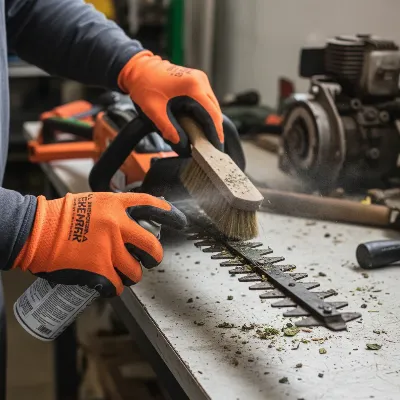 Person cleaning hedge trimmer blades with a brush and cleaner
 - Lubricate Blades Regularly: Lubrication is critical for reducing friction, preventing rust and corrosion, and maintaining optimal cutting efficiency.
- Why it Matters: As blades move rapidly against each other, friction generates heat, which can dull the edges and warp the metal over time. Plant sap and moisture also contribute to rust and corrosion. A protective lubricant minimizes these issues, ensuring smoother cuts, less strain on the motor, and extending the lifespan of your blades.
- What to Use: Opt for specialist hedge trimmer oils or sprays. Examples include STIHL Superclean (which also acts as a cleaner), Agealube products, WD-40 Specialist Lawn & Garden Spray (specifically the garden tool formula, not regular WD-40 which is a solvent), 3-IN-ONE Multi-Purpose Oil, light machine oil, or silicone-based sprays. Avoid using regular WD-40 as a lubricant; it’s a degreaser and can attract dirt while potentially harming plants.
- How to Lubricate Safely at Home (DIY Steps):
- Ensure Safety First: Always disconnect the power source (unplug electric trimmers, remove batteries from cordless, turn off gas engines) before you begin. Wear protective gloves.
- Clean the Blades: As detailed above, ensure the blades are thoroughly clean and dry to remove all sap, dirt, and moisture. Lubricant applied over grime is ineffective.
- Apply Lubricant: Apply a light, even coat of your chosen lubricant along the entire length of the blades. Pay special attention to the cutting edges, the space between the teeth, and any visible moving parts where the blades slide against each other. If using a spray, hold the can about 10-15 cm (4-6 inches) away for good coverage.
- Distribute Evenly: Briefly run the trimmer for just one or two seconds. This action helps to distribute the lubricant uniformly between the reciprocating blades, ensuring all surfaces are coated.
- Wipe Excess: Use a clean, dry cloth to wipe away any excess lubricant. This prevents it from attracting dust, dirt, and plant debris during storage or the next use.
- How Often: Ideally, lubricate your hedge trimmer blades after every use. This is especially important after cutting resinous plants that leave sticky residue. If you use your trimmer frequently, a quick lubrication before and after each session is beneficial. For less frequent users, a monthly application, and a generous coat before long-term storage, will suffice.
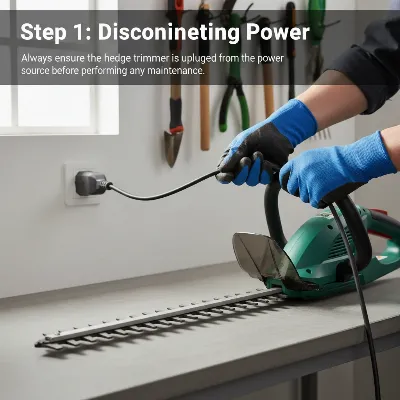 Step-by-step process of lubricating hedge trimmer blades safely
- Sharpen Blades: When you notice the trimmer snagging or leaving ragged cuts, it’s time to sharpen the blades. This typically needs to be done after every 50 hours of accumulated use. You can use a fine-tooth file or a specialized sharpening tool, always following the manufacturer’s instructions. If you’re unsure, professional sharpening services are available.
- Check and Tighten Fasteners: The vibrations from operation can loosen screws and bolts over time. Periodically inspect all visible fasteners and gently tighten any that are loose. Be careful not to overtighten, as this can impede blade movement.
- General Cleaning of the Unit: Wipe down the entire trimmer body with a damp cloth to remove dirt and dust. For gas models, clean the air filter regularly (refer to your manual for instructions) to ensure proper engine airflow and prevent overheating.
- Proper Storage: Store your hedge trimmer in a clean, dry, and secure location, ideally with the blade guard in place to protect the blades from damage and moisture. For cordless models, remove the battery and store it separately in a cool, dry, fireproof area, avoiding extreme temperatures. For gas models, consider emptying the fuel tank before long-term storage.
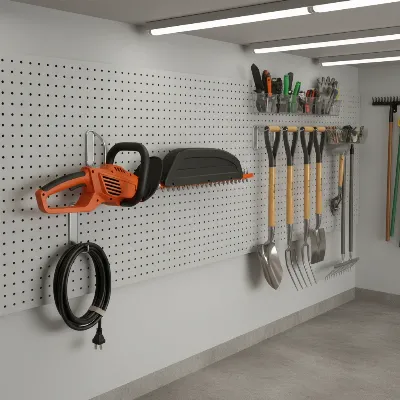 A well-maintained hedge trimmer stored safely in a garage
Conclusion
A well-maintained hedge trimmer is not just a luxury; it’s a necessity for achieving beautifully manicured hedges and ensuring the longevity of your valuable gardening tool. From understanding the various types of trimmers available to meticulously following safety guidelines, every aspect contributes to a more efficient and enjoyable gardening experience.
Frequently Asked Questions
Why is regular lubrication important for hedge trimmer blades?
Regular lubrication is critical for hedge trimmer blades because it reduces friction, prevents rust and corrosion, and maintains optimal cutting efficiency. Friction generates heat that can dull edges, while plant sap and moisture lead to rust, all of which are minimized by a protective lubricant.
What types of lubricants are safe to use on hedge trimmer blades?
Safe lubricants for hedge trimmer blades include specialist hedge trimmer oils or sprays like STIHL Superclean, Agealube products, WD-40 Specialist Lawn & Garden Spray (garden tool formula), 3-IN-ONE Multi-Purpose Oil, light machine oil, or silicone-based sprays. Avoid using regular WD-40 as it is a degreaser.
How often should I lubricate my hedge trimmer blades for best results?
Ideally, you should lubricate your hedge trimmer blades after every use, especially after cutting resinous plants. For frequent users, a quick lubrication before and after each session is beneficial, while less frequent users can apply lubricant monthly and before long-term storage.
What personal protective equipment (PPE) is necessary when operating a hedge trimmer?
When operating a hedge trimmer, essential PPE includes safety glasses or goggles, ear protection (ear defenders or plugs), sturdy non-slip work boots, long pants, and heavy-duty work gloves. Long sleeves are also recommended to protect your arms from debris and cuts.
When should hedge trimmer blades be sharpened?
Hedge trimmer blades should be sharpened when you notice the trimmer snagging or leaving ragged cuts, which typically occurs after every 50 hours of accumulated use. You can use a fine-tooth file or a specialized sharpening tool, or opt for professional sharpening services.
How to Lubricate Hedge Trimmer Blades Safely at Home
Lubricating your hedge trimmer blades is a simple yet crucial maintenance step that extends the tool's lifespan and ensures efficient cutting. Follow these steps to safely lubricate your blades after each use.
Always disconnect the power source before starting any maintenance. Unplug electric trimmers, remove batteries from cordless models, and turn off gas engines, allowing them to cool. Wear protective gloves to prevent injury.
Before applying lubricant, ensure the blades are completely clean and dry. Use a stiff brush to remove large debris, then clean with warm soapy water or a specialized blade cleaner to remove sap and grime. Lubricant applied over dirt is ineffective.
Apply a light, even coat of a specialist hedge trimmer oil or spray along the entire length of the blades. Focus on the cutting edges and the spaces between the teeth where blades slide against each other. If using a spray, hold the can 10-15 cm (4-6 inches) away for optimal coverage.
Briefly run the trimmer for just one or two seconds to help distribute the lubricant uniformly between the reciprocating blades. This ensures all moving surfaces are coated, maximizing protection against friction and rust.
Use a clean, dry cloth to wipe away any excess lubricant from the blades. This prevents the lubricant from attracting dust, dirt, and plant debris during storage or the next use, keeping your blades cleaner for longer.

I always struggled with my hedge trimmer blades getting gunked up, but the tip about using a wire brush for cleaning before lubrication was a game-changer. My old electric trimmer feels like new after following these steps. It’s cutting through thicker branches much more smoothly now, and I’m confident it’ll last a lot longer.
The safety protocols section was thorough, which I appreciate. However, I was hoping for a bit more detail on specific lubricant brands or types that are best for different climates. My cordless trimmer works fine, but I’m always looking for ways to optimize its performance in humid conditions. Still, good basic info.
This guide was super helpful for understanding the different types of lubricants. I used to just grab whatever oil was in the garage, but now I know why a specific blade lubricant is better for preventing rust and keeping things running smoothly. My gas-powered trimmer definitely sounds happier after its first proper lube job.
My hedge trimmer was getting really sluggish, and I thought I might need a new one. Following the detailed maintenance steps, especially the blade cleaning and lubrication, brought it back to life. It’s amazing how much difference proper care makes. I’m so glad I didn’t buy a new one!