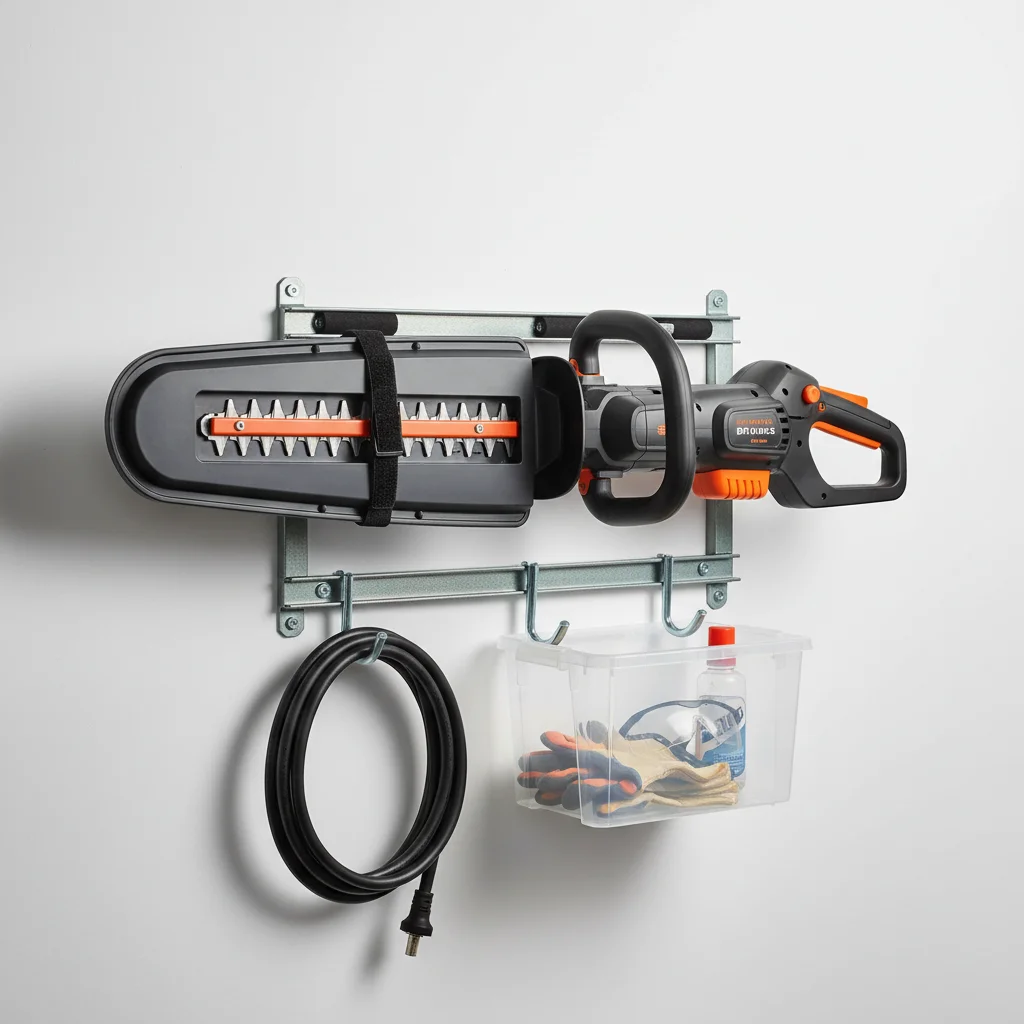
Proper hedge trimmer storage is crucial for extending the lifespan of your tool and ensuring it’s ready for action when spring arrives. The best approach involves a five-step process that addresses cleaning, lubrication, fuel management, blade protection, and environmental considerations. Neglecting these steps can lead to rust, engine issues, and decreased performance, costing you time and money in repairs or replacements.
Why Proper Storage Matters for Your Hedge Trimmer
Storing your hedge trimmer correctly isn’t just about tidiness; it’s about preventative maintenance. Exposure to moisture, dust, and extreme temperatures can degrade components, dull blades, and even cause engine problems for gas models. A well-stored hedge trimmer will start easier, run smoother, and require less maintenance when you pull it out for the next trimming season. This proactive approach saves you from frustrating breakdowns and unexpected repair costs.
Step-by-Step Guide to Off-Season Hedge Trimmer Storage
Before putting your hedge trimmer away for an extended period, follow these essential steps:
- Thorough Cleaning: Remove all sap, dirt, and debris from the blades, engine housing, and air vents. Use a stiff brush and a damp cloth. For stubborn sap, a specialized cleaner or mineral spirits can be effective.
- Blade Protection: After cleaning, apply a light coat of lubricant or rust preventative to the blades. This prevents corrosion during storage. Consider using a blade cover for added protection against accidental damage and to keep the lubricant in place.
- Fuel Management (Gas Models): For gas hedge trimmers, either run the fuel tank dry or use a fuel stabilizer. Stale fuel can gum up the carburetor and fuel lines, making starting difficult. If running dry, ensure the engine cools completely before storage.
- Battery Care (Cordless Models): Remove the battery from cordless hedge trimmers. Store batteries in a cool, dry place, ideally at a partial charge (around 50-60%) to prolong their overall life. Avoid storing fully charged or fully depleted batteries for long periods.
- Environmental Control: Store your hedge trimmer in a dry, sheltered location away from direct sunlight, extreme temperatures, and high humidity. A shed, garage, or workshop is ideal. Avoid damp basements or outdoor storage where moisture can accumulate.
Following these steps will significantly reduce the risk of common storage-related issues.
Essential Tools and Products for Optimal Storage
|
Our Picks for the Best Hedge Trimmer in 2026
As an Amazon Associate I earn from qualifying purchases.
|
||
| Num | Product | Action |
|---|---|---|
| 1 | WORX 22" Cordless Hedge Trimmer, Electric Hedge Trimmer with Dual-Action Blades, Lightweight Bush Trimmer with 4.4 LBS, Battery & Charger Not Included, WG261.9 |

|
| 2 | Electric Hedge Trimmer Cordless Compatible with DEWALT 20V MAX Battery, 20-Inch Cordless Hedge Trimmer, Brushless Bush Trimmer, 2/3'' Cutting Capacity, Lightweight & Rotatable Handle(No Battery) |
|
| 3 | Hedge Trimmer for Dewalt 20V Battery, Cordless Hedge Trimmer with 22'' Dual-Action Blade, 1600RPM, 3/5'' Cutting Width, Rotating Handle & Dual Switch Design (Battery Not Included) (Yellow) |
|
| 4 | Cordless Hedge Trimmer 22-Inch Compatible with DEWALT 20V MAX Battery, Electric Hedge Trimmer Cordless, Bush Trimmers for Garden, Battery Powered Hedge Trimmers (Tool Only) |
|
| 5 | BLACK+DECKER 18-Inch Electric Hedge Trimmer (BEHT200) |
|
| 6 | Hedge Trimmer for Dw 20V Battery,Hedge Trimmer Cordless with 22'' Dual-Action Blade and 3/5'' Cutting Capacity,1600RPM& Safety Lock (Battery Not Included) |
|
| 7 | SEESII 20V Hedge Trimmer Cordless: 20" Electric Bush Trimmer - Dual 4.0Ah Batteries, Dual-Action Blade, 0.71" Blade Gap, Rotatable Handle, Lightweight Handheld Grass Shrub Clipper for Garden Yard |
|
| 8 | BLACK+DECKER 20V MAX Cordless Hedge Trimmer, Battery and Charger Included, 22 Inch Steel Blade Lightweight Bush Trimmer, Soft Grip, Less Vibration (LHT2220) |
|
| 9 | BLACK+DECKER Electric Hedge Trimmer, 16-Inch 3.0 Amp Compact Corded Power Hedge Trimmer (BEHT100) |
|
| 10 | BLACK+DECKER Electric Hedge Trimmer, 17-Inch Corded 3.2 Amp, Dual Action, Reduced Vibration, Cleaner Cut, Lightweight, 3800 Cuts per Min (BEHT150) |
|
To properly prepare your hedge trimmer for storage, you’ll need a few key items. A good quality blade cleaner and lubricant are indispensable for preventing rust and keeping blades sharp. For gas models, a reliable fuel stabilizer is a must-have to prevent fuel degradation. Additionally, a sturdy blade cover offers crucial protection against nicks and dings during the off-season.Investing in these simple products can save you from costly repairs down the line.
Common Storage Mistakes to Avoid
Many users inadvertently shorten their hedge trimmer’s life by making common storage errors. One frequent mistake is storing gas models with untreated fuel in the tank, leading to carburetor issues. Another is neglecting to clean and lubricate blades, which results in rust and dullness. Storing the tool in a damp environment or exposed to the elements is also detrimental, inviting corrosion and damage to electrical components. Always ensure your storage location is dry and protected.Taking a few extra minutes to store your tool correctly will pay dividends in its longevity and performance.
When to Prepare Your Hedge Trimmer for Storage
The ideal time to prepare your hedge trimmer for off-season storage is immediately after its last use of the growing season. This ensures that any sap or debris is removed before it hardens, and fuel is treated or drained before it can go stale. Don’t wait until the last minute; a proactive approach guarantees your tool is in prime condition when you’re ready to tackle your hedges again next spring.

I always just threw my hedge trimmer in the shed, but after reading about the importance of blade protection, I invested in a good blade cover. It’s made a huge difference in preventing rust, especially with the humidity we get here. My gas model starts up so much smoother now too, probably because I’m actually taking the time to clean it properly before putting it away.
This is exactly what I needed! I’ve been struggling with my hedge trimmer not performing as well each spring, and I think it’s because I’ve been neglecting the lubrication step. I’m going to make sure to oil the blades and moving parts before storing it this year. It makes total sense that proper maintenance extends the tool’s lifespan.
The tips on fuel management were really helpful. I used to just leave the old gas in my Stihl trimmer all winter, and it was always a pain to get it going in the spring. Draining the fuel or using a stabilizer seems like a small step but it’s saved me a lot of headaches. Wish I’d known this sooner!
I appreciate the advice on environmental considerations, especially keeping the trimmer in a dry, temperature-controlled spot. My garage gets pretty cold in winter, and I’ve noticed some issues with the plastic housing on my electric model getting brittle. It’s a good reminder, but finding that ‘ideal’ spot can be tough for those of us with limited space.