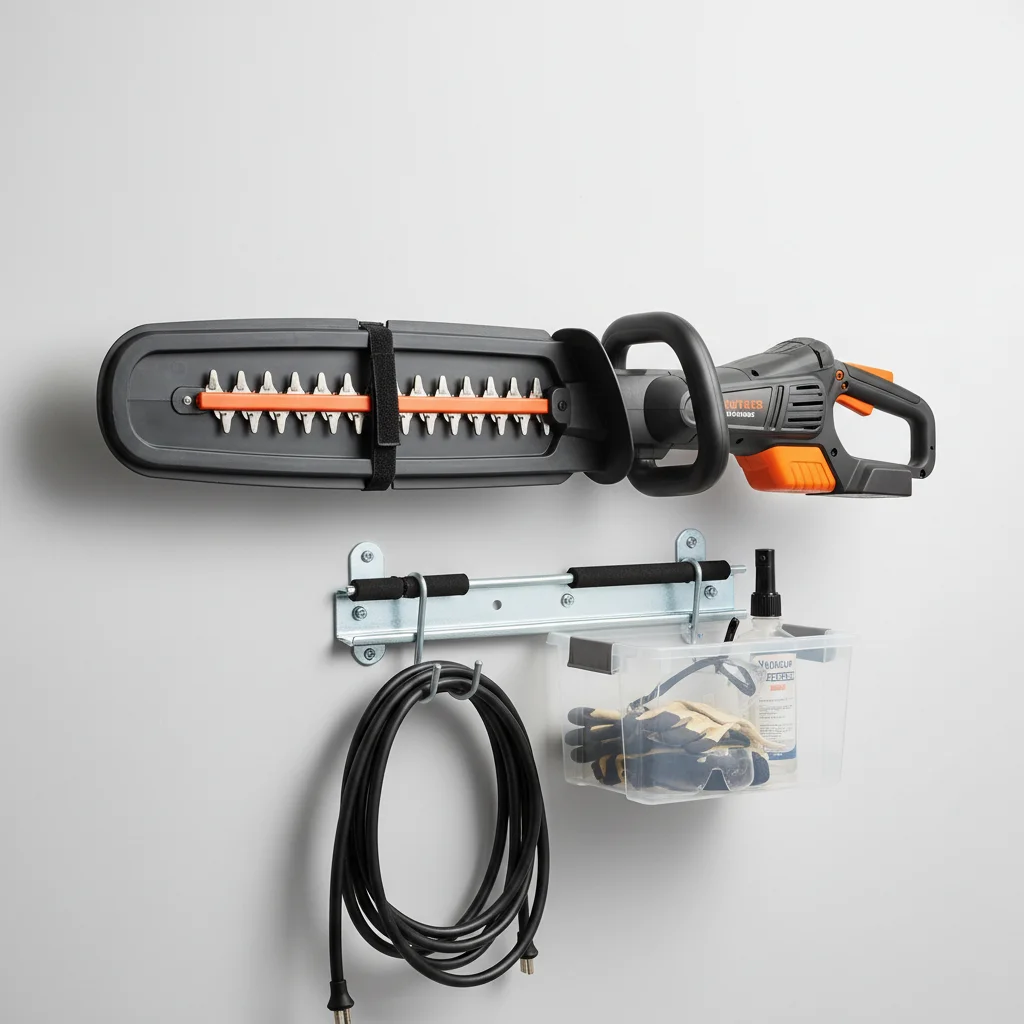
Proper hedge trimmer storage is crucial for extending the lifespan of your tool and ensuring it’s ready for action when spring arrives. The best way to store your hedge trimmer involves a five-step process that addresses cleaning, lubrication, fuel management, battery care, and proper placement. Neglecting these steps can lead to rust, engine issues, or battery degradation, costing you time and money in repairs or replacements.
Why Proper Storage Matters for Your Hedge Trimmer
Storing your hedge trimmer correctly isn’t just about tidiness; it’s about preserving its functionality and safety. Exposure to moisture can cause rust on blades and internal components, while improper fuel management in gas models can lead to carburetor clogs. For battery-powered units, incorrect charging and storage can significantly reduce battery life and performance. A well-stored hedge trimmer will start easily and perform efficiently season after season.
Step-by-Step Guide to Off-Season Hedge Trimmer Storage
Before putting your hedge trimmer away for an extended period, especially over winter, follow these essential steps. This comprehensive approach ensures every part of your tool is protected.
- Clean the Blades Thoroughly: Remove all sap, dirt, and debris from the blades using a stiff brush and a suitable cleaner.
- Lubricate Moving Parts: Apply a light coat of oil to the blades and any other moving metal parts to prevent rust.
- Address Fuel (Gas Models): Run the engine dry or use a fuel stabilizer to prevent gumming and corrosion.
- Care for Batteries (Cordless Models): Store batteries partially charged (around 50%) in a cool, dry place.
- Choose a Suitable Storage Location: Keep the trimmer in a dry, protected area away from extreme temperatures.
Cleaning and Blade Maintenance Before Storage
|
Our Picks for the Best Hedge Trimmer in 2026
As an Amazon Associate I earn from qualifying purchases.
|
||
| Num | Product | Action |
|---|---|---|
| 1 | Hedge Trimmer for Dw 20V Battery,Hedge Trimmer Cordless with 22'' Dual-Action Blade and 3/5'' Cutting Capacity,1600RPM& Safety Lock (Battery Not Included) |

|
| 2 | Hedge Trimmer for Dewalt 20V Battery, Cordless Hedge Trimmer with 22'' Dual-Action Blade, 1600RPM, 3/5'' Cutting Width, Rotating Handle & Dual Switch Design (Battery Not Included) (Yellow) |
|
| 3 | SEESII 20V Hedge Trimmer Cordless: 20" Electric Bush Trimmer - Dual 4.0Ah Batteries, Dual-Action Blade, 0.71" Blade Gap, Rotatable Handle, Lightweight Handheld Grass Shrub Clipper for Garden Yard |
|
| 4 | BLACK+DECKER 20V MAX Cordless Hedge Trimmer, Battery and Charger Included, 22 Inch Steel Blade Lightweight Bush Trimmer, Soft Grip, Less Vibration (LHT2220) |
|
| 5 | WORX 22" Cordless Hedge Trimmer, Electric Hedge Trimmer with Dual-Action Blades, Lightweight Bush Trimmer with 4.4 LBS, Battery & Charger Not Included, WG261.9 |
|
| 6 | Electric Hedge Trimmer Cordless Compatible with DEWALT 20V MAX Battery, 20-Inch Cordless Hedge Trimmer, Brushless Bush Trimmer, 2/3'' Cutting Capacity, Lightweight & Rotatable Handle(No Battery) |
|
| 7 | BLACK+DECKER Electric Hedge Trimmer, 17-Inch Corded 3.2 Amp, Dual Action, Reduced Vibration, Cleaner Cut, Lightweight, 3800 Cuts per Min (BEHT150) |
|
| 8 | Cordless Hedge Trimmer 22-Inch Compatible with DEWALT 20V MAX Battery, Electric Hedge Trimmer Cordless, Bush Trimmers for Garden, Battery Powered Hedge Trimmers (Tool Only) |
|
| 9 | BLACK+DECKER 18-Inch Electric Hedge Trimmer (BEHT200) |
|
| 10 | BLACK+DECKER Electric Hedge Trimmer, 16-Inch 3.0 Amp Compact Corded Power Hedge Trimmer (BEHT100) |
|
The first and most critical step is a thorough cleaning. Sap and plant residue can harden and corrode blades over time. Use a wire brush or a specialized blade cleaner to remove all organic matter. After cleaning, apply a thin layer of lubricating oil, such as a multi-purpose oil or a specialized blade lubricant, to prevent rust and keep the blades in prime condition. This also makes the first cut of the next season much smoother.
Fuel and Engine Preparation for Gas Hedge Trimmers
For gas-powered hedge trimmers, fuel management is paramount. You have two main options: either run the fuel tank completely dry or use a high-quality fuel stabilizer. Running it dry prevents stale fuel from gumming up the carburetor. If you opt for a stabilizer, follow the product instructions carefully, then run the engine for a few minutes to ensure the stabilized fuel circulates throughout the system. This prevents ethanol-related damage and ensures easy starting next season.
Battery Care for Cordless Hedge Trimmers
Cordless hedge trimmers require specific battery care for long-term storage. Do not store batteries fully charged or completely depleted. Aim for a charge level of approximately 50-60%. Store the batteries in a cool, dry place, ideally between 50-70°F (10-20°C), away from direct sunlight and extreme temperatures. This practice significantly extends the overall life of your lithium-ion batteries.
Choosing the Right Storage Location
The final step is selecting an appropriate storage location. A shed, garage, or workshop is ideal, provided it is dry and protected from significant temperature fluctuations. Avoid storing your hedge trimmer outdoors or in areas prone to dampness, which can lead to rust and electrical issues. Hanging the trimmer on a wall mount can save space and keep it safe from accidental damage.
