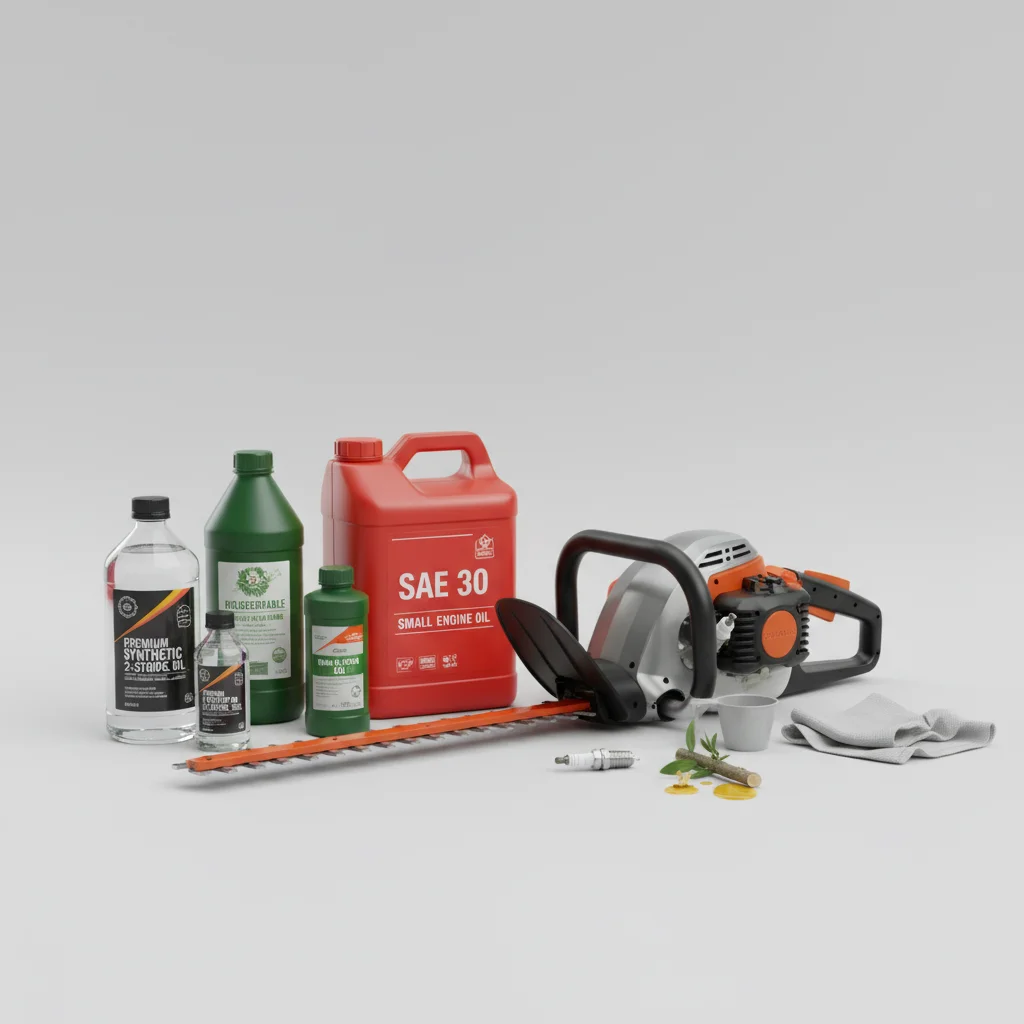
Choosing the correct hedge trimmer oil type is crucial for optimal engine performance and longevity. For most 2-stroke gas hedge trimmers, a high-quality 2-stroke engine oil specifically designed for air-cooled engines is recommended, often at a 50:1 or 40:1 fuel-to-oil ratio. 4-stroke models, while less common, require a different type of oil, typically an SAE 30 or 10W-30 motor oil.
Understanding 2-Stroke Hedge Trimmer Oil
2-stroke hedge trimmers are the most prevalent type of gas-powered models. These engines require a pre-mixed fuel and oil solution. The oil lubricates the engine’s internal components as it burns with the gasoline. Using the wrong type of oil or an incorrect ratio can lead to severe engine damage, including piston seizure and excessive carbon buildup. Always consult your hedge trimmer’s owner’s manual for the precise oil type and mixing ratio recommended by the manufacturer. Many manufacturers, like Stihl and Husqvarna, produce their own branded 2-stroke oils formulated for their specific engines. For hedge trimmer buying guides on this site.
4-Stroke Hedge Trimmer Oil Requirements
While less common, some hedge trimmers operate on a 4-stroke engine. Unlike 2-stroke engines, 4-stroke engines have separate oil sumps, meaning the oil does not mix with the fuel. These engines typically use standard motor oil, similar to what you’d find in a car. Common recommendations include SAE 30 or 10W-30. It’s vital to check the oil level regularly and change it according to the manufacturer’s schedule to ensure proper lubrication and prevent wear. Using the correct viscosity is key to protecting the engine in various operating temperatures.
Synthetic vs. Conventional Oil for Hedge Trimmers
|
Our Picks for the Best Hedge Trimmer in 2026
As an Amazon Associate I earn from qualifying purchases.
|
||
| Num | Product | Action |
|---|---|---|
| 1 | BLACK+DECKER Electric Hedge Trimmer, 17-Inch Corded 3.2 Amp, Dual Action, Reduced Vibration, Cleaner Cut, Lightweight, 3800 Cuts per Min (BEHT150) |

|
| 2 | WORX 22" Cordless Hedge Trimmer, Electric Hedge Trimmer with Dual-Action Blades, Lightweight Bush Trimmer with 4.4 LBS, Battery & Charger Not Included, WG261.9 |
|
| 3 | Cordless Hedge Trimmer 22-Inch Compatible with DEWALT 20V MAX Battery, Electric Hedge Trimmer Cordless, Bush Trimmers for Garden, Battery Powered Hedge Trimmers (Tool Only) |
|
| 4 | Hedge Trimmer for Dw 20V Battery,Hedge Trimmer Cordless with 22'' Dual-Action Blade and 3/5'' Cutting Capacity,1600RPM& Safety Lock (Battery Not Included) |
|
| 5 | BLACK+DECKER 18-Inch Electric Hedge Trimmer (BEHT200) |
|
| 6 | Electric Hedge Trimmer Cordless Compatible with DEWALT 20V MAX Battery, 20-Inch Cordless Hedge Trimmer, Brushless Bush Trimmer, 2/3'' Cutting Capacity, Lightweight & Rotatable Handle(No Battery) |
|
| 7 | SEESII 20V Hedge Trimmer Cordless: 20" Electric Bush Trimmer - Dual 4.0Ah Batteries, Dual-Action Blade, 0.71" Blade Gap, Rotatable Handle, Lightweight Handheld Grass Shrub Clipper for Garden Yard |
|
| 8 | BLACK+DECKER 20V MAX Cordless Hedge Trimmer, Battery and Charger Included, 22 Inch Steel Blade Lightweight Bush Trimmer, Soft Grip, Less Vibration (LHT2220) |
|
| 9 | Hedge Trimmer for Dewalt 20V Battery, Cordless Hedge Trimmer with 22'' Dual-Action Blade, 1600RPM, 3/5'' Cutting Width, Rotating Handle & Dual Switch Design (Battery Not Included) (Yellow) |
|
| 10 | BLACK+DECKER Electric Hedge Trimmer, 16-Inch 3.0 Amp Compact Corded Power Hedge Trimmer (BEHT100) |
|
Both synthetic and conventional oils are available for hedge trimmers. Conventional oils are petroleum-based and offer good lubrication for standard use. Synthetic oils, on the other hand, are engineered to provide superior lubrication, better thermal stability, and reduced smoke emissions. While often more expensive, synthetic oils can extend engine life, especially under heavy use, and may allow for slightly longer intervals between maintenance. For those seeking maximum performance and protection, especially in commercial applications or for frequently used tools, synthetic 2-stroke oil is often a worthwhile investment.
Mixing Ratios and Best Practices
The fuel-to-oil mixing ratio is critical for 2-stroke hedge trimmers. Common ratios are 50:1 (50 parts gasoline to 1 part oil) or 40:1. Using too little oil can cause overheating and premature wear, while too much oil can lead to excessive smoke, fouled spark plugs, and carbon buildup. Always use a clean, approved fuel container for mixing and ensure the gasoline is fresh (preferably less than 30 days old). Avoid using automotive oils in 2-stroke engines, as they lack the necessary additives for air-cooled, high-RPM small engines. For 4-stroke engines, simply ensure the oil level is within the recommended range on the dipstick.
- Always refer to your hedge trimmer’s owner’s manual for specific oil recommendations.
- Use fresh, high-quality gasoline for 2-stroke mixes.
- Measure oil and fuel precisely using an approved mixing container.
- Store mixed fuel in a cool, dark place for no more than 30 days.
- Regularly check and change oil in 4-stroke hedge trimmers.
Environmental Considerations and Disposal
Proper disposal of used engine oil and mixed fuel is essential for environmental protection. Never pour used oil or old fuel down drains or onto the ground. Many automotive repair shops, recycling centers, and hazardous waste facilities accept used engine oil for recycling. Check with your local municipality for specific guidelines on disposing of old mixed fuel. Some areas have collection events for hazardous household waste. Responsible disposal prevents contamination of soil and water sources.
