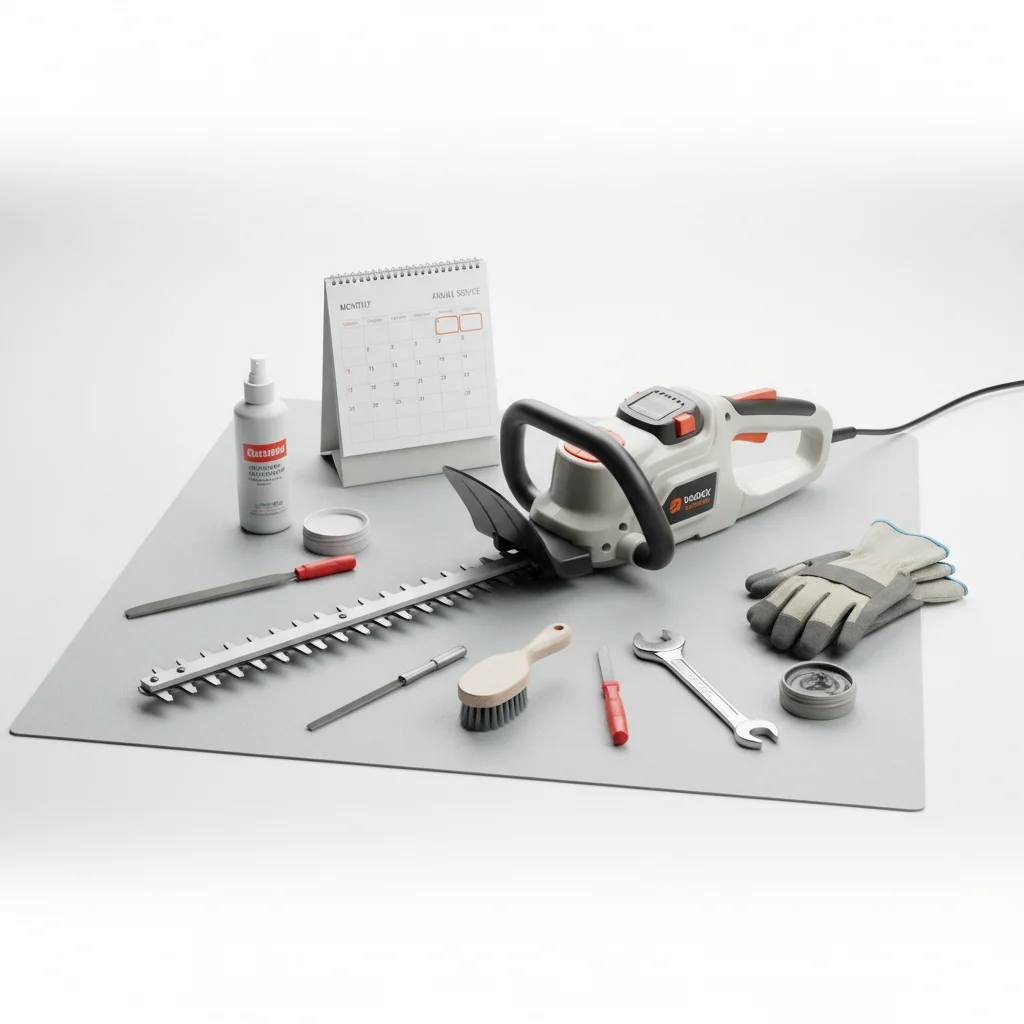
A consistent hedge trimmer maintenance schedule is crucial for extending the life of your tool and ensuring optimal performance. Generally, you should perform light maintenance after every use, a more thorough check every 25 hours of operation or annually, and professional servicing every 50 hours or every two years, depending on usage intensity. Adhering to this schedule prevents common issues like dull blades, engine problems, and reduced cutting efficiency, ultimately saving you time and money on repairs.
Daily Maintenance After Each Use
After each trimming session, dedicate a few minutes to basic cleaning and inspection. This involves removing sap, leaves, and debris from the blades and housing. Use a stiff brush or cloth for this, and for stubborn sap, a specialized cleaner or mineral spirits can be effective. Always ensure the tool is unplugged or the spark plug cap is removed for gas models before cleaning. A light application of lubricant to the blades will also prevent rust and keep them moving smoothly. This quick routine prevents buildup that can lead to corrosion and dulling.
Seasonal or 25-Hour Maintenance Checklist
Every 25 hours of operation or at the start of a new trimming season, a more comprehensive maintenance routine is recommended. For gas hedge trimmers, this includes checking and cleaning the air filter, inspecting the spark plug for wear, and ensuring all fasteners are tight. For electric and battery models, focus on checking the power cord for damage, inspecting the battery contacts, and ensuring the charger is functioning correctly. This is also a good time to sharpen the blades if you notice any tearing or ragged cuts, rather than clean cuts.
Annual or 50-Hour Professional Servicing
|
Our Picks for the Best Hedge Trimmer in 2026
As an Amazon Associate I earn from qualifying purchases.
|
||
| Num | Product | Action |
|---|---|---|
| 1 | Hedge Trimmer for Dewalt 20V Battery, Cordless Hedge Trimmer with 22'' Dual-Action Blade, 1600RPM, 3/5'' Cutting Width, Rotating Handle & Dual Switch Design (Battery Not Included) (Yellow) |

|
| 2 | BLACK+DECKER Electric Hedge Trimmer, 16-Inch 3.0 Amp Compact Corded Power Hedge Trimmer (BEHT100) |
|
| 3 | Hedge Trimmer for Dw 20V Battery,Hedge Trimmer Cordless with 22'' Dual-Action Blade and 3/5'' Cutting Capacity,1600RPM& Safety Lock (Battery Not Included) |
|
| 4 | BLACK+DECKER 18-Inch Electric Hedge Trimmer (BEHT200) |
|
| 5 | Cordless Hedge Trimmer 22-Inch Compatible with DEWALT 20V MAX Battery, Electric Hedge Trimmer Cordless, Bush Trimmers for Garden, Battery Powered Hedge Trimmers (Tool Only) |
|
| 6 | BLACK+DECKER 20V MAX Cordless Hedge Trimmer, Battery and Charger Included, 22 Inch Steel Blade Lightweight Bush Trimmer, Soft Grip, Less Vibration (LHT2220) |
|
| 7 | BLACK+DECKER Electric Hedge Trimmer, 17-Inch Corded 3.2 Amp, Dual Action, Reduced Vibration, Cleaner Cut, Lightweight, 3800 Cuts per Min (BEHT150) |
|
| 8 | WORX 22" Cordless Hedge Trimmer, Electric Hedge Trimmer with Dual-Action Blades, Lightweight Bush Trimmer with 4.4 LBS, Battery & Charger Not Included, WG261.9 |
|
| 9 | Electric Hedge Trimmer Cordless Compatible with DEWALT 20V MAX Battery, 20-Inch Cordless Hedge Trimmer, Brushless Bush Trimmer, 2/3'' Cutting Capacity, Lightweight & Rotatable Handle(No Battery) |
|
| 10 | SEESII 20V Hedge Trimmer Cordless: 20" Electric Bush Trimmer - Dual 4.0Ah Batteries, Dual-Action Blade, 0.71" Blade Gap, Rotatable Handle, Lightweight Handheld Grass Shrub Clipper for Garden Yard |
|
Even with diligent home maintenance, professional servicing every 50 hours or annually is highly beneficial, especially for gas-powered units. A professional can perform tasks such as carburetor adjustments, fuel filter replacement, and a thorough inspection of internal components that are not easily accessible to the average user. They can also identify potential issues before they become major problems, ensuring your hedge trimmer remains in top condition for years to come. This investment in professional care can significantly prolong the tool’s lifespan.
Key Maintenance Tasks to Prioritize
- Clean blades and housing after every use.
- Lubricate blades regularly to prevent rust and friction.
- Check and clean air filter (gas models) or inspect power cords (electric/battery models) seasonally.
- Sharpen blades as needed to maintain cutting efficiency.
- Inspect spark plug and fuel filter (gas models) annually.
Understanding Your Hedge Trimmer’s Specific Needs
While general guidelines apply, always refer to your hedge trimmer’s owner’s manual for specific maintenance instructions and recommended service intervals. Different models, especially between gas, electric, and battery-powered units, will have unique requirements. For instance, battery-powered hedge trimmers might require specific battery care to maximize their lifespan, such as storing them at a partial charge. Gas models, on the other hand, will have more components related to the engine that need regular attention.

The maintenance schedule is helpful, especially the annual check-up tips. I found the recommendation for professional servicing every 50 hours a bit much for my casual use, as I probably only use mine for about 10 hours a year. Still, good to know what to look out for to prevent bigger issues.
I used to just clean my hedge trimmer whenever it looked really dirty, but following the ‘after every use’ advice has made a huge difference. My blades stay sharper longer, and I haven’t had any of the usual gunk buildup. It only takes a few minutes, and it’s definitely worth it for how much smoother my trimming goes now.
My old hedge trimmer always had engine problems, and I realize now it was because I wasn’t doing any regular maintenance. Since getting a new one, I’ve been diligent about removing sap and debris after each use, and it’s running like a dream. This schedule really does prevent those common issues.
I’ve always been pretty good about keeping my tools clean, but I never really thought about a structured schedule. The breakdown of light maintenance vs. the more thorough check every 25 hours is a game-changer. It’s helped me catch dull blades before they become a real problem, which saves me a lot of frustration.