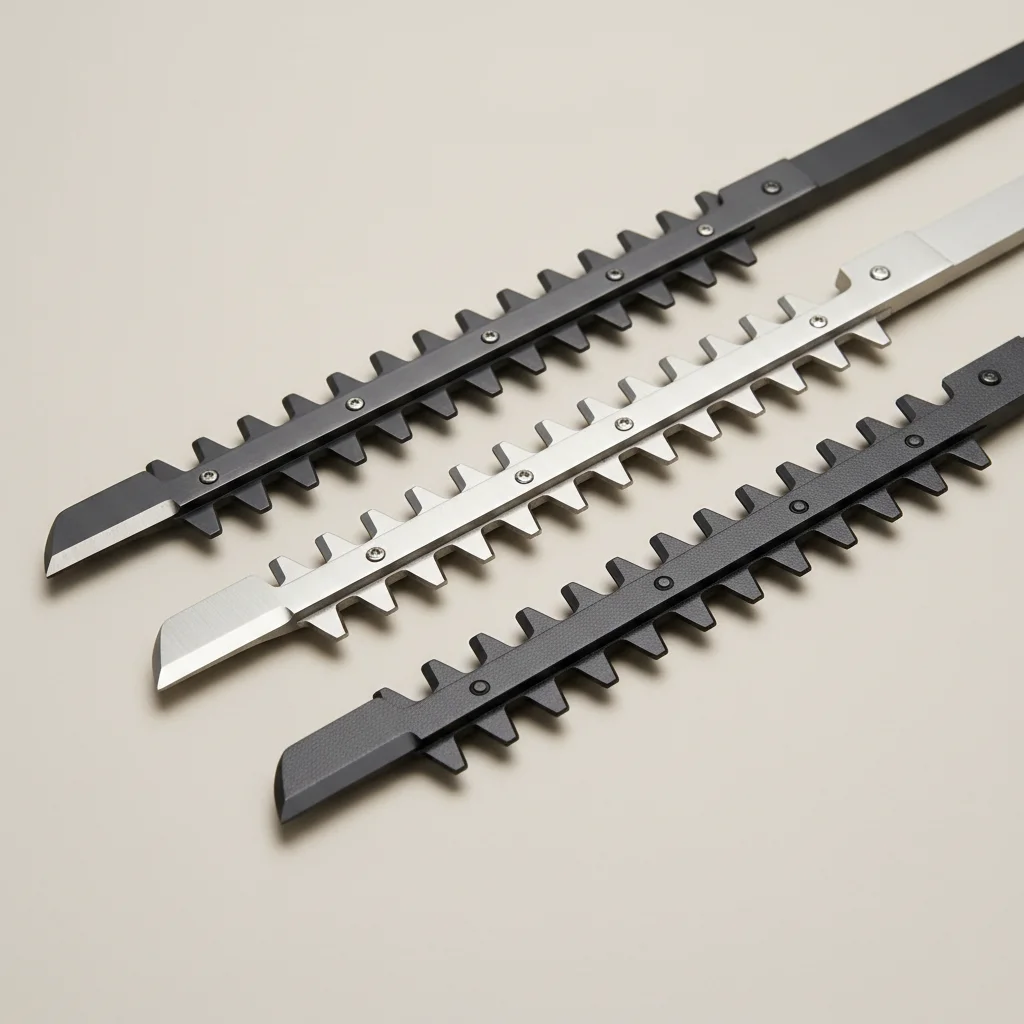
Choosing the right hedge trimmer blade material is crucial for both cutting performance and long-term durability. The best material for hedge trimmer blades is typically hardened steel, often with a chrome or titanium coating, offering a superior balance of sharpness retention, strength, and corrosion resistance. This material ensures your trimmer can tackle various hedge types effectively and withstand the rigors of regular use.
Understanding Common Blade Materials
Hedge trimmer blades are primarily made from a few key materials, each with distinct advantages and disadvantages. High-carbon steel is a popular choice due to its ability to hold a sharp edge, making it excellent for clean cuts. However, it can be prone to rust if not properly maintained. Stainless steel offers better corrosion resistance but may not achieve the same level of initial sharpness as high-carbon steel. The most advanced blades often combine these properties with specialized coatings.
The Benefits of Hardened Steel Blades
Hardened steel blades are a cut above the rest, literally. The hardening process involves heat treatment that significantly increases the steel’s strength and wear resistance. This means the blades stay sharper for longer, reducing the frequency of sharpening and improving overall cutting efficiency. When combined with a precise manufacturing process, hardened steel blades can effortlessly slice through branches, minimizing strain on both the user and the hedge trimmer’s motor.
- Superior edge retention for prolonged sharpness.
- Increased resistance to bending and breaking.
- Enhanced durability against wear and tear.
- Better performance on tougher, thicker branches.
- Reduced need for frequent maintenance and sharpening.
The Role of Blade Coatings
|
Our Picks for the Best Hedge Trimmer in 2026
As an Amazon Associate I earn from qualifying purchases.
|
||
| Num | Product | Action |
|---|---|---|
| 1 | Hedge Trimmer for Dewalt 20V Battery, Cordless Hedge Trimmer with 22'' Dual-Action Blade, 1600RPM, 3/5'' Cutting Width, Rotating Handle & Dual Switch Design (Battery Not Included) (Yellow) |

|
| 2 | Hedge Trimmer for Dw 20V Battery,Hedge Trimmer Cordless with 22'' Dual-Action Blade and 3/5'' Cutting Capacity,1600RPM& Safety Lock (Battery Not Included) |
|
| 3 | BLACK+DECKER Electric Hedge Trimmer, 17-Inch Corded 3.2 Amp, Dual Action, Reduced Vibration, Cleaner Cut, Lightweight, 3800 Cuts per Min (BEHT150) |
|
| 4 | SEESII 20V Hedge Trimmer Cordless: 20" Electric Bush Trimmer - Dual 4.0Ah Batteries, Dual-Action Blade, 0.71" Blade Gap, Rotatable Handle, Lightweight Handheld Grass Shrub Clipper for Garden Yard |
|
| 5 | BLACK+DECKER 18-Inch Electric Hedge Trimmer (BEHT200) |
|
| 6 | BLACK+DECKER 20V MAX Cordless Hedge Trimmer, Battery and Charger Included, 22 Inch Steel Blade Lightweight Bush Trimmer, Soft Grip, Less Vibration (LHT2220) |
|
| 7 | Cordless Hedge Trimmer 22-Inch Compatible with DEWALT 20V MAX Battery, Electric Hedge Trimmer Cordless, Bush Trimmers for Garden, Battery Powered Hedge Trimmers (Tool Only) |
|
| 8 | BLACK+DECKER Electric Hedge Trimmer, 16-Inch 3.0 Amp Compact Corded Power Hedge Trimmer (BEHT100) |
|
| 9 | WORX 22" Cordless Hedge Trimmer, Electric Hedge Trimmer with Dual-Action Blades, Lightweight Bush Trimmer with 4.4 LBS, Battery & Charger Not Included, WG261.9 |
|
| 10 | Electric Hedge Trimmer Cordless Compatible with DEWALT 20V MAX Battery, 20-Inch Cordless Hedge Trimmer, Brushless Bush Trimmer, 2/3'' Cutting Capacity, Lightweight & Rotatable Handle(No Battery) |
|
Beyond the base material, coatings play a vital role in blade performance and longevity. Chrome plating, for instance, provides an extra layer of protection against rust and reduces friction during cutting, leading to smoother operation and less sap buildup. Titanium nitride (TiN) coatings offer even greater hardness and wear resistance, extending the life of the blade significantly. These coatings are particularly beneficial for users who frequently trim resinous or dense hedges.
When considering a new hedge trimmer, always inquire about the blade material and any applied coatings. A high-quality blade can make a substantial difference in your trimming experience, offering cleaner cuts, less effort, and a longer-lasting tool. Investing in a trimmer with superior blade material will pay off in the long run through reduced maintenance and improved garden aesthetics.
Maintenance for Optimal Blade Life
Regardless of the blade material, proper maintenance is key to maximizing its lifespan and performance. Regularly cleaning sap and debris from the blades prevents corrosion and ensures smooth operation. Lubricating the blades after each use, especially for high-carbon steel, will protect against rust and reduce friction. Sharpening the blades periodically, or as needed, will restore their cutting edge and maintain efficiency. Even the most durable materials benefit from consistent care.
For those who frequently encounter tough or woody hedges, a hedge trimmer with hardened, coated steel blades is an indispensable tool. It provides the confidence that your equipment can handle the job without premature dulling or damage. Always refer to your hedge trimmer’s manual for specific care instructions tailored to its blade material.

For years, I struggled with blades that would dull quickly or get pitted. Focusing on hardened steel with a titanium coating has been a game-changer. My hedges have never looked better, and the blades stay sharp for so much longer. It really makes a difference when you’re tackling a lot of dense shrubbery.
I’ve always just bought whatever hedge trimmer was on sale, but after reading about the different blade materials, I decided to invest a bit more. The stainless steel blades on my new model are fantastic for resisting corrosion, which is a big deal for me since I sometimes forget to clean it right away. While it doesn’t feel quite as razor-sharp as some I’ve used, the durability and low maintenance are worth it.
I picked up a trimmer with high-carbon steel blades because I wanted that really clean cut for my ornamental hedges. It definitely delivers on sharpness, but the rust issue is real. I have to be super diligent about cleaning and oiling it after every single use, otherwise I see little spots forming. It’s a bit more upkeep than I anticipated, even though the cutting performance is great.
I recently upgraded my old hedge trimmer and really focused on the blade material this time. The recommendation for hardened steel with a chrome coating was spot on. My new trimmer cuts through even thick branches like butter, and I’ve noticed zero rust spots even after a few uses in damp conditions. It’s a huge improvement over my previous high-carbon steel blades that always seemed to get dull so fast.