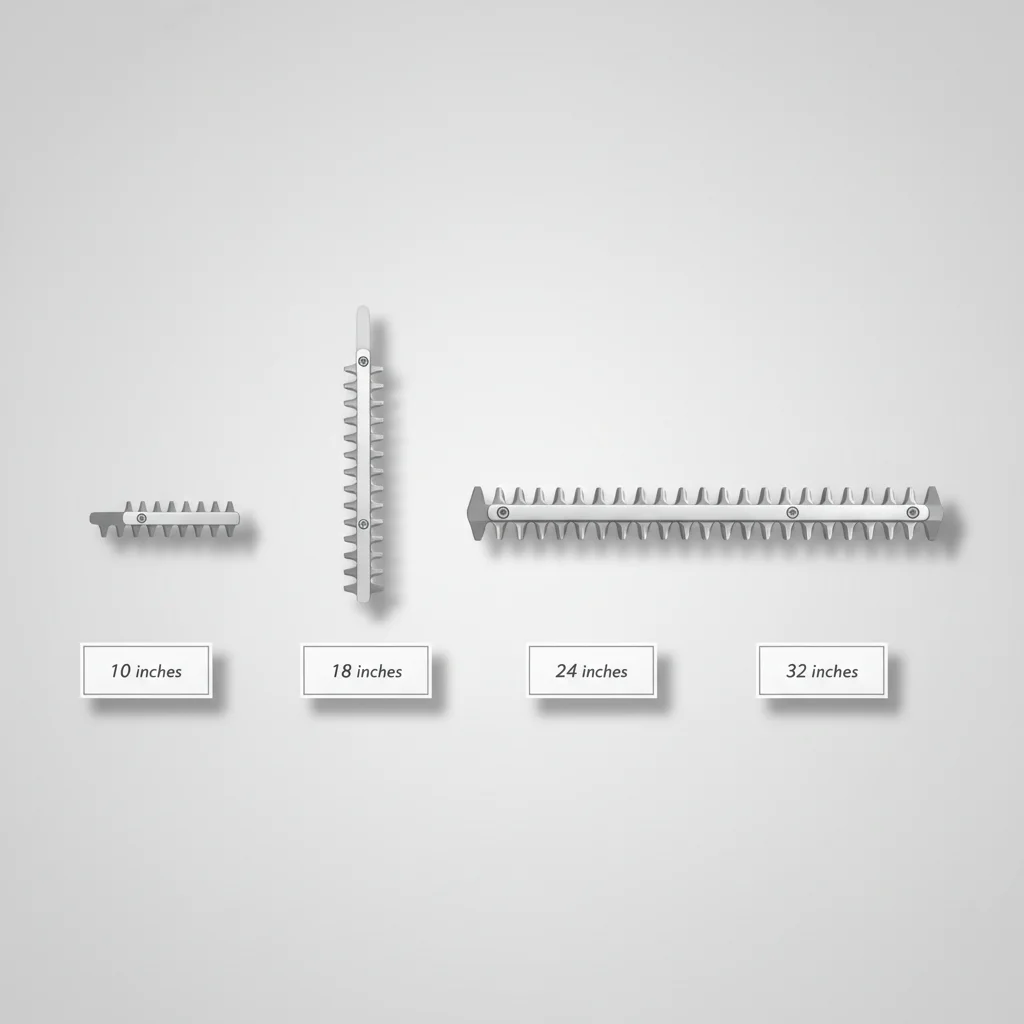
Choosing the ideal hedge trimmer blade length is crucial for efficient and effective hedge maintenance. For most residential hedges, a blade length between 18 to 24 inches is generally ideal, offering a good balance of reach and maneuverability. Shorter blades, typically 16 inches or less, are excellent for intricate shaping and smaller shrubs, while longer blades, exceeding 24 inches, are best suited for extensive, tall hedges where reach is a priority.
Understanding Blade Length and Its Impact
The length of your hedge trimmer’s blade directly influences its cutting capacity and ease of use. A longer blade allows you to cover more area with each pass, making it faster to trim large hedges. However, longer blades can also be heavier and more challenging to control, especially for detailed work or if you’re working overhead. Conversely, shorter blades offer superior precision and are lighter, reducing fatigue during prolonged use, but they require more passes to complete larger tasks.
Matching Blade Length to Hedge Size and Type
For small, ornamental shrubs or hedges that require precise shaping, a blade length of 16 to 18 inches is often the most suitable. This allows for greater control and accuracy. If you’re dealing with medium-sized hedges, up to chest height, an 18 to 22-inch blade provides a good compromise between reach and manageability. For very tall or wide hedges, particularly those that are difficult to reach, a blade length of 22 to 26 inches or even longer can significantly reduce the time and effort required. Consider the typical width and height of your hedges before making a decision.
Maneuverability and User Comfort
|
Our Picks for the Best Hedge Trimmer in 2026
As an Amazon Associate I earn from qualifying purchases.
|
||
| Num | Product | Action |
|---|---|---|
| 1 | Hedge Trimmer for Dw 20V Battery,Hedge Trimmer Cordless with 22'' Dual-Action Blade and 3/5'' Cutting Capacity,1600RPM& Safety Lock (Battery Not Included) |

|
| 2 | Hedge Trimmer for Dewalt 20V Battery, Cordless Hedge Trimmer with 22'' Dual-Action Blade, 1600RPM, 3/5'' Cutting Width, Rotating Handle & Dual Switch Design (Battery Not Included) (Yellow) |
|
| 3 | SEESII 20V Hedge Trimmer Cordless: 20" Electric Bush Trimmer - Dual 4.0Ah Batteries, Dual-Action Blade, 0.71" Blade Gap, Rotatable Handle, Lightweight Handheld Grass Shrub Clipper for Garden Yard |
|
| 4 | BLACK+DECKER Electric Hedge Trimmer, 17-Inch Corded 3.2 Amp, Dual Action, Reduced Vibration, Cleaner Cut, Lightweight, 3800 Cuts per Min (BEHT150) |
|
| 5 | Cordless Hedge Trimmer 22-Inch Compatible with DEWALT 20V MAX Battery, Electric Hedge Trimmer Cordless, Bush Trimmers for Garden, Battery Powered Hedge Trimmers (Tool Only) |
|
| 6 | Electric Hedge Trimmer Cordless Compatible with DEWALT 20V MAX Battery, 20-Inch Cordless Hedge Trimmer, Brushless Bush Trimmer, 2/3'' Cutting Capacity, Lightweight & Rotatable Handle(No Battery) |
|
| 7 | BLACK+DECKER Electric Hedge Trimmer, 16-Inch 3.0 Amp Compact Corded Power Hedge Trimmer (BEHT100) |
|
| 8 | BLACK+DECKER 20V MAX Cordless Hedge Trimmer, Battery and Charger Included, 22 Inch Steel Blade Lightweight Bush Trimmer, Soft Grip, Less Vibration (LHT2220) |
|
| 9 | WORX 22" Cordless Hedge Trimmer, Electric Hedge Trimmer with Dual-Action Blades, Lightweight Bush Trimmer with 4.4 LBS, Battery & Charger Not Included, WG261.9 |
|
| 10 | BLACK+DECKER 18-Inch Electric Hedge Trimmer (BEHT200) |
|
Beyond just the size of your hedges, consider your own physical capabilities and the ergonomics of the tool. A longer blade, while efficient for large areas, can put more strain on your arms and back, especially if the trimmer is heavy. If you have a lot of intricate work or prefer a lighter tool for extended use, a shorter blade might be more comfortable. Many users find that a blade in the 20-inch range offers a good balance for general yard work, providing enough reach without being overly cumbersome.
Blade Material and Tooth Gap Considerations
While blade length is key, don’t overlook other blade characteristics. The material of the blade, typically hardened steel, impacts its durability and sharpness retention. Furthermore, the tooth gap, or the distance between the cutting teeth, determines the maximum diameter of branches the trimmer can cut. A larger tooth gap (e.g., 1 inch) is necessary for thicker branches, while a smaller gap (e.g., 0.5 inches) is fine for lighter foliage. Always match the tooth gap to the typical thickness of the branches you’ll be trimming to prevent jamming and ensure clean cuts.
Key Factors When Choosing Blade Length
- Hedge Size: Small hedges (under 4 ft) benefit from shorter blades (16-18 inches).
- Hedge Height/Width: Taller/wider hedges (over 6 ft) may require longer blades (22-26 inches).
- Precision Needs: Intricate shaping demands shorter, more controllable blades.
- User Strength: Longer blades can be heavier and more fatiguing.
- Branch Thickness: Ensure the tooth gap is appropriate for your typical branch size.
Maintenance for Optimal Blade Performance
Regardless of the blade length you choose, proper maintenance is essential for optimal performance and longevity. Regularly clean sap and debris from the blades, especially after trimming resinous plants. Sharpening the blades periodically ensures clean cuts and reduces strain on the motor. Lubricating the blades after each use helps prevent rust and keeps them moving smoothly. A well-maintained blade, regardless of its length, will always perform better and last longer.

I used to struggle with my old, short hedge trimmer, taking forever to get through my tall privet hedges. After reading about blade length, I invested in a model with a 26-inch blade, and it’s made a world of difference. I can now reach the tops without a ladder, and it cuts through everything so much faster. Definitely recommend going longer if you have extensive, tall hedges.
I’ve always used an 18-inch blade for my mixed hedges, and it’s been pretty good. It’s a nice balance for both the front shrubs and the slightly taller backyard ones. I was considering a shorter one for more detailed shaping, but the 18-inch really does offer that good balance of reach and maneuverability for general residential use. No complaints here, it gets the job done efficiently.
My old trimmer was a pain to use on my large, unruly hedges. The blade was too short, and I was constantly repositioning. Upgrading to a 24-inch blade has been a game-changer. It covers so much more area with each pass, and I can finish trimming my entire yard in half the time. It’s still manageable for me, not too heavy, and the extra reach is invaluable.
I bought a hedge trimmer with a 16-inch blade specifically for my small boxwoods and some intricate shaping around the garden. While it’s great for precision and lightweight, I found it a bit too short for even my medium-sized rose bushes. It takes a lot more passes than I expected, and my arms get tired quicker. Next time, I might opt for something a little longer, maybe an 18-inch, for more versatility.