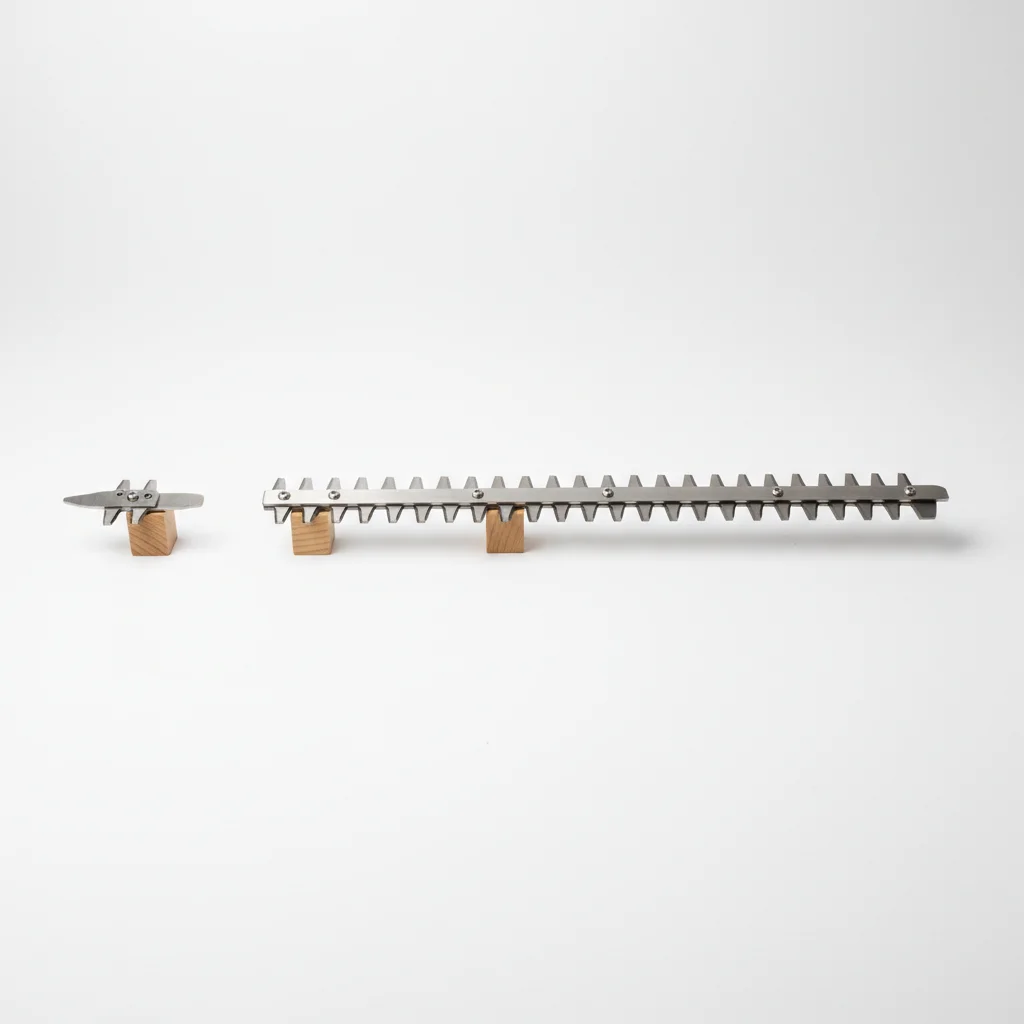
The ideal hedge trimmer blade length for your hedges depends on the size and type of foliage you’re maintaining. For most residential hedges, a blade length between 18 and 24 inches is highly effective, offering a balance of reach and maneuverability. Shorter blades (16 inches or less) are excellent for intricate shaping and small ornamental shrubs, while longer blades (26 inches or more) are best suited for extensive, tall hedges and professional landscaping tasks.
Understanding Blade Length and Its Impact
Hedge trimmer blade length directly influences the tool’s reach, cutting capacity, and overall handling. A longer blade allows you to cover more area with each pass, which can significantly speed up the trimming process for large hedges. However, longer blades also tend to be heavier and can be more challenging to control, especially for detailed work or when working overhead. Conversely, shorter blades offer superior precision and are lighter, making them ideal for intricate shaping, smaller bushes, and users who prioritize maneuverability over raw cutting speed.
Consider the typical height and width of your hedges. If you have numerous small, decorative shrubs, a shorter blade will provide the control needed for precise cuts. For long, uniform hedges that require a flat top or straight sides, a medium to long blade will be more efficient. The type of foliage also plays a role; dense, woody hedges might benefit from a slightly longer blade to power through, while lighter, softer growth can be managed with shorter options.
Choosing the Right Length for Residential Use
For the average homeowner, a hedge trimmer with an 18-inch to 22-inch blade is often the sweet spot. This range provides enough reach for most common hedge sizes without becoming unwieldy. It allows for efficient trimming of medium-sized hedges and shrubs, offering a good balance between speed and control. If your yard features a mix of hedge types, a blade in this range offers versatility.
If you primarily maintain small, intricate topiaries or very low hedges, a 16-inch blade or even a specialized shrub shear might be more appropriate. These shorter tools excel at detailed work, allowing you to sculpt and shape with greater accuracy. For those with taller hedges that require reaching, a 24-inch blade can reduce the need for ladders, though always prioritize safety when working at height.
Professional and Large Property Considerations
|
Our Picks for the Best Hedge Trimmer in 2026
As an Amazon Associate I earn from qualifying purchases.
|
||
| Num | Product | Action |
|---|---|---|
| 1 | BLACK+DECKER Electric Hedge Trimmer, 16-Inch 3.0 Amp Compact Corded Power Hedge Trimmer (BEHT100) |

|
| 2 | Electric Hedge Trimmer Cordless Compatible with DEWALT 20V MAX Battery, 20-Inch Cordless Hedge Trimmer, Brushless Bush Trimmer, 2/3'' Cutting Capacity, Lightweight & Rotatable Handle(No Battery) |
|
| 3 | BLACK+DECKER 20V MAX Cordless Hedge Trimmer, Battery and Charger Included, 22 Inch Steel Blade Lightweight Bush Trimmer, Soft Grip, Less Vibration (LHT2220) |
|
| 4 | Hedge Trimmer for Dewalt 20V Battery, Cordless Hedge Trimmer with 22'' Dual-Action Blade, 1600RPM, 3/5'' Cutting Width, Rotating Handle & Dual Switch Design (Battery Not Included) (Yellow) |
|
| 5 | SEESII 20V Hedge Trimmer Cordless: 20" Electric Bush Trimmer - Dual 4.0Ah Batteries, Dual-Action Blade, 0.71" Blade Gap, Rotatable Handle, Lightweight Handheld Grass Shrub Clipper for Garden Yard |
|
| 6 | Hedge Trimmer for Dw 20V Battery,Hedge Trimmer Cordless with 22'' Dual-Action Blade and 3/5'' Cutting Capacity,1600RPM& Safety Lock (Battery Not Included) |
|
| 7 | BLACK+DECKER Electric Hedge Trimmer, 17-Inch Corded 3.2 Amp, Dual Action, Reduced Vibration, Cleaner Cut, Lightweight, 3800 Cuts per Min (BEHT150) |
|
| 8 | Cordless Hedge Trimmer 22-Inch Compatible with DEWALT 20V MAX Battery, Electric Hedge Trimmer Cordless, Bush Trimmers for Garden, Battery Powered Hedge Trimmers (Tool Only) |
|
| 9 | BLACK+DECKER 18-Inch Electric Hedge Trimmer (BEHT200) |
|
| 10 | WORX 22" Cordless Hedge Trimmer, Electric Hedge Trimmer with Dual-Action Blades, Lightweight Bush Trimmer with 4.4 LBS, Battery & Charger Not Included, WG261.9 |
|
Landscapers and property owners with extensive hedging often opt for longer blade lengths, typically 26 inches or more. These professional-grade hedge trimmers are designed for maximum efficiency over large areas, allowing operators to complete jobs faster. While heavier, their increased reach and cutting swath are invaluable for maintaining long rows of hedges or very tall specimens. Some commercial models even feature articulating or extended-reach poles to tackle exceptionally high hedges without ladders.
When selecting a professional hedge trimmer, also consider the power source. Gas-powered models often pair well with longer blades due to their sustained power output, making them suitable for demanding, all-day use on large properties. Battery-powered options with longer blades are also emerging, offering a quieter and emission-free alternative for commercial applications where noise is a concern.
Blade Length vs. Cutting Capacity
It’s important to distinguish between blade length and cutting capacity (or gap). While blade length refers to the overall cutting surface, cutting capacity indicates the maximum diameter of a branch the trimmer can cut. A longer blade doesn’t necessarily mean a higher cutting capacity. Many hedge trimmers, regardless of blade length, have a cutting capacity ranging from 3/4 inch to 1 inch, with some heavy-duty models reaching 1.5 inches. Always check both specifications to ensure the tool meets your needs.
- Blade Length: Determines reach and coverage per pass.
- Cutting Capacity: Dictates the maximum branch thickness.
- Blade Material: High-carbon steel offers durability.
- Tooth Spacing: Wider spacing for thicker branches.
- Dual-Action Blades: Reduce vibration for smoother operation.
Maintenance for Optimal Blade Performance
Regardless of blade length, proper maintenance is crucial for optimal performance and longevity. Regularly clean your blades after each use to remove sap and debris, which can dull the edge and hinder cutting efficiency. Sharpening the blades periodically ensures clean cuts and reduces strain on the motor. Lubricating the blades also helps prevent rust and ensures smooth operation. A well-maintained blade, regardless of its length, will always perform better and last longer.
For sharpening, you can use a flat file or a specialized sharpening tool. Always refer to your hedge trimmer’s manual for specific maintenance instructions. Neglecting blade care can lead to jagged cuts, damaged hedges, and increased effort during trimming.Investing a little time in maintenance will pay dividends in the form of a healthier garden and a more efficient tool.
