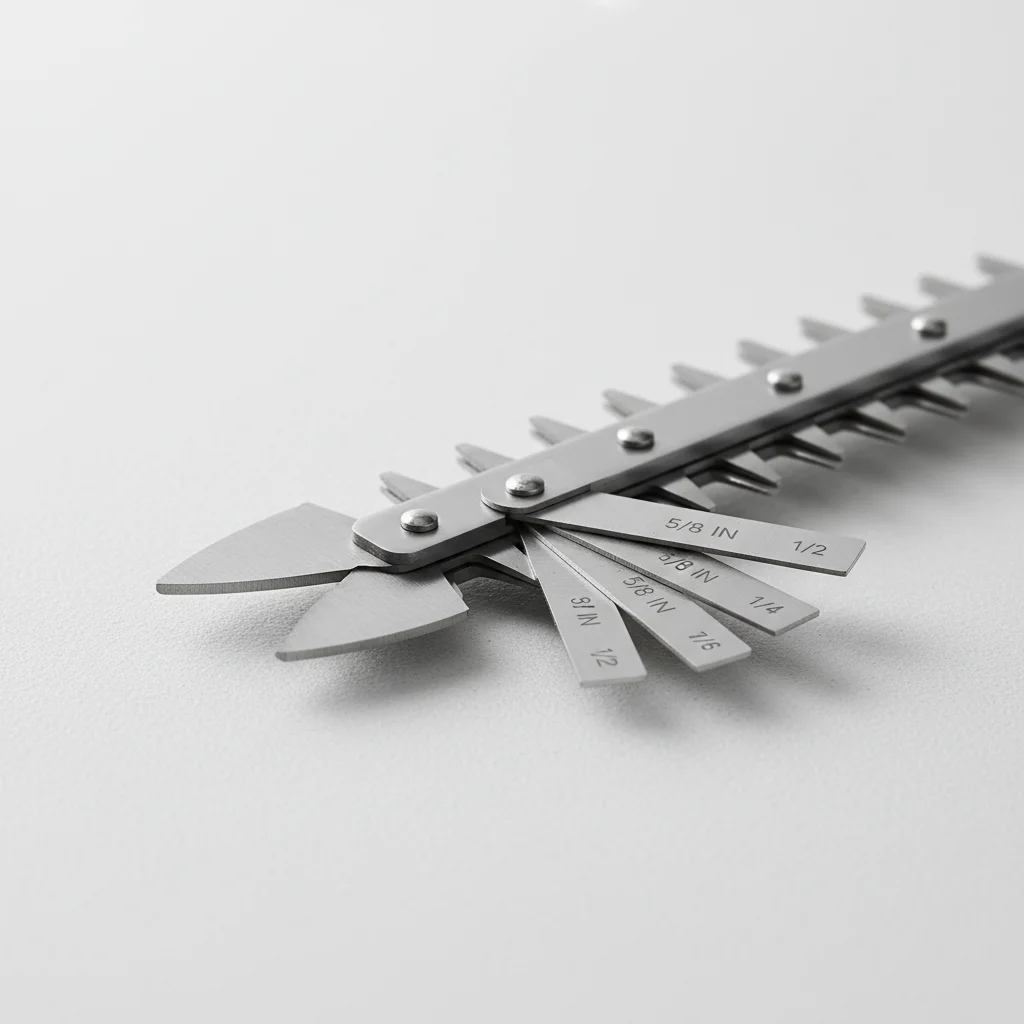
The ideal hedge trimmer blade gap for clean cuts typically ranges between 3/4 inch and 1 inch (19mm to 25mm). This measurement, often referred to as the cutting capacity, dictates the maximum diameter of branches your hedge trimmer can effectively sever without jamming or tearing. Understanding and selecting a hedge trimmer with an appropriate blade gap is crucial for achieving precise results and maintaining the health of your hedges.
Why Blade Gap Matters for Hedge Health
The blade gap directly impacts the quality of the cut. A gap that is too small for the branches you’re trimming will lead to the blades getting stuck, causing frustration and potential damage to the tool. Conversely, a gap that is too large for thinner growth might result in a ragged, torn cut rather than a clean slice. Torn branches are more susceptible to disease and pest infestation, compromising the overall health and appearance of your hedges. For most residential hedges, a gap around 3/4 inch is sufficient, while thicker, more mature shrubs may require a 1-inch or larger capacity.
Matching Blade Gap to Your Trimming Needs
Before purchasing a hedge trimmer, assess the typical thickness of the branches you intend to cut. If you primarily maintain ornamental shrubs with slender stems, a smaller blade gap (e.g., 5/8 inch) might be perfectly adequate and offer a finer cut. However, if your property features mature hedges with woody branches, investing in a model with a larger blade gap is essential. Many manufacturers clearly state the maximum cutting capacity in their product specifications, making it easier to choose the right tool for the job. Consider the type of hedges you have and their growth habits.
- Small, Ornamental Shrubs: Look for a blade gap of 5/8 inch to 3/4 inch for precise shaping.
- Average Residential Hedges: A 3/4 inch to 1 inch blade gap is versatile for most common hedge types.
- Thick, Woody Hedges: Opt for a 1 inch to 1.25 inch blade gap to handle tougher material.
- Professional/Commercial Use: Some heavy-duty models offer blade gaps exceeding 1.25 inches.
Adjusting and Maintaining Your Hedge Trimmer’s Blade Gap
|
Our Picks for the Best Hedge Trimmer in 2026
As an Amazon Associate I earn from qualifying purchases.
|
||
| Num | Product | Action |
|---|---|---|
| 1 | BLACK+DECKER 20V MAX Cordless Hedge Trimmer, Battery and Charger Included, 22 Inch Steel Blade Lightweight Bush Trimmer, Soft Grip, Less Vibration (LHT2220) |

|
| 2 | Cordless Hedge Trimmer 22-Inch Compatible with DEWALT 20V MAX Battery, Electric Hedge Trimmer Cordless, Bush Trimmers for Garden, Battery Powered Hedge Trimmers (Tool Only) |
|
| 3 | BLACK+DECKER Electric Hedge Trimmer, 16-Inch 3.0 Amp Compact Corded Power Hedge Trimmer (BEHT100) |
|
| 4 | Electric Hedge Trimmer Cordless Compatible with DEWALT 20V MAX Battery, 20-Inch Cordless Hedge Trimmer, Brushless Bush Trimmer, 2/3'' Cutting Capacity, Lightweight & Rotatable Handle(No Battery) |
|
| 5 | Hedge Trimmer for Dw 20V Battery,Hedge Trimmer Cordless with 22'' Dual-Action Blade and 3/5'' Cutting Capacity,1600RPM& Safety Lock (Battery Not Included) |
|
| 6 | BLACK+DECKER 18-Inch Electric Hedge Trimmer (BEHT200) |
|
| 7 | WORX 22" Cordless Hedge Trimmer, Electric Hedge Trimmer with Dual-Action Blades, Lightweight Bush Trimmer with 4.4 LBS, Battery & Charger Not Included, WG261.9 |
|
| 8 | Hedge Trimmer for Dewalt 20V Battery, Cordless Hedge Trimmer with 22'' Dual-Action Blade, 1600RPM, 3/5'' Cutting Width, Rotating Handle & Dual Switch Design (Battery Not Included) (Yellow) |
|
| 9 | SEESII 20V Hedge Trimmer Cordless: 20" Electric Bush Trimmer - Dual 4.0Ah Batteries, Dual-Action Blade, 0.71" Blade Gap, Rotatable Handle, Lightweight Handheld Grass Shrub Clipper for Garden Yard |
|
| 10 | BLACK+DECKER Electric Hedge Trimmer, 17-Inch Corded 3.2 Amp, Dual Action, Reduced Vibration, Cleaner Cut, Lightweight, 3800 Cuts per Min (BEHT150) |
|
While most hedge trimmers come with a fixed blade gap, some professional-grade models might offer minor adjustments. However, for the vast majority of consumer-grade trimmers, the blade gap is determined by the design and cannot be altered. Regular maintenance, such as sharpening the blades and ensuring they are free of sap and debris, is far more critical for maintaining optimal cutting performance. Dull blades, regardless of the gap, will tear rather than cut cleanly. Always refer to your hedge trimmer’s owner’s manual for specific maintenance instructions and any potential adjustment capabilities.
For those seeking a reliable hedge trimmer with a generous blade gap for diverse trimming tasks, consider models like the. This unit is known for its robust cutting capacity and durable blades, making it suitable for both light shaping and tackling thicker growth. Its ergonomic design also ensures comfortable operation during extended use, which is a significant advantage when dealing with extensive hedging projects. The power output is consistently strong, allowing for smooth cuts without bogging down, even on denser material.
The Impact of Blade Sharpness on Effective Gap Utilization
Even with the perfect blade gap, dull blades will severely compromise your hedge trimmer’s performance. Sharp blades are crucial for making clean, precise cuts that promote plant health. When blades are dull, they tend to chew and tear at branches, leaving ragged edges that are more susceptible to disease. Therefore, regular sharpening is just as important as selecting the correct blade gap. Many users find that sharpening their blades after every 10-15 hours of use, or at least once per season, significantly improves cutting efficiency and extends the life of their tool. A well-maintained, sharp blade will effectively utilize its designed gap for superior results.
If you’re in the market for a new hedge trimmer and prioritize both a suitable blade gap and ease of maintenance, theoffers an excellent balance. This model often features self-sharpening capabilities or easily replaceable blades, reducing the hassle of manual sharpening. Its cutting capacity is well-suited for a wide range of residential hedges, from delicate shrubs to more established growth. The balance and weight distribution are also noteworthy, contributing to less fatigue during prolonged trimming sessions, making it a popular choice among homeowners who value both performance and user comfort.
