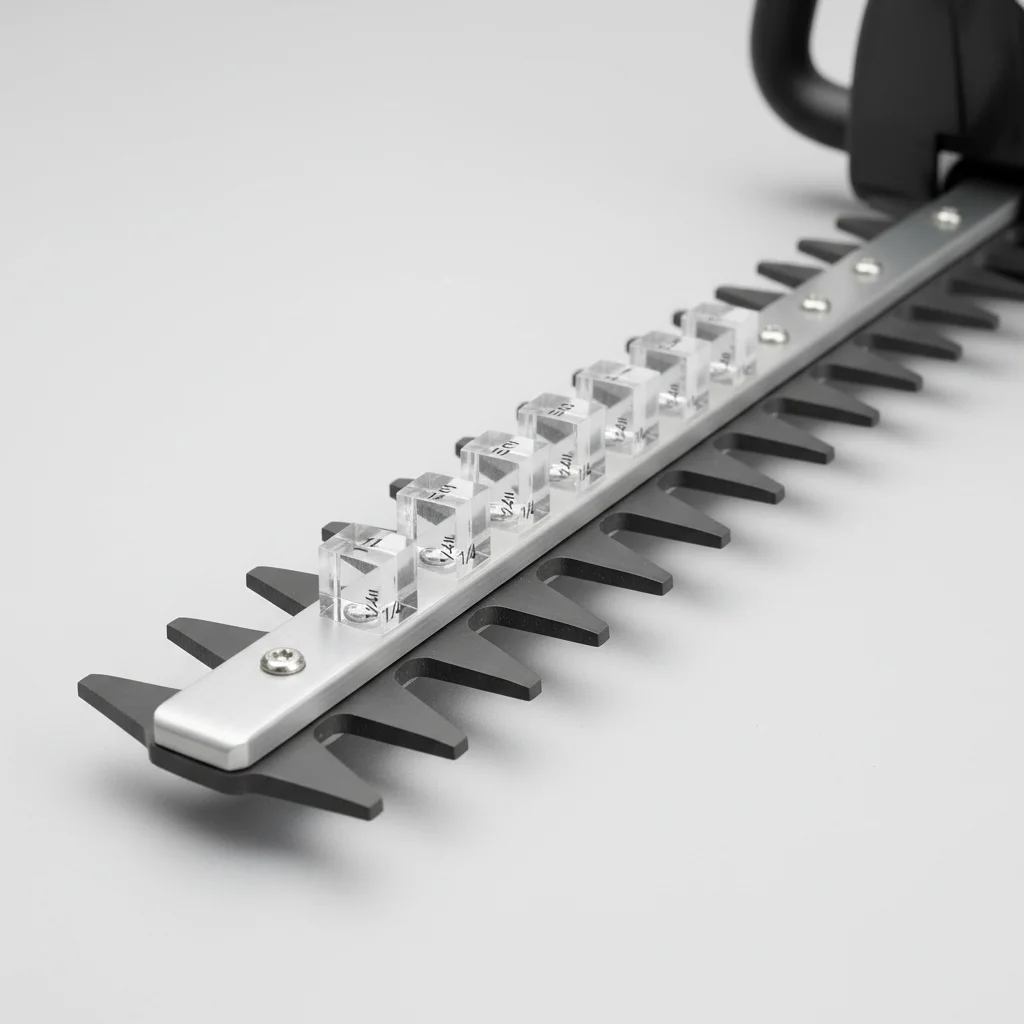
The ideal hedge trimmer blade gap for most residential hedges is between 3/4 inch and 1 inch. This range allows for efficient cutting of common hedge and shrub branches without excessive jamming or unnecessary strain on the motor. Understanding the correct blade gap is crucial for achieving clean cuts and maintaining the health of your hedges, as well as extending the lifespan of your tool.
Understanding Blade Gap and Its Importance
The blade gap, also known as the tooth spacing or cutting capacity, refers to the maximum diameter of a branch that a hedge trimmer can effectively cut. A larger blade gap allows for thicker branches, while a smaller gap is better suited for finer, more delicate trimming. Choosing the right blade gap prevents the blades from getting stuck and ensures a smooth, continuous cutting experience. It also reduces the risk of damaging your hedges by tearing rather than cleanly cutting branches.
For general garden maintenance, a blade gap of 0.75 to 1 inch is versatile enough to handle most common hedge types like privet, boxwood, and laurel. If you primarily deal with very thin, ornamental shrubs, a smaller gap might suffice, but for anything with woody stems, the recommended range is optimal.
Matching Blade Gap to Hedge Type
Different hedge types require different blade gaps for optimal results. For instance, dense, woody hedges such as Leylandii or mature laurels often benefit from a larger blade gap, typically 1 inch or more, to tackle their thicker stems. Conversely, for delicate flowering shrubs or young hedges with pliable stems, a smaller gap around 0.6 to 0.7 inches can provide a cleaner finish without over-cutting. Always assess the average thickness of the branches you intend to trim before selecting or purchasing a hedge trimmer.
- Small, Ornamental Shrubs: 0.6 – 0.7 inches
- General Residential Hedges (Privet, Boxwood): 0.75 – 1 inch
- Thick, Woody Hedges (Leylandii, Mature Laurel): 1 inch or more
- Flowering Shrubs: 0.6 – 0.7 inches
- Young Hedges with Pliable Stems: 0.6 – 0.7 inches
Impact of Incorrect Blade Gap
|
Our Picks for the Best Hedge Trimmer in 2026
As an Amazon Associate I earn from qualifying purchases.
|
||
| Num | Product | Action |
|---|---|---|
| 1 | BLACK+DECKER 20V MAX Cordless Hedge Trimmer, Battery and Charger Included, 22 Inch Steel Blade Lightweight Bush Trimmer, Soft Grip, Less Vibration (LHT2220) |

|
| 2 | WORX 22" Cordless Hedge Trimmer, Electric Hedge Trimmer with Dual-Action Blades, Lightweight Bush Trimmer with 4.4 LBS, Battery & Charger Not Included, WG261.9 |
|
| 3 | Hedge Trimmer for Dw 20V Battery,Hedge Trimmer Cordless with 22'' Dual-Action Blade and 3/5'' Cutting Capacity,1600RPM& Safety Lock (Battery Not Included) |
|
| 4 | SEESII 20V Hedge Trimmer Cordless: 20" Electric Bush Trimmer - Dual 4.0Ah Batteries, Dual-Action Blade, 0.71" Blade Gap, Rotatable Handle, Lightweight Handheld Grass Shrub Clipper for Garden Yard |
|
| 5 | Cordless Hedge Trimmer 22-Inch Compatible with DEWALT 20V MAX Battery, Electric Hedge Trimmer Cordless, Bush Trimmers for Garden, Battery Powered Hedge Trimmers (Tool Only) |
|
| 6 | BLACK+DECKER Electric Hedge Trimmer, 17-Inch Corded 3.2 Amp, Dual Action, Reduced Vibration, Cleaner Cut, Lightweight, 3800 Cuts per Min (BEHT150) |
|
| 7 | BLACK+DECKER Electric Hedge Trimmer, 16-Inch 3.0 Amp Compact Corded Power Hedge Trimmer (BEHT100) |
|
| 8 | Hedge Trimmer for Dewalt 20V Battery, Cordless Hedge Trimmer with 22'' Dual-Action Blade, 1600RPM, 3/5'' Cutting Width, Rotating Handle & Dual Switch Design (Battery Not Included) (Yellow) |
|
| 9 | BLACK+DECKER 18-Inch Electric Hedge Trimmer (BEHT200) |
|
| 10 | Electric Hedge Trimmer Cordless Compatible with DEWALT 20V MAX Battery, 20-Inch Cordless Hedge Trimmer, Brushless Bush Trimmer, 2/3'' Cutting Capacity, Lightweight & Rotatable Handle(No Battery) |
|
Using a hedge trimmer with an incorrect blade gap can lead to several problems. If the gap is too small for the branches you’re cutting, the trimmer will frequently jam, causing frustration and potentially overheating the motor. This also results in ragged, torn cuts on your hedges, which can make them susceptible to disease. On the other hand, if the blade gap is too large for very thin branches, the trimmer might not cut them cleanly, instead bending or missing them entirely, leading to an uneven finish.
Proper blade gap selection is a key factor in both the efficiency of your trimming and the long-term health of your plants. It’s a balance between power and precision, ensuring that each cut is effective and clean.
Adjusting and Maintaining Your Hedge Trimmer Blades
While most hedge trimmers come with a fixed blade gap, some professional models allow for minor adjustments. For the average homeowner, the focus should be on selecting a trimmer with an appropriate fixed gap for their needs. Regular maintenance, such as cleaning and sharpening the blades, is crucial regardless of the blade gap. Sharp blades cut more efficiently, reducing strain on the motor and ensuring cleaner cuts, even within the correct blade gap. Always refer to your hedge trimmer’s manual for specific maintenance instructions and recommendations.
When purchasing a new hedge trimmer, consider the primary types of hedges you’ll be maintaining. This will guide you in choosing a model with the most suitable blade gap. For a versatile option that handles most common residential tasks, look for models with a 3/4 to 1-inch cutting capacity.For specialized tasks involving very thick or very delicate growth, you might consider a secondary tool or a model specifically designed for those conditions.

I always struggled with my old hedge trimmer jamming, especially with some of the thicker branches on my privet hedge. After reading about the importance of blade gap, I invested in a model with a 1-inch gap, and it’s made a world of difference. No more frustrating stops, just smooth, clean cuts every time. My hedges look so much healthier now too.
I’ve always just used whatever trimmer I had, not really thinking about the blade gap. My old one was probably closer to 1/2 inch, and it was a pain on anything but the newest growth. Upgraded to one with a 3/4 inch gap, and it handles my mixed hedges, including some older rose bushes, much better. Still have to go slow on the really woody stuff, but it’s a huge improvement for general maintenance.
I bought a new hedge trimmer recently, and while it’s powerful, I’m finding the 1-inch blade gap a bit too wide for my delicate boxwood hedges. It tends to tear some of the smaller, finer branches instead of giving a clean cut. I probably should have looked for something with a slightly smaller gap for my specific needs. It works great on the larger shrubs though.
This information on blade gap is spot on. I used to think more power was the only thing that mattered, but understanding the cutting capacity changed my whole approach. My new trimmer has a 7/8 inch gap, which is perfect for the variety of hedges I maintain around my property. It really does extend the lifespan of the tool when you’re not constantly forcing it.