Maintaining a pristine landscape often hinges on the right tools, and for sculpted hedges, a reliable hedge trimmer is indispensable. As we navigate 2026, the long-standing debate between gas and battery-powered models has intensified, with technological advancements reshaping capabilities and user preferences. No longer a simple choice, selecting the ideal hedge trimmer requires a deep understanding of evolving features and specific needs. This article will delve into the nuances of both gas and battery hedge trimmers, offering a comprehensive guide to help you make an informed decision that aligns with your property size, hedge types, and environmental considerations.
An Overview of Hedge Trimmers
Hedge trimmers are specialized gardening tools designed to shape and prune hedges, shrubs, and bushes, maintaining their aesthetic appeal and promoting healthy growth. From defining property lines to crafting intricate garden features, these machines offer precision and efficiency that hand shears simply cannot match. Historically, gas-powered models dominated the market, providing raw power for demanding tasks. However, the last decade has witnessed a significant evolution, with battery-powered tools emerging as formidable contenders, driven by innovations in lithium-ion technology and brushless motors. This shift reflects a broader consumer trend towards convenience, environmental responsibility, and reduced noise pollution in gardening equipment.
Detailed Classification of Hedge Trimmers
Understanding the different types of hedge trimmers available is crucial before making a purchase. The primary distinction lies in their power source and, to a lesser extent, their blade design. For hedge trimmer buying guides on this site.
By Power Source
The power source dictates much of a hedge trimmer’s performance, mobility, and maintenance requirements.
Gas Hedge Trimmers
Gas-powered hedge trimmers are equipped with small internal combustion engines, typically two-stroke or four-stroke, fueled by gasoline or a gasoline-oil mix. They are renowned for their robust power and ability to tackle demanding tasks.
- Advantages: Gas trimmers offer superior sustained power and torque, making them ideal for cutting through thick, woody branches and overgrown hedges that haven’t been maintained for a while. They provide unlimited runtime as long as you have fuel, which is a significant advantage for large properties or professional landscapers needing all-day operation. Many professional-grade configurations, including long-reach units, are widely available.
- Disadvantages: These machines are typically heavier, causing more fatigue during extended use. They are considerably louder than electric models, often requiring hearing protection, and produce exhaust emissions that contribute to air pollution. Gas trimmers also demand more frequent and complex maintenance, including fuel mixing (for 2-stroke), spark plug and air filter checks, and winterization.
- Applications: Best suited for large rural properties, dense or mature hedges, infrequent but heavy seasonal cuts, and commercial landscaping where maximum power and extended runtime are critical.
Battery-Powered Hedge Trimmers
Battery-powered (cordless) hedge trimmers operate on rechargeable lithium-ion batteries. They have become the fastest-growing segment in the market, thanks to rapid technological advancements.
- Advantages: These trimmers offer low noise and minimal vibration, making them suitable for residential areas and early morning work. They provide instant starts with the push of a button, eliminating the need for pull cords or fuel priming. Battery models produce zero direct emissions, aligning with environmental concerns and increasingly strict regulations. Maintenance is significantly simpler, primarily involving blade cleaning and battery charging. Many models are part of multi-tool battery platforms, allowing one battery to power multiple garden tools.
- Disadvantages: Runtime is limited by battery capacity, though modern high-voltage (56-80V) systems with brushless motors now offer competitive performance for typical residential hedges. Heavy-duty, woody stems may still bog down lower-voltage units. While batteries add weight, many cordless models are well-balanced. Initial investment can be higher if you need to purchase batteries and chargers separately, and cold weather can reduce battery runtime.
- Applications: Excellent for small to medium-sized yards, regular light shaping, noise-sensitive neighborhoods, and homeowners prioritizing convenience and eco-friendliness. High-voltage models are increasingly viable for demanding residential tasks.
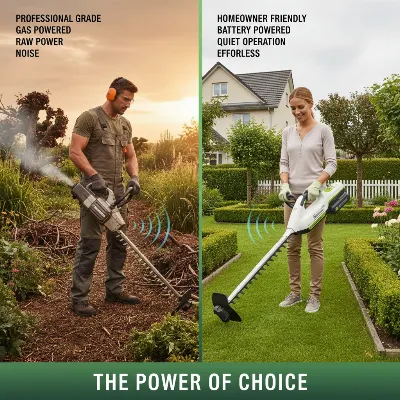 A side-by-side comparison of a gas-powered hedge trimmer and a battery-powered hedge trimmer, highlighting their differences in power source and typical usage environments.
Corded Electric Hedge Trimmers
While not the focus of this comparison, corded electric hedge trimmers are powered directly by an extension cord. They are generally the most affordable and lightest option, offering consistent power without worrying about fuel or battery life. However, their mobility is severely restricted by the length of the cord, making them best for small gardens close to a power source.
By Blade Design
Hedge trimmer blades are designed for specific cutting performance and handling.
- Single-Sided Blades: These have cutting teeth on one side of the blade bar. They are often longer, making them efficient for straight, flat cuts on long hedges. They tend to be lighter but can be less versatile for shaping.
- Double-Sided Blades: Featuring cutting teeth on both sides of the blade bar, these are more versatile for shaping and intricate work, as they can cut in both directions. They often provide reduced vibration and are popular for their maneuverability.
- Swiveling Blades/Rotating Handles: Some models, particularly battery and pole trimmers, feature rotating rear handles or articulating heads, allowing the user to adjust the cutting angle for vertical, horizontal, or angled cuts without contorting their body. This enhances ergonomics and precision.
Gas vs. Battery Hedge Trimmers: A Comparative Analysis
When choosing between gas and battery hedge trimmers, several key performance metrics and ownership aspects come into play. Here’s a detailed comparison:
| Feature | Gas Hedge Trimmers | Battery Hedge Trimmers |
|---|---|---|
| Power | Highest sustained power, excellent for very thick, woody branches. | Good to excellent power for most residential hedges; high-voltage models rival gas. |
| Runtime | Indefinite with refuels; ideal for all-day professional use. | Limited by battery capacity (30-90 minutes typically); spare batteries extend work. |
| Weight | Heavier due to engine and fuel; can cause fatigue over long periods. | Generally lighter, though large batteries add weight; often well-balanced. |
| Noise Level | Very loud (often >95 dB); requires hearing protection; not neighborhood-friendly. | Significantly quieter (often <80 dB); suitable for early morning/residential areas. |
| Emissions | Produces exhaust fumes (CO2, hydrocarbons); environmental impact. | Zero direct emissions; environmentally friendly. |
| Maintenance | High: fuel mixing, spark plug, air filter, carburetor, winterization. | Low: blade cleaning, battery charging; minimal engine maintenance. |
| Upfront Cost | Often lower for the tool itself. | Can be higher due to battery and charger costs (unless already part of an ecosystem). |
| Running Cost | Ongoing cost of fuel and engine maintenance/repairs. | Low cost of electricity for charging; battery replacement after several years. |
| Vibration | Higher vibration levels, can lead to operator fatigue. | Lower vibration levels, more comfortable for extended use. |
| Start-up | Pull-start mechanism, can be finicky in extreme temperatures. | Instant push-button start; reliable in varying conditions. |
| Ideal Use | Large properties, dense/overgrown hedges, professional landscaping. | Small to medium gardens, regular maintenance, noise-sensitive areas, multi-tool users. |
In 2026, the global market is showing a strong shift towards battery-operated equipment, with electrification redefining competitive dynamics. This trend is driven by regulatory pressures, increasing sustainability awareness, and continuous technological innovation in battery power and motor efficiency.
Factors to Consider When Buying a Hedge Trimmer
Choosing the best hedge trimmer means carefully assessing your specific needs and aligning them with the tool’s capabilities.
Assess Your Trimming Needs
Your property and gardening habits play the biggest role in determining the right trimmer.
- Hedge Size and Area: For small urban gardens or a few decorative shrubs, a lightweight battery trimmer offers ample power and maneuverability. If you manage extensive hedges across a large property, the sustained power of a gas trimmer or a high-capacity battery system with spare batteries becomes essential.
- Branch Thickness and Type: Do your hedges consist of soft, new growth or thick, woody branches? Gas trimmers historically excel at cutting through dense, mature growth. However, modern high-voltage battery trimmers (e.g., 56V or 80V with brushless motors) can now handle branches up to 1-1/4 inches thick, making them competitive for many challenging residential hedges. Check the “tooth gap” or “cutting capacity” specification, which indicates the maximum branch diameter the trimmer can handle.
- Frequency of Use: If you perform frequent, light shaping, a quiet and easy-to-start battery trimmer is ideal. For infrequent but heavy seasonal cuts, where power is paramount, a gas model might still be preferred by some.
Budget Considerations
Beyond the initial purchase price, consider the long-term cost of ownership.
- Upfront vs. Long-Term Costs: Battery trimmers often have a higher initial cost, especially if you need to buy batteries and a charger separately. However, their running costs are minimal (electricity for charging) and they require less maintenance. Gas trimmers may be cheaper upfront for the tool, but ongoing expenses for fuel, oil, spark plugs, air filters, and more frequent servicing add up over time.
- Battery Ecosystem Benefits: If you already own other battery-powered tools from a particular brand (e.g., EGO, Milwaukee, DeWalt), you might save significantly by purchasing a “tool-only” hedge trimmer that uses your existing batteries. This also simplifies charging and storage.
Key Features and Ergonomics
Modern hedge trimmers come with a variety of features designed to enhance performance, safety, and comfort.
- Blade Length: Longer blades (22-26 inches) cover more area per pass, speeding up work on large, straight hedges. Shorter blades (18-20 inches) offer better maneuverability for intricate shaping or smaller hedges.
- Distance Between Teeth (Tooth Gap): This measurement indicates the maximum thickness of branches the trimmer can cut. A wider tooth gap (e.g., 1 inch or more) is necessary for thicker, woodier growth.
- Motor Power/Battery Voltage: Higher voltage (e.g., 40V, 56V, 80V for battery) and engine displacement (cc for gas) generally correlate with greater cutting power. Brushless motors in battery tools provide superior efficiency and longevity.
- Weight and Balance: A well-balanced trimmer, regardless of weight, reduces strain on your arms and back. Look for models with ergonomic handles and designs that distribute weight evenly.
- Safety Features: Essential features include a two-handed operation requirement (to prevent accidental starts), a blade guard, and a handguard. Some models also have an electric brake that stops the blades almost instantly when the trigger is released.
- Convenience Features:
- Rotating Handles: Allows you to adjust the handle for comfortable vertical or horizontal trimming.
- Anti-Vibration Systems: Reduces fatigue during extended use.
- Low Noise Output: Especially important for residential users.
Top Picks: Highly-Rated Gas and Battery Hedge Trimmers for 2026
The market for hedge trimmers in 2026 is robust, with both gas and battery models excelling in their respective categories. Here are a few examples of highly-regarded options, based on recent reviews and market trends:
- Best Overall Battery: The EGO Power+ HT2600 (or similar models like HT2411, HT2400) is consistently praised for its impressive power, 26-inch blade length, and large cutting capacity (up to 1.2 inches), making it suitable for even thick branches. Users appreciate its lightweight design and rotating handle for comfortable operation. “The advancement in EGO’s battery technology has genuinely closed the gap with gas, making it a go-to for serious homeowners.”
- Best Value Battery: The RYOBI 40-volt 24-inch Hedge Trimmer Kit RY40HG01K offers an excellent balance of price, performance, and ease of use. It provides good cut quality at a quick speed, is well-balanced, and its 40-volt battery is compatible with a wide range of other Ryobi tools, enhancing its value.
- Runner-Up Battery: The Milwaukee M18 Fuel 24 Inch Hedge Trimmer (3033-20) is a strong contender for more aggressive cutting, capable of handling branches up to 1-1/4 inches thick with its high strokes per minute. Its rotating handle adds versatility for various cutting angles.
- Best Overall Gas: The Echo HC-2020 is frequently cited as a top gas hedge trimmer, known for its powerful cutting performance and durability, making it a favorite for professionals and those with extensive, demanding hedge work.
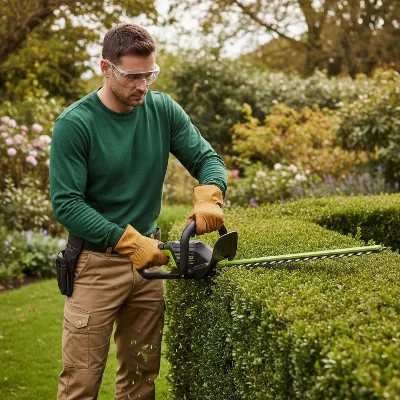 A person wearing safety gear uses a modern battery-powered hedge trimmer to trim a dense green hedge in a well-maintained garden, showcasing ergonomic design and efficient operation.
Safe Operation and Maintenance Practices
Regardless of whether you choose a gas or battery hedge trimmer, adhering to safety protocols and regular maintenance is crucial for longevity and efficient performance.
Safety First
Operating any power tool requires caution to prevent injuries.
- Wear Protective Gear: Always don safety glasses or goggles, sturdy gloves, and appropriate long-sleeved clothing and trousers. For gas trimmers, hearing protection is mandatory due to high noise levels.
- Inspect Before Use: Before each use, check the blades for damage or dullness, ensure all fasteners are tight, and verify that safety features (like the two-handed switch) are functioning correctly. For battery models, check the battery charge; for gas, ensure adequate and correctly mixed fuel.
- Maintain Proper Stance: Keep a firm grip with both hands and maintain good balance. Avoid overreaching.
- Clear the Area: Ensure no people, pets, or obstacles (like hidden wires or pipes) are in the cutting path.
- Be Aware of Kickback: Especially when cutting thicker branches, the trimmer can kick back. Be prepared to brace against this.
Essential Maintenance Tips
Regular maintenance prolongs the life of your hedge trimmer and ensures optimal cutting performance.
- Blade Care: After each use, clean the blades thoroughly to remove sap, dirt, and debris. Lubricate the blades with a light oil or silicone spray to prevent rust and ensure smooth operation. Sharpen blades periodically or as needed; dull blades tear rather than cut, damaging the hedge and straining the motor.
- Battery Care (for Battery Trimmers): Store batteries in a cool, dry place away from direct sunlight. Avoid completely draining lithium-ion batteries and charge them before long-term storage to about 50-70%. Follow manufacturer guidelines for charging and temperature.
- Gas Engine Care (for Gas Trimmers): This is more involved.
- Fuel: Use fresh, properly mixed fuel (for 2-stroke engines). Old fuel can gum up the carburetor.
- Air Filter: Clean or replace the air filter regularly to ensure proper engine breathing.
- Spark Plug: Inspect and replace the spark plug as recommended by the manufacturer.
- Winterization: Before long-term storage, drain the fuel tank, run the engine dry, or use a fuel stabilizer to prevent fuel degradation.
- General Storage: Store your hedge trimmer in a clean, dry, and secure location, out of reach of children. Use blade covers to protect the blades and prevent accidental injury.
Conclusion
The choice between a gas and battery hedge trimmer in 2026 largely depends on individual needs, priorities, and property characteristics. Gas models continue to offer unparalleled power and unlimited runtime for heavy-duty, extensive, or professional tasks. However, battery technology has made significant strides, delivering impressive power, quieter operation, zero emissions, and minimal maintenance, making them the preferred choice for the vast majority of homeowners and many commercial applications. As battery advancements continue, we can expect even longer runtimes and greater power, further shifting the landscape of garden tool preferences. By carefully evaluating your hedge type, property size, frequency of use, and willingness for maintenance, you can confidently select the hedge trimmer that will be your ultimate trimming partner. What kind of hedges are you looking to tackle this season?
Frequently Asked Questions
Which type of hedge trimmer is best for beginners?
A battery-powered hedge trimmer is generally best for beginners due to its lighter weight, significantly lower noise, and easy, instant-on operation. There’s no complex fuel mixing or pull-starting; just charge the battery and go, making it much more user-friendly.
How long do cordless hedge trimmer batteries typically last on a single charge?
Most cordless hedge trimmer batteries provide a runtime of 30 to 90 minutes per charge, depending on the battery’s voltage (Ah) and the thickness of the material being cut. For longer jobs, having a spare, charged battery or a fast charger can be very beneficial.
Do gas hedge trimmers require special fuel?
Yes, most gas hedge trimmers use a two-stroke engine, which requires a specific blend of gasoline and two-stroke oil. It’s crucial to use the correct fuel mixture ratio as specified by the manufacturer to ensure proper lubrication and engine longevity. Four-stroke models use straight gasoline but still require oil in a separate crankcase.
