To ensure your gas hedge trimmer delivers peak performance and lasts for years, proactive and regular maintenance is essential, including pre-use checks, post-use cleaning, and annual servicing. Consistent care prevents costly breakdowns and ensures efficient, clean cuts every time you use it. This guide, informed by over a decade of hands-on experience, details the essential maintenance steps to keep your gas hedge trimmer in top condition.
An Overview of Gas Hedge Trimmers
Gas hedge trimmers are typically powered by two-stroke internal combustion engines, providing significant power for cutting through thick foliage that electric or battery models might struggle with. Their design offers superior freedom of movement without power cords or limited battery run-time, making them ideal for large properties or professional landscaping. While modern hedge trimmers feature ergonomic designs and advanced safety features, the core principle of a powerful, fuel-driven engine driving reciprocating blades remains central to their effectiveness. This power, however, comes with specific maintenance requirements distinct from electric counterparts.
Essential Maintenance Tips for Your Gas Hedge Trimmer
Consistent upkeep is the cornerstone of extending your gas hedge trimmer’s lifespan and ensuring its optimal functionality. These steps cover everything from pre-use checks to deep annual servicing, ensuring every component works in harmony.
Before Every Use
Before starting your gas hedge trimmer, a quick inspection can prevent potential issues and ensure safe operation. Check for any loose screws or bolts on the housing, blades, and handle grips, tightening them as needed. Examine the blades for dullness, rust, or any signs of damage like chips or cracks. Ensure the trigger and safety lock mechanisms are functioning correctly to prevent accidental blade movement. Lightly oiling the blades before starting can also enhance performance.
After Every Use
Cleaning your hedge trimmer immediately after use is one of the most impactful maintenance habits. Wipe off any sap, leaves, or moisture from the blades and the main body with a dry cloth. Sap buildup can dull blades and cause uneven cuts, leading to increased strain on the engine. A soft brush can help remove compacted debris from around the blade guard and motor vents. Applying a small amount of light oil or maintenance spray to the blades after cleaning helps protect the metal from corrosion and keeps the moving parts lubricated.
Regular Checks
Depending on your frequency of use, certain components require more frequent attention beyond immediate post-use cleaning.
- Blade Lubrication: Lubricate the blades regularly to reduce friction and prevent wear, typically weekly or monthly depending on use.
- Rust and Corrosion: Inspect for any signs of rust or corrosion, especially around joints or moving parts. A quick wipe-down with a rust inhibitor spray can be beneficial.
- Recoil Starter Rope: Inspect the starter rope for any fraying, damage, knots, or tangles. The rope should wind smoothly and evenly. Replace it if it shows signs of wear to avoid more costly repairs.
Annual Servicing & Deeper Maintenance
|
Our Picks for the Best Hedge Trimmer in 2026
As an Amazon Associate I earn from qualifying purchases.
|
||
| Num | Product | Action |
|---|---|---|
| 1 | BLACK+DECKER Electric Hedge Trimmer, 16-Inch 3.0 Amp Compact Corded Power Hedge Trimmer (BEHT100) |

|
| 2 | Hedge Trimmer for Dw 20V Battery,Hedge Trimmer Cordless with 22'' Dual-Action Blade and 3/5'' Cutting Capacity,1600RPM& Safety Lock (Battery Not Included) |
|
| 3 | Electric Hedge Trimmer Cordless Compatible with DEWALT 20V MAX Battery, 20-Inch Cordless Hedge Trimmer, Brushless Bush Trimmer, 2/3'' Cutting Capacity, Lightweight & Rotatable Handle(No Battery) |
|
| 4 | BLACK+DECKER 18-Inch Electric Hedge Trimmer (BEHT200) |
|
| 5 | BLACK+DECKER Electric Hedge Trimmer, 17-Inch Corded 3.2 Amp, Dual Action, Reduced Vibration, Cleaner Cut, Lightweight, 3800 Cuts per Min (BEHT150) |
|
| 6 | SEESII 20V Hedge Trimmer Cordless: 20" Electric Bush Trimmer - Dual 4.0Ah Batteries, Dual-Action Blade, 0.71" Blade Gap, Rotatable Handle, Lightweight Handheld Grass Shrub Clipper for Garden Yard |
|
| 7 | Hedge Trimmer for Dewalt 20V Battery, Cordless Hedge Trimmer with 22'' Dual-Action Blade, 1600RPM, 3/5'' Cutting Width, Rotating Handle & Dual Switch Design (Battery Not Included) (Yellow) |
|
| 8 | Cordless Hedge Trimmer 22-Inch Compatible with DEWALT 20V MAX Battery, Electric Hedge Trimmer Cordless, Bush Trimmers for Garden, Battery Powered Hedge Trimmers (Tool Only) |
|
| 9 | BLACK+DECKER 20V MAX Cordless Hedge Trimmer, Battery and Charger Included, 22 Inch Steel Blade Lightweight Bush Trimmer, Soft Grip, Less Vibration (LHT2220) |
|
| 10 | WORX 22" Cordless Hedge Trimmer, Electric Hedge Trimmer with Dual-Action Blades, Lightweight Bush Trimmer with 4.4 LBS, Battery & Charger Not Included, WG261.9 |
|
At least once a year, ideally before the peak trimming season, a more thorough service is recommended. This might involve tasks you can do yourself or, for more complex issues, a professional service.
- Sharpen Blades: Sharpen the blades or have them professionally serviced to maintain high cutting performance. Dull blades not only make trimming harder but also put undue stress on the engine.
- Inspect Engine Components: This includes a detailed check of the air filter, spark plug, and fuel system.
- Tighten All Accessible Screws: Over time, vibrations can loosen fasteners, so periodically re-tightening all accessible screws ensures structural integrity.
- Gear Lubrication: For the gearbox, it’s often recommended to have it serviced and topped up with specialized lubricant by a professional dealer.
Fuel System Care
The fuel system is critical for a gas hedge trimmer’s performance. Using fresh, correctly mixed fuel is paramount. Old or stale fuel can lead to poor ignition and starting difficulties.
- Fuel Tank Inspection: Regularly check the fuel tank, lines, and filter for leaks, damage, or contamination.
- Fuel Filter Replacement: Replace the fuel filter when it appears dirty or clogged to ensure proper fuel flow.
- Fuel Line Integrity: Carefully inspect fuel lines for cracks or deterioration. Replace any damaged lines immediately.
- Fuel Tank Cleaning: Periodically clean the fuel tank to remove any accumulated sediment, debris, or water.
- Spark Arrestor: Clean the spark arrestor on the muffler regularly to prevent carbon buildup, which can cause the trimmer to run at a lower RPM and not “breathe” properly.
Blade Care: Cleaning, Sharpening, Lubrication
The blades are the business end of your hedge trimmer, and their condition directly impacts cutting efficiency and engine health.
> “Clean, sharp blades are not just about aesthetics; they dramatically reduce the strain on your engine and extend its life, preventing overheating and premature wear.” – ReviewsRain.com Technical Expert
- Cleaning: After each use, wipe blades clean of sap and debris. For heavy residue, a resin solvent or isopropyl alcohol can be effective.
- Sharpening: Sharpen blades with a fine file, maintaining the original modern angle. Ensure an equal number of strokes on each edge for balanced performance.
- Lubrication: Apply a lubricant to both sides of the blades and run the trimmer briefly to distribute it. This minimizes friction and prevents rust.
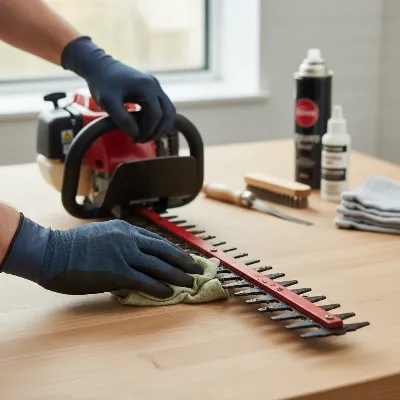 A person performing routine maintenance on a gas hedge trimmer, ensuring its longevity and performance.
Engine Components: Air Filter, Spark Plug, Recoil Starter
These components are vital for the smooth operation and starting of your gas hedge trimmer.
- Air Filter: Clean the air filter regularly, especially if it appears dark or clogged, as limited airflow can choke the engine. Dirty filters can be cleaned with soapy water and dried completely before reinstallation, or replaced if too worn or damaged.
- Spark Plug: Inspect the spark plug for dirt, corrosion, or carbon buildup at the start of the season. A clean plug with the correct gap is essential for proper ignition. Replace it after approximately 100 operating hours or if it’s more than a couple of years old. Consult your manual for the correct plug gap.
- Recoil Starter Rope: As mentioned, inspect for wear. A small amount of lubricant on the recoil starter mechanism can ensure smooth operation, but avoid over-lubricating which can attract dirt.
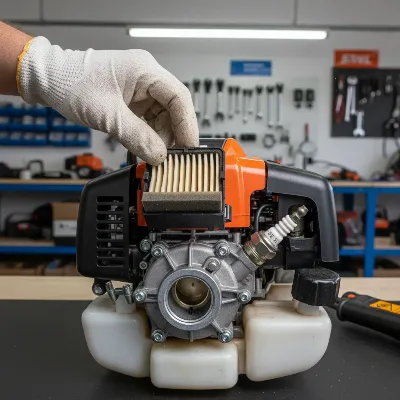 Detailed view of a gas hedge trimmer's engine, highlighting air filter and spark plug maintenance.
Safe Operation and Storage
Maintenance isn’t just about keeping the machine running; it’s also about ensuring safety and longevity.
Safety First
Always prioritize safety when operating or maintaining your gas hedge trimmer. Wear safety goggles, ear protection, and cut-resistant gloves to protect against debris and noise. Long sleeves, pants, and closed-toe shoes with good traction are also recommended. Before performing any maintenance, ensure the trimmer is powered off, the engine is cool, and the spark plug wire is disconnected to prevent accidental starting. Clear your work area of any obstacles and keep bystanders at a safe distance.
Proper Storage for Longevity
Correct storage is as crucial as regular cleaning for extending your hedge trimmer’s lifespan.
- Dry, Secure Location: Always store your hedge trimmer in a dry, frost-free shed or garage, preferably in a locked area to prevent accidents or theft. Avoid leaving it outside, even under a tarp, as damp conditions can lead to corrosion.
- Blade Protection: Use a blade cover to protect the blades from damage and to keep them safe from accidental contact.
- Fuel Management: For extended storage (three months or more), either drain the fuel tank completely or use a fuel stabilizer to prevent fuel degradation. Running the engine until it runs out of fuel after draining helps ensure the carburetor is empty.
Conclusion
Maintaining your gas hedge trimmer doesn’t have to be a daunting task. By incorporating these essential maintenance tips into your routine – from diligent blade care and fuel system checks to regular engine component inspections – you can significantly extend your tool’s life, ensure reliable performance, and make your hedge trimming tasks more efficient and enjoyable. A well-maintained gas hedge trimmer is a safe and effective hedge trimmer, ready to tackle any foliage challenge you throw its way.
Frequently Asked Questions
How often should I clean my gas hedge trimmer’s air filter?
Your gas hedge trimmer’s air filter should be cleaned regularly, especially if you use the trimmer frequently or in dusty conditions. A good rule of thumb is to check it after every few uses and clean or replace it if it appears dirty or clogged to ensure optimal engine performance and prevent overheating.
Is it necessary to sharpen the blades of my gas hedge trimmer, and how often?
Yes, sharpening the blades is crucial for efficient and clean cuts. Dull blades make the trimmer work harder, reducing its lifespan. The frequency depends on use, but inspecting them seasonally or after extensive trimming for dullness or damage and sharpening them as needed is a good practice.
Frequently Asked Questions
How often should I clean my gas hedge trimmer's air filter?
Your gas hedge trimmer's air filter should be cleaned regularly, particularly if you use the trimmer often or in dusty environments. It's recommended to check the filter after every few uses and clean or replace it if it appears dirty or clogged to maintain optimal engine performance and prevent overheating.
Is it necessary to sharpen the blades of my gas hedge trimmer, and how often?
Yes, sharpening the blades is crucial for efficient and clean cuts, as dull blades force the trimmer to work harder and reduce its lifespan. The frequency depends on usage, but inspecting them seasonally or after extensive trimming for dullness or damage and sharpening them as needed is a good practice.
What are the key steps for proper fuel system care in a gas hedge trimmer?
Proper fuel system care involves using fresh, correctly mixed fuel and regularly inspecting the fuel tank, lines, and filter for leaks or contamination. Replace the fuel filter when dirty, check fuel lines for cracks, and periodically clean the fuel tank to remove sediment. Also, clean the spark arrestor to prevent carbon buildup.
How should I store my gas hedge trimmer for extended periods?
For extended storage (three months or more), store your gas hedge trimmer in a dry, frost-free, and secure location like a locked shed or garage. Always use a blade cover for protection. Additionally, either drain the fuel tank completely or use a fuel stabilizer to prevent fuel degradation, running the engine until it runs out of fuel to ensure the carburetor is empty.
What safety precautions should I take when maintaining a gas hedge trimmer?
Always prioritize safety by wearing safety goggles, ear protection, and cut-resistant gloves. Ensure the trimmer is powered off, the engine is cool, and the spark plug wire is disconnected before performing any maintenance to prevent accidental starting. Clear your work area and keep bystanders at a safe distance.
Maintain Your Gas Hedge Trimmer
Follow these steps to perform essential maintenance on your gas hedge trimmer, ensuring its longevity and optimal performance.
Before each use, inspect for loose screws or bolts on the housing, blades, and handle grips, tightening them as needed. Examine blades for dullness, rust, or damage, and ensure safety mechanisms function correctly. Lightly oiling the blades can also improve performance.
Immediately after use, wipe off sap, leaves, and moisture from blades and the main body with a dry cloth. Use a soft brush for compacted debris around the blade guard and motor vents. Apply light oil or maintenance spray to blades to prevent corrosion and lubricate moving parts.
Lubricate blades weekly or monthly depending on use to reduce friction. Inspect for rust or corrosion, especially around joints, and apply a rust inhibitor if needed. Check the recoil starter rope for fraying or damage and replace it if signs of wear are present.
Once a year, sharpen blades or have them professionally serviced to maintain cutting performance. Inspect engine components including the air filter, spark plug, and fuel system. Tighten all accessible screws and consider professional gear lubrication for the gearbox.
Use fresh, correctly mixed fuel. Regularly check the fuel tank, lines, and filter for damage or contamination, replacing the filter when dirty. Inspect fuel lines for cracks and periodically clean the fuel tank. Clean the spark arrestor on the muffler to prevent carbon buildup.

This guide was super helpful for understanding the annual servicing. I usually just clean the blades and call it a day, but knowing about checking the spark plug and sharpening the blades properly is a game-changer. My hedge trimmer is a Stihl, and it definitely deserves this kind of care to keep it running strong.
I’ve been using gas hedge trimmers for years on my large property, and the point about proper storage during the off-season is crucial. Draining the fuel and storing it in a dry place really does extend the life of the engine. It’s a small step that makes a huge difference in avoiding costly breakdowns.
Good tips overall, especially about keeping the blades sharp. I tried to do the carburetor adjustment myself once on my older Craftsman model and ended up making it worse. I wish there was a bit more detail on how to safely do that part without messing things up, or maybe a warning about when to just take it to a pro.
I’ve always been pretty good about cleaning my gas hedge trimmer after each use, but I never really thought about the pre-use checks until reading this. Checking the fuel mix and air filter before I even start makes a lot of sense for preventing issues down the line. My old trimmer used to bog down sometimes, and I bet this would have helped.